How Much Water Enters The Hydrologic Cycle

Ever wonder just how much water is swirling around above us, below us, and all around us? It’s a staggering amount, and getting a handle on it can actually make your day more...

Ever wonder just how much water is swirling around above us, below us, and all around us? It’s a staggering amount, and getting a handle on it can actually make your day more fun. Let’s dive into the hydrologic cycle—the planet’s ultimate water recycling system.
The Big, Wet Numbers
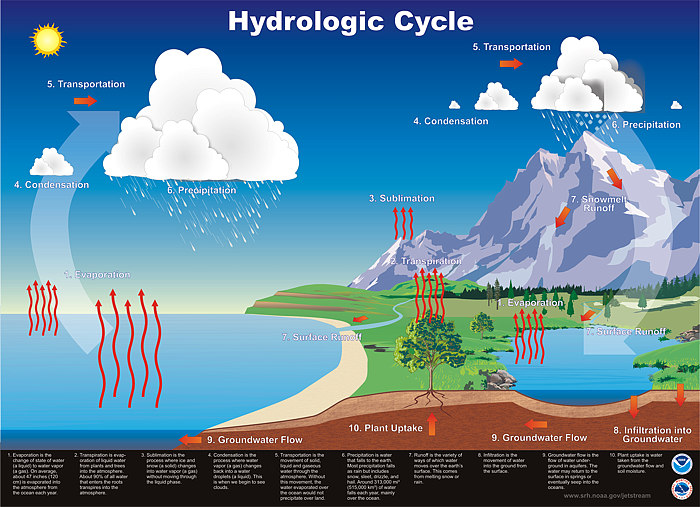
Every year, about 577,000 cubic kilometers of water enters the atmosphere through evaporation and transpiration. That’s enough to cover the entire United States in a layer of water over 60 meters deep! Seriously, think about that next time you’re stuck in a traffic jam.
Now, don’t panic—this water doesn’t just vanish. It falls back as precipitation, balancing the books. The ocean does most of the heavy lifting, contributing about 86% of that moisture, while land chimes in with the remaining 14 percent.
Must Read
What Actually Pumps All This Water?
The sun is the star player here. It heats up oceans, lakes, and even that puddle on your driveway, turning liquid into invisible vapor. Then, plants get in on the act through transpiration—they sweat, just like you do after a workout!
Combine those two, and you get evapotranspiration. It’s a fancy word for “the Earth breathing,” and it moves a mind-boggling volume of water skyward every single day. Pretty cool, right?
Why This Makes Life More Fun
Here’s where it gets personal: that same water you drank this morning might have once been part of a dinosaur’s bath. Or a medieval rainstorm. Or the mist in a rainforest canopy. You are, quite literally, sipping ancient history.
 The hydrologic (water) cycle | GeoKansas | Geografia
Next time you see a storm cloud rolling in, you can impress your friends by saying, “That’s about 100,000 swimming pools’ worth of water up there!” Watch their eyes widen. It turns a boring forecast into a mind-blowing spectacle.
The Secret Superpower of Soil
Believe it or not, soil is a massive reservoir. It holds about twice as much water as all the rivers and lakes combined. When it rains, the ground acts like a giant sponge, slowly releasing moisture to plants and groundwater.
That’s why a healthy garden isn’t just pretty—it’s a tiny engine of the hydrologic cycle. Watering your tomatoes is like giving a high-five to the entire planet’s weather system. Give it a try.
A Quick Reality Check
Of all that 577,000 cubic kilometers, only a tiny fraction—about 0.001%—stays in the atmosphere at any given moment. Most of it cycles through in about 9 days for the atmosphere. Fast, right?
 Hurricanes: Science and Society: Hydrologic Cycle
Meanwhile, a water molecule can spend thousands of years locked in a glacier or deep ocean. The cycle is a mix of speed and patience, like a cosmic rollercoaster that’s been running for 4.5 billion years.
The Uplifting Note
Here’s the best part: you are already part of this cycle. Every breath you exhale contains water vapor. Every time you run your sprinkler or boil pasta, you’re adding a tiny droplet to the grand system. You matter in this global dance.
So go ahead—watch the rain with new eyes. Know that you’re connected to every river, cloud, and ocean. The hydrologic cycle isn’t just science; it’s a reminder that we are all made of the same stuff, moving together. And that, my friend, is truly inspiring.
Ready to learn more? The next time a drop falls on your nose, think of it as an invitation. The world’s water is calling—go explore it!
