What Is A Type I Water Purification System

So, you’ve stumbled upon the term Type I water purification system. Sounds like something from a sci-fi lab, right? It kind of is, but trust me, it’s way more exciting than a...

So, you’ve stumbled upon the term Type I water purification system. Sounds like something from a sci-fi lab, right? It kind of is, but trust me, it’s way more exciting than a boring chemistry textbook.
Let’s get real for a second. We all think tap water is just fine—and it is, mostly. But Type I water is the superhero of H₂O, stripped down to its purest, naked form.
What exactly makes it "Type I"?
Think of water purity like a grading system, from a D- to an A+. Tap water is a solid C. Distilled water? That’s a B. Type I water, often called ultrapure water, is the gold medalist. It has almost zero contaminants—no minerals, no bacteria, no dissolved gasses, nothing.
Must Read
Scientists measure this by resistivity, which sounds fancy but is simple: pure water doesn’t conduct electricity well. Type I water hits a stunning 18.2 megohm-cm resistivity. That’s basically the water equivalent of a zen monk—calm, clear, and completely uncontaminated.
Okay, but why should you care?
Here’s the fun part: this stuff is a game-changer for everyday life, not just labs. Imagine brewing coffee or tea with water that has no off-flavors. No weird mineral aftertaste. Just pure, clean extraction.
Or think about your home humidifier. Tap water leaves white dust everywhere. Type I water? Zero residue. Your plants, your espresso machine, even your beloved fish tank will thank you.
The cool factor: It’s like magic, but real.
Type I water is so pure that it actually wants to absorb things. When you expose it to air, it instantly grabs carbon dioxide, changing its pH. That’s why it’s usually stored in airtight containers. It’s a little diva, but we love it.
 Bench Top Lab Water Purification System (Type I, 5–10 LPH) at ₹ 350000
You can even use it to clean your eyeglasses or phone screen without streaks. One drop, and you’re looking at a world without smudges. Unexpected? Yes. Awesome? Absolutely.
How does a system make this magic happen?
It’s not a single filter, but a whole team of superhero steps. First, the water passes through a reverse osmosis membrane that kicks out 99% of impurities. Then, it hits special resins and UV light that zap any remaining ions or microbes.
The process is called deionization, and it’s basically a tiny water spa treatment. Your tap water goes in grumpy, and comes out as a pristine, high-energy athlete ready to perform.
But isn’t this overkill for home use?
Honestly? Not if you love perfection. Many enthusiasts buy compact Type I systems for their kitchens. They’re about the size of a shoebox and sit right under the sink.
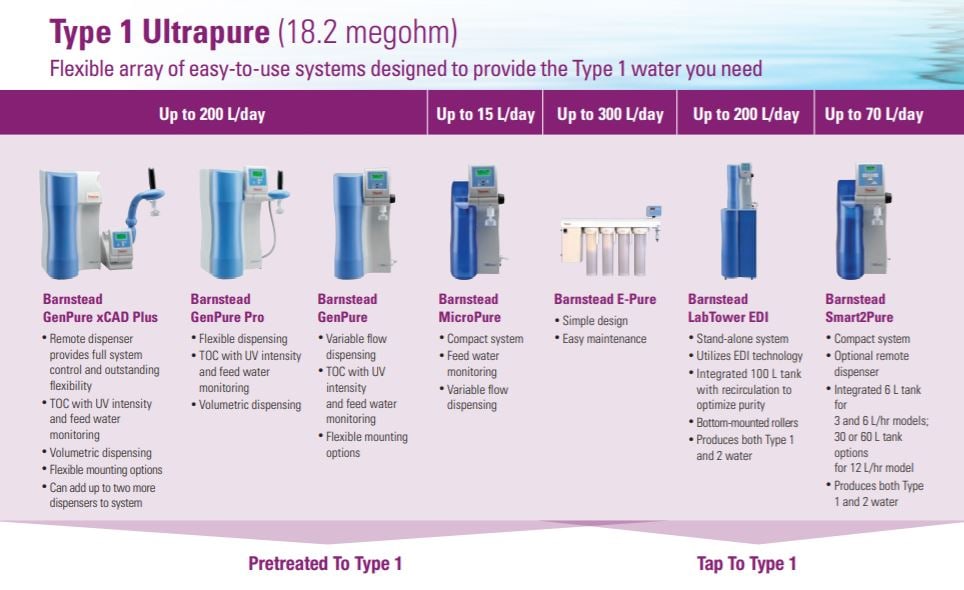 Choosing the right water purification system
You don’t need to be a lab coat to enjoy it. Anyone can set up a mini system for under $200. Suddenly, you’re the friend who makes the best iced tea at parties.
The hidden bonus: it makes you feel like a pro
There’s a silly, delightful pride in pouring water that’s purer than rainwater. It’s like knowing a secret handshake. You’ll start noticing the little things: no spots on your glassware, no weird smells from your steam mop.
Your morning coffee becomes a ritual. Your plants grow greener. Even your ice cubes look clearer and shatter like jewels. It’s small, but it’s joy.
An uplifting note to take with you
We live in a world full of complications—bills, traffic, weird weather. But here’s a simple truth: you can control the quality of one essential thing. Water. Type I purification systems are proof that purity is possible, even in our chaotic lives.
So go ahead, be curious. Look up a system. Read a manual. You might end up sipping the cleanest drink of your life, giggling at how nerdy this feels—and how good it tastes. That’s inspiration, right there in a glass.
