How Long Does Salt Last In Water Softener

Let’s be honest: the salt in your water softener can feel a little mysterious. You toss a bag in, ignore it for a while, and suddenly the kids are complaining that the shower...

Let’s be honest: the salt in your water softener can feel a little mysterious. You toss a bag in, ignore it for a while, and suddenly the kids are complaining that the shower water tastes “weird.” It’s not magic—it’s just a question of timing.
So, how long does that salt actually last? The short, cheerful answer is: it depends. But in a good way—like how long a bag of chips lasts depends on who’s watching the movie.
The general rule of thumb
For a typical household, a 40-pound bag of water softener salt will usually last about six to eight weeks. That’s roughly the lifespan of a houseplant you’re trying not to kill.
Must Read
But here’s the kicker: your mileage will vary. A family of four with teenagers who take epic showers will burn through salt faster than a quiet couple who both work from home.
Think of it like gas in your car. One person gets 300 miles out of a tank; another gets 200 because they drive like they’re in a heist film. Your water softener is the same.
What actually eats your salt?
The biggest culprit is water hardness. If you live somewhere with “rock-hard” water—like parts of the Midwest or Southwest—your softener will work overtime. That means more salt, more often.
On the flip side, if your water is only mildly hard, a bag can stretch for two or three months. It’s like the difference between a thirsty Great Dane and a dainty Chihuahua.
Your household size matters, too. Remember those teenagers? Each shower, each load of laundry, each dishwasher cycle is pulling salt from that tank.
A quick story: the great salt mystery
My neighbor, Linda, once called me in a panic. “My softener is empty,” she said, “and I just bought that bag two weeks ago!” I went over and saw her teenager, Dylan, had been taking 45-minute showers while prepping for a school play. That’s not a softener problem—that’s a parenting problem.
Linda’s salt didn’t disappear; it just got used up faster because the demand was higher. She now keeps a sticky note on the tank that reads: “Dylan = salt vampire.”
 How to Add Salt to a Water Softener
How do you know when it’s running low?
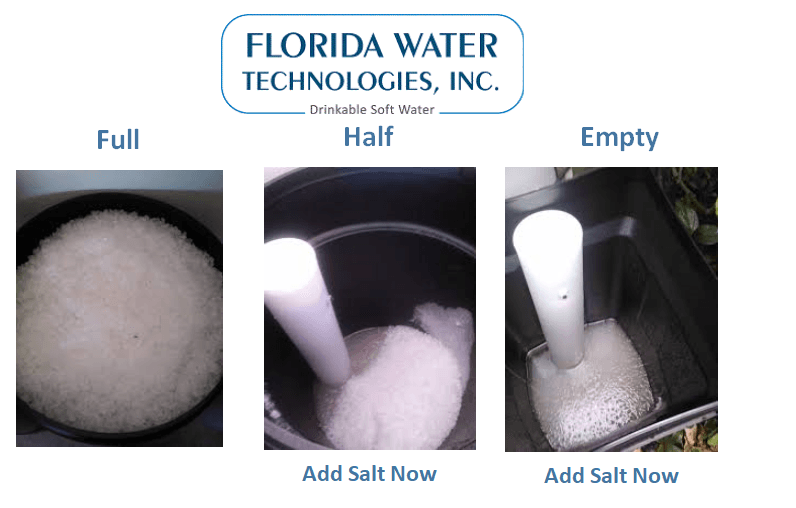
Most modern softeners have a little light or a beep. If yours is old-school, just look inside the brine tank. If the salt level is below the water line, or if you see a thick sludge at the bottom, you’re probably due for a refill.
Another giveaway? Your water tastes a bit mineral-y again, or your dishes start feeling filmy. That’s the water screaming, “Feed me, Seymour!”
Don’t panic if you let it run dry for a day or two. It’s not like forgetting to feed the cat. You just need to add salt and run a manual regeneration cycle.
The “summer vs. winter” factor
Here’s a fun twist: salt can last longer in winter if you live where it’s cold. Why? Because water usage often drops when kids are in school and you’re not watering the lawn.
Summer, though? Bring on the sprinklers, the extra showers, and the constant laundry from muddy camp clothes. Your salt will vanish faster than ice cream on a hot day.
It’s worth keeping an extra bag in the garage during July. Trust me on this one.
Does salt ever “go bad”?
Technically, no. Salt is basically rock. It doesn’t rot, mold, or expire. But it can clump together if the room is humid, turning into a solid brick that’s annoying to break apart.
Think of it like a bag of sugar left in a damp pantry. It’s still sugar—it’s just angry sugar.
 Water Softener Salt Setting at Latonya Langley blog
To avoid that, store your bags in a dry spot. A basement corner works better than a laundry room with a leaky pipe.
A quick cost check
Most bags cost between $6 and $12. So if you replace salt every six weeks, that’s about $1.50 per week. That’s cheaper than a fancy coffee once a week—and it keeps your pipes happy and your skin softer.
Compare that to the cost of repairing a water heater wrecked by hard water scale. Suddenly, that salt bag feels like a bargain.
The bottom line (no math required)
There’s no perfect answer for every home, but here’s the practical takeaway: check your salt level once a month. Do it while you’re waiting for your morning coffee to brew. It takes ten seconds.
If you see less than six inches of salt remaining, add a new bag. If you see a crusty bridge of salt above the water, break it up with a broom handle. Yes, it’s mildly satisfying.
And if you travel a lot? Throw in a full bag before you leave for vacation. Your softener will chug along quietly, like a good dog waiting for you to come home.
In the end, it’s really about rhythm. You’ll learn your home’s salt appetite faster than you learn your car’s weird dashboard light. And when you do, your showers will feel silky, your glasses will sparkle, and you’ll never panic over a dry brine tank again.
Unless you have a Dylan. In which case, buy bulk.
