What Is The Perfect Ph For Drinking Water

Let’s be honest—most of us don’t give our drinking water a second thought. We fill a glass from the tap, gulp it down, and move on with our day. But have you ever wondered wha...

Let’s be honest—most of us don’t give our drinking water a second thought. We fill a glass from the tap, gulp it down, and move on with our day. But have you ever wondered what makes water taste just right? That’s where pH comes in, and it’s not as science-y as it sounds.
What Even Is pH?
Think of pH like a mood ring for water. It measures how acidic or alkaline (basic) something is on a scale from 0 to 14. Pure water sits right in the middle at a pH of 7, which is neutral—like a perfectly balanced cup of tea.
Anything below 7 is acidic, like lemon juice (around pH 2) or black coffee (around pH 5). Anything above 7 is alkaline, like baking soda water (pH 9) or a milky latte. That neutral 7 is where we feel most at home.
Must Read
So, What’s the “Perfect” pH for Drinking Water?
The short answer: between 6.5 and 8.5. This is the range recommended by the World Health Organization and most water safety agencies. It’s wide enough to cover most tap water, and it’s the sweet spot where water is safe, tastes fresh, and doesn’t mess with your pipes.
Think of it like Goldilocks—water that’s too acidic can taste sharp or metallic, like sucking on a penny. Too alkaline? It can taste bitter or flat, like licking a chalkboard eraser. Yikes!
A Little Story: The Lemonade Test
Remember making lemonade as a kid? You squeeze lemons (super acidic, pH 2) into water, and then you add sugar to balance it out. That is your brain secretly adjusting for pH—you want that drink to feel refreshing, not sour enough to make your cheeks pucker. Same goes for plain water: when it’s near neutral, it feels clean and crisp on your tongue.
I once visited a friend who had well water that was a bit acidic. It tasted like someone dropped a rusty nail into the glass. We added a pinch of baking soda (which raises pH), and suddenly the water was smooth and pleasant. Nobody wants to drink rusty nails!
Why Should You Care About pH?
Here’s the truth: your body works hard to keep your blood pH around 7.4, no matter what you drink. Water pH won’t cure diseases or turn you into a superhuman. But it does affect your everyday comfort.
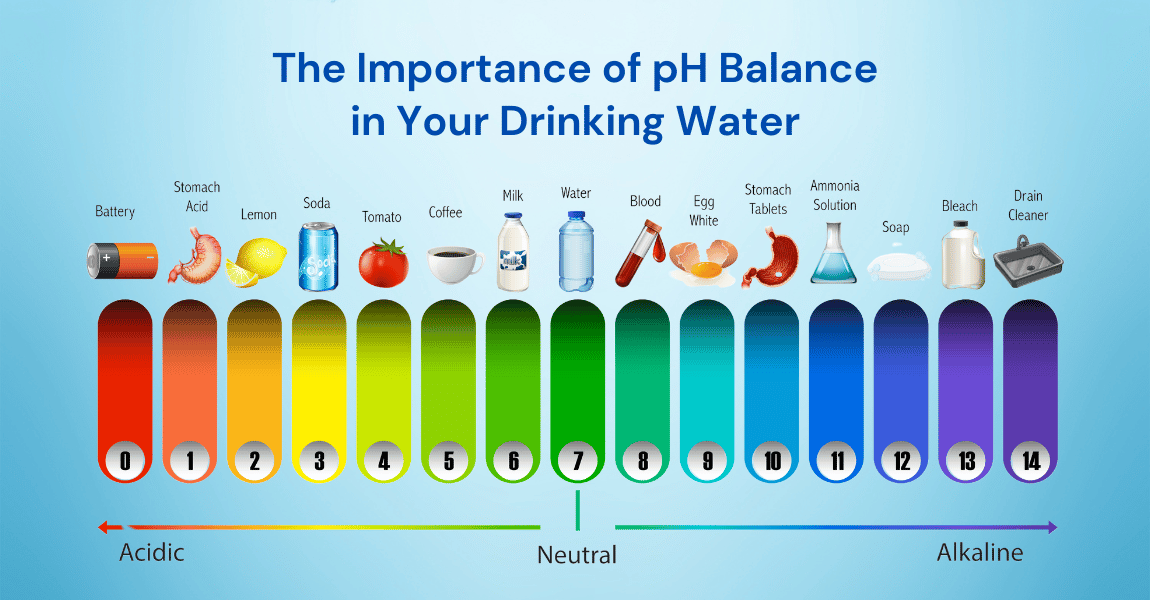 Discover the Importance of pH Balance in Drinking Water for Health
If your tap water is too acidic (below 6), it can leach metals like copper or lead from old pipes, which you really don’t want in your belly. It can also irritate your stomach lining over time—like drinking slightly soured milk. Not fun.
On the flip side, super-alkaline water (pH 9 or above) might taste weird and can interfere with your digestion. Imagine swallowing a mouthful of antacid tablets—you’d feel bloated and off. Balance is key.
The “Amazing” Bottled Water Myth
You’ve probably seen those fancy bottles labeled “pH 9.5” or “Alkaline Water” at the store. They promise better hydration and “detoxing.” I hate to burst the bubble, but your stomach acid is so strong (pH 1.5 to 3.5) that it neutralizes any extra alkalinity within seconds. So that pricey bottle? It’s basically just water with a marketing badge.
I tried one once, and honestly? It tasted like someone stirred a spoonful of baking soda into a glass of tap water. Not refreshing at all. Stick with normal tap or filtered water—it’s cheaper and just as good.
How to Check Your Water’s pH
You don’t need a lab coat. Buy pH test strips from a drugstore or online—they’re cheap and easy. Dip one in your glass, wait a few seconds, and compare the color to the chart.
 Drinking Water Ph
Pro tip: If you’re on a public water system, your utility already tests this for you. Most tap water in developed countries falls nicely in the 6.5–8.5 range. If you’re on a well, testing once a year is a smart habit.
What If Your Water Is Off? A Real-Life Fix
Let’s say you test your water and it’s a bit acidic (pH 6). Don’t panic. You can install an acid-neutralizing filter (commonly using calcite or magnesium oxide) for about $100. It’s like giving your water a gentle hug.
If it’s too alkaline (pH 9+), a simple reverse osmosis filter can bring it back down. Or just let it sit in a pitcher for an hour—exposure to air naturally lowers pH a bit. No hoops to jump through.
The Takeaway (No, Seriously, Take a Sip)
At the end of the day, perfect drinking water is water you actually want to drink. If it tastes good and comes from a clean source, don’t stress over pH numbers. Your body is a brilliant machine that knows how to handle a little variation.
So next time you fill your glass, think of it like this: neutral water is the quiet friend at the party—reliable, unassuming, and exactly what you need. Cheers to that.
