How To Remineralize Reverse Osmosis Water

So, you’ve fallen for Reverse Osmosis water. I get it. It’s incredibly pure. It’s like the monastic ascetic of the water world—all impurity stripped away, leaving only H2O so...
So, you’ve fallen for Reverse Osmosis water. I get it. It’s incredibly pure. It’s like the monastic ascetic of the water world—all impurity stripped away, leaving only H2O so clean it’s almost offensive. But here’s the dirty little secret: that purity comes at a cost. Your pristine, gloriously empty water is so devoid of minerals it will actively leach them from your body. It’s a thirsty, beautiful thief.
Why Your RO Water is a Mineral Vampire
Think of your body as a high-performance sports car. Now, picture filling its fuel tank with pure, distilled nothing. That’s RO water. It won’t explode, but it won’t perform either. Reverse Osmosis strips out calcium, magnesium, potassium, and other trace minerals that your cells actually crave. Drinking it long-term is like running a marathon on a diet of lettuce and sad vibes. Your body has to dip into its own mineral reserves to balance the pH of that ultra-pure water.
This isn’t hippie science; it’s basic chemistry. Water wants to be balanced. When it’s too pure, it becomes a hungry little sponge that pulls minerals from wherever it can find them—usually your bones and teeth. So, how do we fix this without buying a $4,000 Himalayan salt lamp and chanting? You, my friend, need to remineralize.
Must Read
Method 1: The Lazy Genius Way (Trace Mineral Drops)
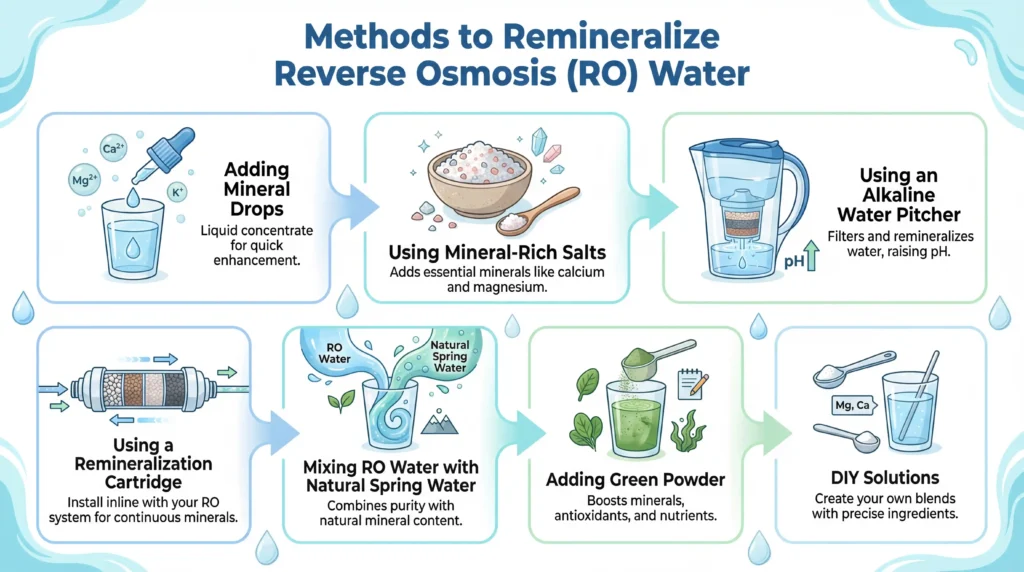
You want the easiest fix? Buy a bottle of trace mineral drops. It’s the microwave dinner of water health. Seriously, you just drip a few drops into your glass or jug. It’s so simple, a houseplant could do it. The ingredients are usually just concentrated seawater or mined salts that contain a dizzying array of elements like zinc, selenium, and liquid magic.
The best part? You control the taste. Too much? You’ll get a slightly salty kick. Just right? You’ll taste nothing, except maybe the smug satisfaction of outsmarting your own water filter. One catch: don’t use iodized table salt. That’s for your french fries, not your cells. It lacks the complex mineral profile your body is begging for.
Method 2: The Pink Salt & Baking Soda Hack
This is for the people who enjoy feeling a little alchemist. Get yourself some Himalayan pink salt—the stuff that looks like it was mined from a unicorn’s dreams. Add a tiny pinch to your RO water. It’s not just for flavor; it adds calcium, magnesium, and 84 other trace elements. But wait, there’s more.
 How To Remineralize Reverse Osmosis Water: 5 Best Methods (2024) - Aqua
To fix the pH balance (because RO water is often slightly acidic), add a teeny pinch of baking soda. We’re talking a 1/8 teaspoon per gallon. It neutralizes acidity and adds a bit of sodium bicarbonate, which your body actually uses for digestion and pH regulation. Congratulations, you’ve just turned your boring RO water into a slightly fizzy, mineral-rich elixir. You can now wear a lab coat and pretend you’re a hydration scientist.
Method 3: The Expensive, Hobbyist Route (Alkaline Pitcher)
Maybe you want a gadget. We all love gadgets. You can buy a remineralizing water pitcher that fits into your fridge. You pour your RO water in, and it trickles through a cartridge full of crushed coral, magnesium stones, and ceramic balls. It’s like a spa day, but for water. These pitchers can take RO water from “aggressively boring” to “mountain spring but better” in about five minutes.
The surprising fact? Some of these cartridges also add molecular hydrogen, a trendy antioxidant that might reduce inflammation. Or it might just make your water smell faintly of science. Either way, you’ll feel very adult moving a pitcher from one side of the counter to the other. The downside? Cartridges cost money and you’ll eventually forget to change one, drinking “dead” water for a month while the cartridge slowly turns into a petri dish. But hey, no risk, no reward.
 WaterSeer.org - Water Filtration & Purification Expert
The Final, Weirdest Option: Coral Calcium
Ready to get weird? You can buy coral calcium powder. Yes, fossilized coral. It comes from the ocean floor and is supposedly the most bioavailable source of calcium known to man. You mix a teaspoon into a gallon of RO water, shake it furiously, and let it sit overnight. The result? Water that tastes like liquid rock—in a good way.
A word of caution: don’t overdo it. Too much calcium and you’ll create water that’s harder than a math test. Your kidneys will give you a stern lecture. But the principle is sound: if you want to replicate the mineral profile of natural spring water, you use actual earth. It’s a little extreme, sure. But if you’re the type of person who owns a sourdough starter and composts your own tea bags, this is your jam.
TL;DR: Don’t Drink the Naked Goddess
Don’t let your RO water sit there looking pure and innocent while it slowly depletes your body’s mineral bank account. Whether you choose drops, salt, a pitcher, or fossilized sea creatures, the goal is the same: make your water work for you, not against you. A glass of remineralized RO water is a tiny, daily victory over the tyranny of extreme purity. Cheers to balanced water, healthy teeth, and the wonderful, awkward science of making your tap water slightly less stupid.
