What Does A Refrigerator Water Filter Do

Okay, let’s talk about that little cylinder living in your fridge. You know the one. It’s probably tucked away in the top right corner, looking vaguely important and totally i...
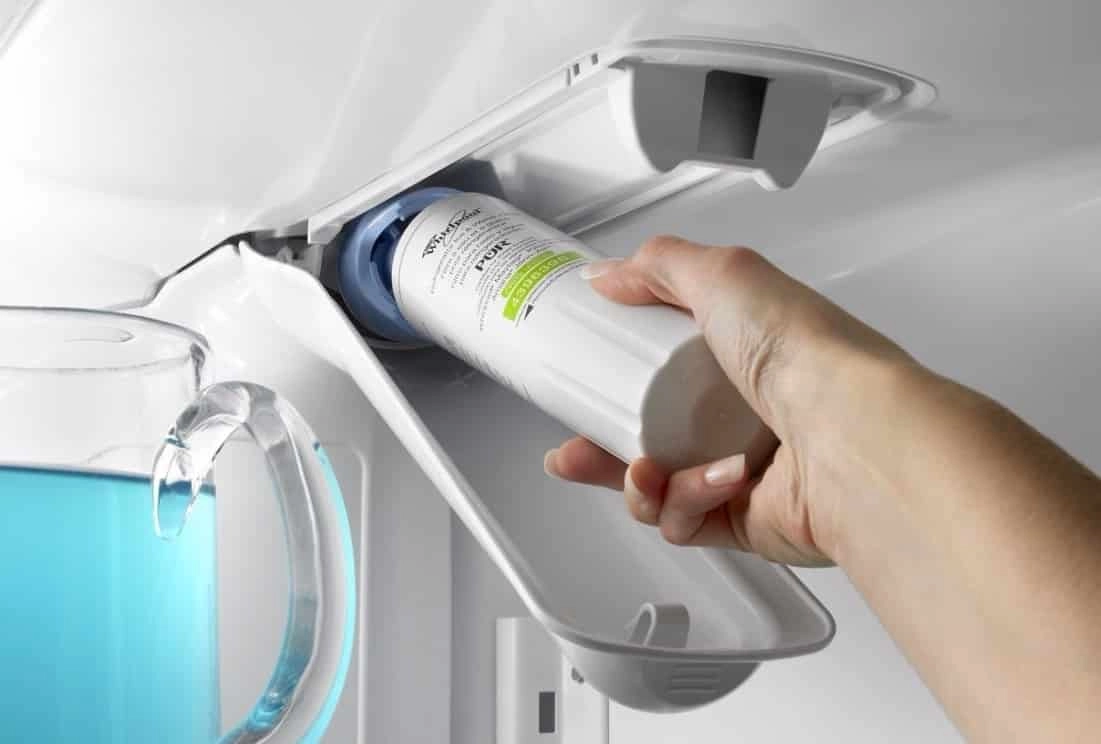
Okay, let’s talk about that little cylinder living in your fridge. You know the one. It’s probably tucked away in the top right corner, looking vaguely important and totally ignored.
That’s your refrigerator water filter. And honestly, it’s doing more work than you probably give it credit for.
So, what does it actually do? Besides costing you money and occasionally being a pain to replace?
Must Read
The Unsexy Truth About Your Tap Water
Let’s be real for a second. Your tap water is a cocktail of stuff you don’t want to think about. We’re not talking about pure H2O here, my friend.
Think chlorine (for that “pool day” vibe), sediment (tiny, gross particles), and maybe even some lead or mercury if your pipes are old. You’re drinking that. Delicious, right?
The filter is basically a bouncer for your glass. It stands at the door and says, “Not you, chlorine. Not you, dirt. You stay outside.”
It’s Not Just About Taste (But Seriously, It Helps)
Yeah, we all know filtered water tastes better. That’s the obvious part. But the filter is doing more than just making your ice cubes taste like a mountain spring.
It’s removing particles you can’t even see. That cloudy look in a glass of unfiltered tap? Gone. That weird, metallic aftertaste? Poof. It’s like a magic trick for your mouth.
And let’s be honest—have you ever tried to make iced coffee with unfiltered tap water? It’s a tragedy. Don’t do that to your coffee beans.
The Gross Stuff It Catches (You’re Welcome)
Here’s where it gets a little gross, so brace yourself. That filter is a tiny, hardworking janitor for your water supply.
 Refrigerator Water Filter Safety: Is Your Fridge Water Safe to Drink
It traps things like rust from old pipes and sediment that just floats around in the municipal water system. It also reduces lead, mercury, and copper—which are heavy metals you definitely don’t want in your morning hydration routine.
Some fancy filters even tackle cysts. Yes, as in microscopic parasites. You’re basically paying the filter to be your personal parasite bouncer. Worth every penny, right?
But Wait… Does It Filter Out Everything?
No, and don’t let anyone tell you otherwise. A standard fridge filter isn’t a magic bullet.
It won’t remove fluoride (that’s a fight for another day) or dissolved minerals like calcium and magnesium. It also doesn’t kill bacteria or viruses—that needs UV light or a bigger system.
Think of it as a very good pest control guy, not a hazmat team. It handles the big, annoying stuff so your water tastes crisp and clear.
Why You Should Actually Replace It (Don’t Be Lazy)
I know. Replacing it is a hassle. You have to remember the model number, hunt for it online, and then wrestle it out of the fridge while the door hits your hip. Ugh.
But here’s the thing: an old, clogged filter is worse than no filter at all. It becomes a breeding ground for bacteria because it’s just sitting there, damp and full of trapped gunk.
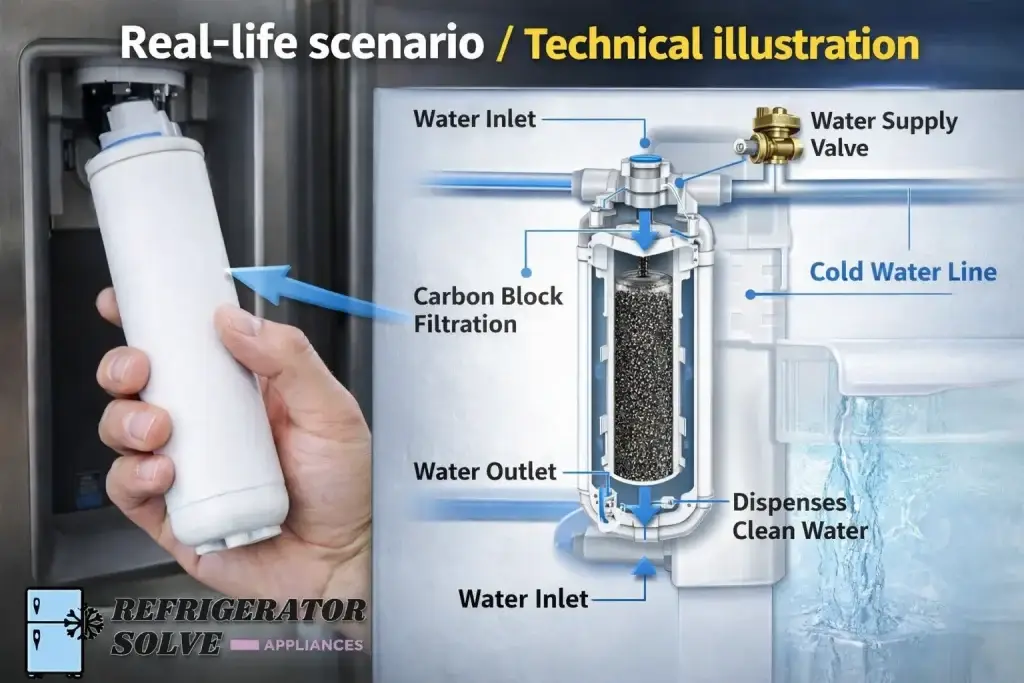 Are Fridge Water Filters Necessary? The Truth Most People Miss
So that “clean” water you’re pouring? It’s actually picking up bits of stale, nasty biofilm from the filter. Suddenly, that “mountain spring” taste turns into “swamp water with attitude.”
How Often? (The Six-Month Rule)
Most manufacturers yell at you to replace it every six months. And honestly? They’re not wrong.
If you have a family that drinks a ton of water, or you use the ice maker heavily, do it every four to five months. Your taste buds will thank you.
Also, if your water pressure from the dispenser suddenly feels weaker—like a tired kid blowing through a straw—that’s your filter screaming for a retirement party.
The Bottom Line (In Plain English)
Your refrigerator water filter is a workhorse. It removes chlorine, lead, sediment, and weird smells. It makes your ice clear and your coffee happy.
It’s not a miracle worker, but it’s the difference between drinking something that tastes like a pipe and something that tastes like refreshment. So change it, please.
Your kidneys, your taste buds, and your future self (who doesn’t want to gag on tap water) will all be very grateful. Now go wrestle that filter out. You’ve got this.
