What Does Grain Mean In A Water Softener

So, you’ve stumbled upon a water softener and noticed the word “grains” stamped on the box. Maybe you’re picturing oats or wheat floating in your pipes, right? Trust me, you’r...

So, you’ve stumbled upon a water softener and noticed the word “grains” stamped on the box. Maybe you’re picturing oats or wheat floating in your pipes, right? Trust me, you’re not alone in that confusion. Let’s clear up this little mystery together, shall we?
In the world of water softeners, “grain” has nothing to do with breakfast cereal. It’s actually a unit of measurement, and a pretty clever one at that. Think of it as a scorecard for how much hardness (calcium and magnesium) your water carries around.
Why Should You Care About These “Grains”?
Imagine your tap water as a stubborn houseguest that leaves mineral deposits everywhere. The “grain” count tells you exactly how much of that guest you’re dealing with. One grain is equal to about 1/7000th of a pound of hardness minerals—tiny, but mighty annoying when they build up on your showerhead.
Must Read
Your water softener is basically a bouncer for your pipes. It uses resin beads to swap those hard minerals for softer ones like sodium. The capacity of your softener—how many grains it can handle before needing a recharge—is its superpower.
Why is this cool? Because knowing your grain number is like knowing your car’s fuel tank size. You wouldn’t drive cross-country without checking gas, right? Same logic applies to keeping your water soft and your appliances happy.
The Fun Comparison: Grains as a Backpack
Think of your water softener as a magical backpack that soaks up hardness minerals. Each bag of resin inside has a limit, measured in grains—like how many books you can cram into a backpack before it bursts. 30,000-grain softener? That’s a heavy-duty hiking pack. A 10,000-grain model is more like a daypack for a short stroll.
If you fill that backpack with too many grains too fast, the softener gets tired and stops working. It then needs to “regenerate”—a fancy word for flushing out the hard stuff and refilling its backpack with fresh softness. It’s like hitting the reset button on a video game after you’ve collected too many coins.
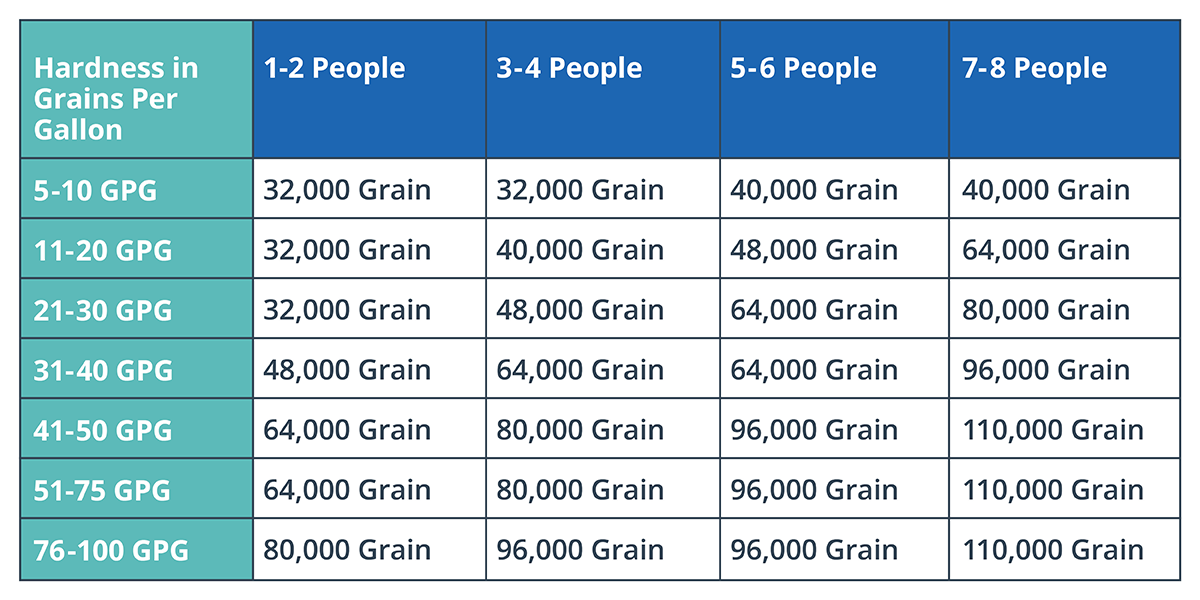 How to Size a Water Softener: Sizing Chart and FAQs | Aquasana
So, the “grain” isn’t the problem—it’s the key to solving the problem. It helps you choose the right softener size for your home and your water’s personality.
How Do You Find Your Water’s Grain Count?
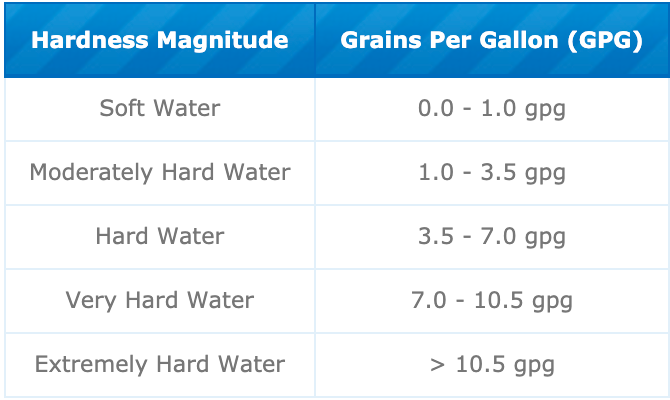
You can buy a simple test kit or look up your local water report. Most municipal water supplies list hardness in grains per gallon (gpg). If it says “12 gpg,” that’s moderately hard—imagine filling a kid’s pool with 12 grains of rock for every gallon. Startling, right?
For reference, anything below 1 gpg is soft as a cloud. Above 10 gpg, you’re in hard-water territory—think crusty faucets and soap that refuses to lather. Your softener’s job is to knock those grains down to near zero.
Here’s a little secret: you don’t always need a huge grain capacity. A smaller softener that regenerates more often can work fine for a family of four. But if you love long showers and a dishwasher that runs daily, go bigger or go home—your pipes will thank you.
The “Why It’s Actually Interesting” Part
Grains make the invisible visible. Without this measurement, you’d be guessing whether your water is friendly or sneaky. It’s like having a mood ring for your plumbing—except instead of colors, you get numbers that tell you exactly how to treat your water right.
 Certiflow Water Softeners
Think about it: every time you see a water softener rated at “48,000 grains,” you’re looking at a beast that can process nearly 7 pounds of hardness before needing a break. That’s a lot of minerals that won’t coat your coffee maker or dull your hair. Pretty satisfying, no?
And here’s a twist: the term “grain” actually comes from ancient measuring systems. Back in the day, a grain of barley was used as a standard weight. So yes, you’re literally using barley-history to keep your water clean. How’s that for a dinner party fact?
So, What’s the Takeaway?
Don’t let the word “grain” intimidate you. It’s just a friendly number that tells you how much work your softener can handle. Bigger doesn’t always mean better—it means you’ll wait longer between regenerations, which saves salt and water. But smaller can mean more flexibility for a small household.
Next time you’re shopping for a softener, ask yourself: “How much backpack do I really need?” Then check your water test results and match them to the grain rating. It’s like pairing the perfect shoe with your favorite jeans—simple once you know the trick.
And if someone asks you what “grain” means in a water softener, you can tell them it’s the secret sauce that turns hard water into a soft, lathery dream. Just don’t mention the barley unless you want to flex your history muscles. Cheers to clear pipes and softer everything!
