What Is The Lifespan Of A Water Softener

So, you’ve got a water softener, or you’re thinking about getting one. You’re probably wondering: how long will this thing last before it starts acting like a grumpy old robot...
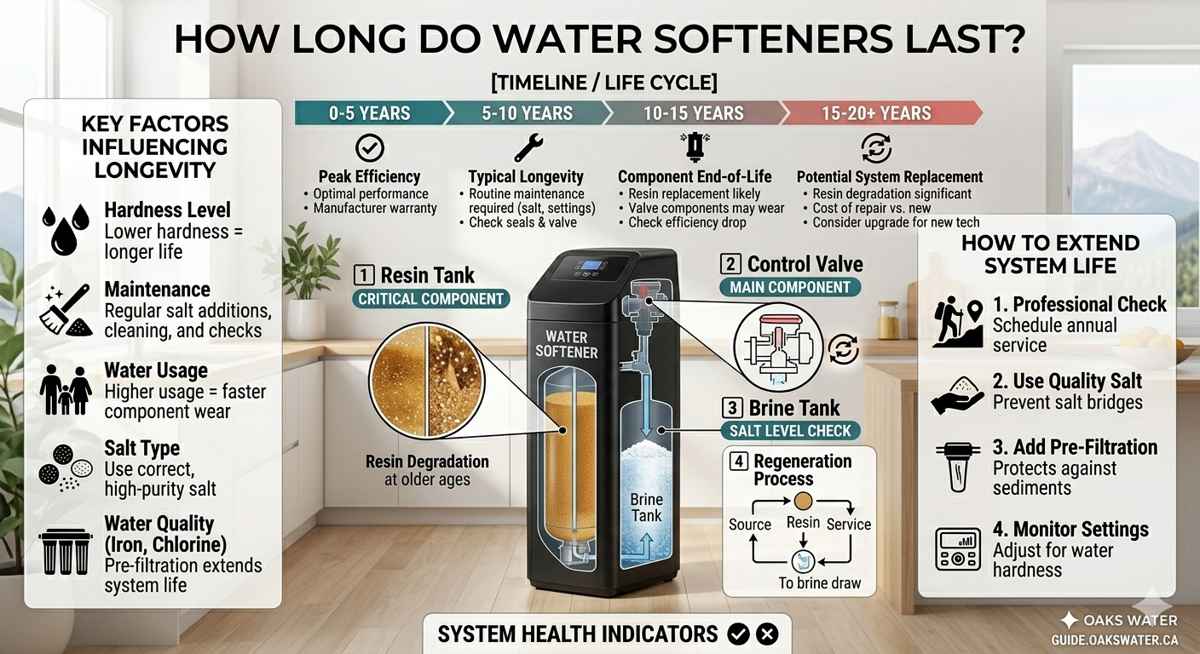
So, you’ve got a water softener, or you’re thinking about getting one. You’re probably wondering: how long will this thing last before it starts acting like a grumpy old robot? Let’s break it down together, without any boring manuals or tech jargon. Grab a coffee (or tea, if you’re fancy), and let’s chat.
The Quick Answer: Ten to Fifteen Years (Usually)
Most water softeners have a lifespan of about 10 to 15 years. Think of it like a trusty dog—you get a solid decade or more of happy service. After that, parts start wearing out, and it might need more love than you’re willing to give.
Of course, some units can last 20 years if you treat them like royalty. Others might conk out at year seven if you’ve been feeding them bad water or ignoring their maintenance needs. It’s a bit like a relationship: the effort you put in determines the outcome.
Must Read
What Affects the Lifespan?
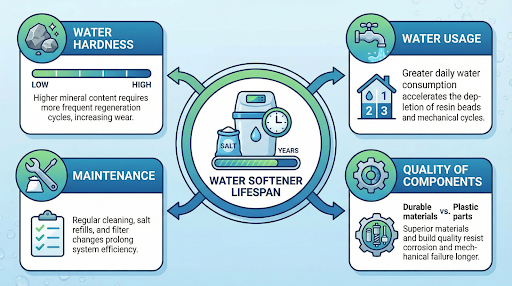
The biggest villain is hard water itself. If your water is ridiculously hard (like, “why does my soap turn to chalk?” hard), your softener works overtime. That constant cycling wears out the resin beads and valves faster.
Another sneaky culprit is iron and sediment. Think of them as tiny sandpaper particles that grind down your softener’s internals. If you’ve got rusty-looking water, you’ll need a pre-filter to save your softener from an early grave.
And let’s not forget salt quality. Using cheap, dirty salt is like putting low-grade gas in a sports car. It works, but you’ll get sludge and premature failure. Splurge on clean salt, your softener will thank you with a longer life.
The Main Parts That Die First
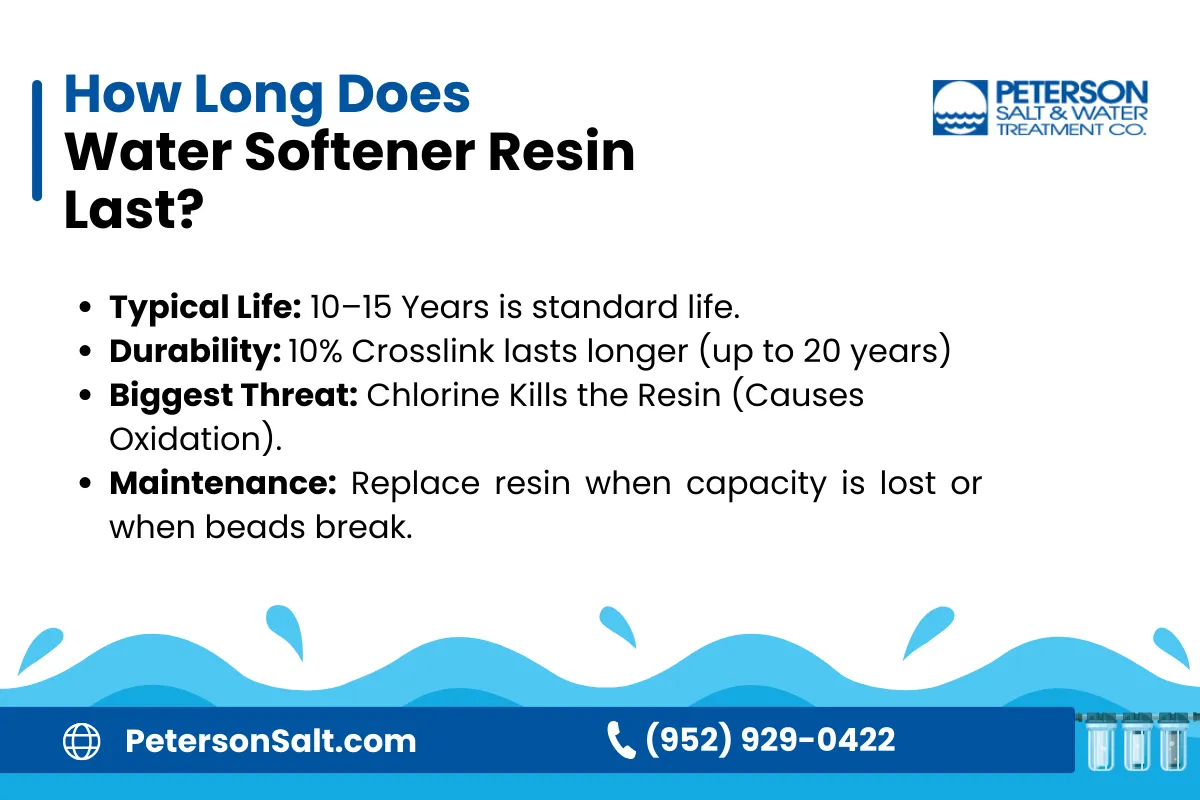
The resin beads are the heart of your softener. After years of swapping calcium for sodium, they can get worn out or coated in gunk. Most beads last about 10 to 15 years, but if your water is super hard, you might need to replace them sooner.
The control valve is the brain. If it’s mechanical, it can last decades. If it’s an electronic board, it might get fried by power surges or moisture. A $200 valve replacement can breathe new life into a softener that’s otherwise fine.
The brine tank (the salt holder) is basically a plastic bucket. It can crack or get salt-mush buildup over time, but it’s cheap and easy to swap out. Don’t let a broken tank kill the whole party.
Signs Your Softener Is Nearing Retirement
You might notice hard water spots returning on your dishes. Or your skin feels less silky after a shower. These are classic “my softener is tired” signals.
 How Long Does Water Softener Resin Last?
Another red flag: your salt usage suddenly spikes. If you’re refilling the tank twice as often, the resin might be exhausted or the valve is stuck in regeneration mode. Time to call a pro or start shopping.
And if you hear strange noises—like grinding, clicking, or a sad metallic groan—your softener is basically saying, “I’m getting old, buddy.” Don’t ignore it.
How to Make It Last Longer
First, use a pre-filter. If your water has sediment, iron, or chlorine, filter it out before it touches your softener. This is the single best thing you can do to extend its life.
Second, clean the brine tank once a year. Dump out old salt, scrub the sludge, and refill it. It’s not fun, but it’s cheaper than a new softener. Think of it as a spa day for your appliance.
Third, don’t let it run dry of salt. Running a brine tank empty can damage the resin and valve. Set a reminder on your phone—your softener loves consistency.
Finally, flush the system with a resin cleaner every few years. This removes iron and mineral buildup that slowly chokes the beads. Your softener will feel like it just had a detox smoothie.
When to Replace vs. Repair
If your softener is under 10 years old and the problem is a broken valve or motor, repair it. You’ll get another 5 years out of it, easily.
 How Long Should a Water Softener Last? Lifespan and Signs of Failure
If it’s over 12 years old and the resin is shot, just replace the whole unit. Newer models are more efficient, use less salt, and often have smarter controls. Don’t throw good money after old worn-out parts.
And if the tank is cracked or leaking? Replace immediately. A flood in your basement is not a fun Tuesday. Trust me, I’ve been there.
The Surprising Truth: Water Quality Varies Wildly
Some people say their softener lasted 25 years. Others complain theirs died at year five. The difference is not bad luck—it’s water chemistry. If you have low hardness and no iron, your softener lives a cushy life.
If you own a home with well water, expect a shorter lifespan. Well water often has manganese, iron, and bacteria that attack resin beads. You might need a whole-house filtration system to keep your softener happy.
Bottom line: test your water every year. Knowledge is power, and it saves you from premature equipment funerals.
Final Thoughts: Don’t Overthink It
A water softener is a hardworking hero, quietly fighting scale and soap scum for a decade or more. It doesn’t ask for much—just some clean salt, a little TLC, and maybe a pre-filter. Treat it right, and it’ll outlast your enthusiasm for doing dishes.
And if your softener does eventually call it quits? That’s okay. It had a good run. You’ll get a new one, and that softener will also be your loyal sidekick. Technology gets better, and so will your water.
Here’s the uplifting part: Every softener eventually retires, but your soft water life doesn’t have to. So give your current unit a pat (or a gentle tap) and thank it for fighting the good fight. Whether it goes out in a blaze of glory or a quiet sigh, you’ll always have soft, silky showers. And that, my friend, is a reason to smile.
