Well Water Smells Like Sewage How To Fix

So, you turn on the tap, expecting a refreshing glass of water, and instead, you’re hit with a smell that belongs in a garbage truck’s lunchbox. Ugh. That “well water smells l...

So, you turn on the tap, expecting a refreshing glass of water, and instead, you’re hit with a smell that belongs in a garbage truck’s lunchbox. Ugh. That “well water smells like sewage” problem is not just a party foul—it’s a full-on houseguest who’s overstayed its welcome.
Don’t panic, and definitely don’t take a big gulp to confirm. I’ve been there, and trust me, the smell is enough to make you consider switching to bottled water for life.
The good news? This stinky situation is usually fixable without calling in a wizard or selling a kidney. Let’s break down why your water smells like a swamp and how to kick that stench to the curb.
Must Read
The Big Stinky Culprit: It’s Usually Bacteria
If your well water smells like sewage, the number one suspect is bacteria growing inside your plumbing system. Think of it as a tiny, invisible rave happening in your pipes, and the music smells like rotten eggs.
This often happens because of a layer of slime (called a biofilm) that builds up inside your water heater or pipes. It’s not dangerous in small amounts, but it’s definitely not what you want in your morning coffee.
Another common cause? A dead animal in your well. I know, I know—gross. But sometimes a critter takes a dive, and the decomposition seeps into your water supply. That smell is a major red flag you can’t ignore.
The Water Heater Is Always the First Suspect
Before you dig up your entire yard, check your water heater. That big metal can in your basement is often the epicenter of the stink. Bacteria love the warm, cozy environment, especially if the heater is set below 120°F (49°C).
Turn up the thermostat to 140°F (60°C) for a few hours to kill the bacteria. Just don’t accidentally boil yourself in the shower—warn your family first! This is called “thermal shocking,” and it costs you nothing but a higher electric bill for one day.
After the heat treatment, flush the water heater by draining a few gallons from the bottom valve. This clears out any dead bacteria that are now floating around, saying “oops, we’re sorry.”
The “Sulfur Smell” vs. “Sewage Smell” Mix-Up
Let’s clear up a common confusion: a sewage smell (think: poop) is different from a rotten egg smell (sulfur). Both are nasty, but they have different fixes. Sewage smell usually points to bacteria or organic matter (like dead critters).
Rotten egg smell is typically hydrogen sulfide gas naturally present in your groundwater. The fix for that might involve a chemical feed pump or an aeration system—fancy stuff for a plumber to handle.
For the purpose of this article, we’re tackling the true sewage stink. If your water just smells like a flatulence convention, you might have sulfur issues instead. But don’t worry—we’ve got you covered later.
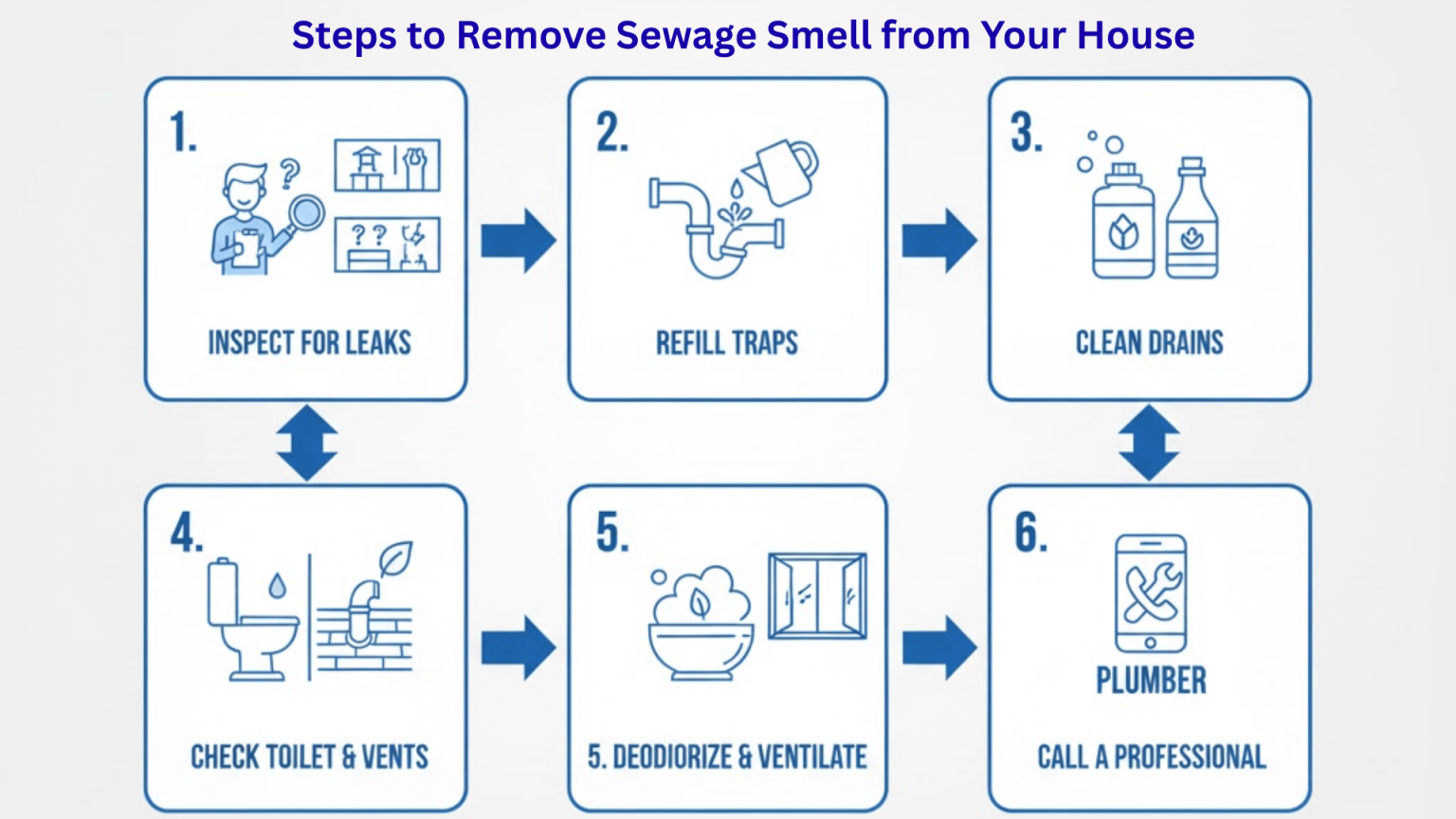 9 Reasons Your House Smells Like Sewage - A House in the Hills
The Quick & Dirty Fix: Shock Chlorination
When bacteria is the problem, you bring in the heavy artillery: bleach. Yes, good old household chlorine bleach. You’re going to “shock” your well the same way you’d shock a swimming pool.
For a deep clean, pour about a gallon of unscented bleach (the plain stuff, no lemon-fresh nonsense) directly into your well. Let it sit for 12-24 hours, then flush every outdoor faucet until the bleach smell is gone.
This will kill any bacteria, algae, or slime that’s throwing a sewage-scented party in your pipes. Fair warning: your water will smell like a swimming pool for a day, but that’s way better than sewage.
When the Well Itself Is the Problem
Sometimes the issue isn’t your pipes—it’s the well itself. If you have a shallow well, surface water (like runoff from a compost pile or septic tank) might be seeping in. That’s a big “uh-oh.”
Check the well cap for cracks or gaps. Mice, frogs, and other tiny explorers can squeeze in and, ahem, contribute to the smell. Seal any openings with silicone caulk—your nose will thank you.
If you suspect a leak from your septic tank (yikes), call a professional immediately. This is not a DIY situation unless you enjoy playing “Will I get sick today?” with your water supply.
The Anode Rod: Your Water Heater’s Strange Secret
Inside your water heater is a metal rod called an anode rod. It’s there to protect the tank from rust, but sometimes it starts reacting with bacteria and creates a sewage smell. It’s like the rod is secretly a prankster.
You can replace the standard magnesium anode rod with an aluminum or powered anode rod. This swap stops the chemical reaction that feeds the stink bacteria. It’s a $30 fix that takes 20 minutes.
If you’re not handy, just show this paragraph to a handyman. It’s a common repair that feels like magic—one moment you have stink water, the next you have neutral water. Hallelujah.
 Well Water Smell Like Sewage? How To Fix In Minutes! - Freedom Residence
The Maintenance Routine to Keep Smells Away
Once you’ve fixed the smell, you don’t want it coming back. Regular well maintenance is like brushing your teeth—boring but essential. Test your water for bacteria every year, especially after heavy rains.
Flush your water heater every 6 months. It’s as easy as hooking up a garden hose and letting a few gallons drain out. Do it while watching a YouTube video about something else, and boom—done.
Also, keep your well cap tight and the area around it clear of leaves, grass clippings, and dead goldfish you buried last summer. Clean surroundings mean clean water.
When to Call a Pro (And Not Your Cousin Dave)
If you’ve tried everything and the smell still haunts your faucets, it’s time to swallow your pride and call a licensed well contractor. They have gadgets that can see inside your well and test the water chemistry.
Don’t call your cousin Dave who “once fixed a pipe.” This is your drinking water we’re talking about. A pro might install a reverse osmosis system or a UV filter that turns your stink water into a crisp mountain stream.
Consider it an investment in your nose’s happiness. Plus, you’ll get to tell dinner guests, “Oh, I had a sewage smell problem, but my contractor fixed it.” Sounds very adult and impressive.
Uplifting Conclusion: You’ve Got This!
Look, dealing with well water that smells like sewage is like finding a spider in your salad—gross, but totally fixable. You now have a game plan: check the water heater, shock the well, swap the anode rod, and call a pro if needed.
Remember, every well owner has a “stinky water story.” Yours will soon be a funny tale you tell while serving fresh, clean water to friends. They’ll never guess your plumbing used to smell like a landfill.
So go forth, brave well-water warrior! Shock that system, flush that heater, and reclaim your confidence. Your water may have smelled like a sewer, but you smell like victory. Cheers to clean, odorless, delightful hydration.
