How To Bypass Water Softener Temporarily

Imagine this: you’re knee-deep in a home project. Suddenly, your water softener starts acting like a diva. It’s beeping, leaking, or just plain refusing to work. You don’t hav...
Imagine this: you’re knee-deep in a home project. Suddenly, your water softener starts acting like a diva. It’s beeping, leaking, or just plain refusing to work.
You don’t have time for a full fix right now. You just need water—now. The good news? Bypassing your water softener is ridiculously easy. It’s like giving your plumbing a coffee break.
Why Would You Even Want To Do This?
First, let’s talk about the why. Maybe you’re watering your prize-winning petunias. Soft water is actually bad for plants—it’s too salty. Your tomatoes will thank you for the bypass.
Must Read
Or perhaps you’re filling a kiddie pool. Soft water leaves a slimy, soapy film. Kids hate that. So do your patio tiles.
Then there’s the emergency: a broken water softener. You need water for a shower, but the tank is clogged with resin beads. You don’t fix a clogged toilet with a book—you bypass the problem.
How To Spot Your Bypass Valve (It’s Hiding in Plain Sight)
Look at your water softener. Do you see two or three valves near the top? They’re usually red, blue, or the same boring white as the pipes. Those are your golden tickets.
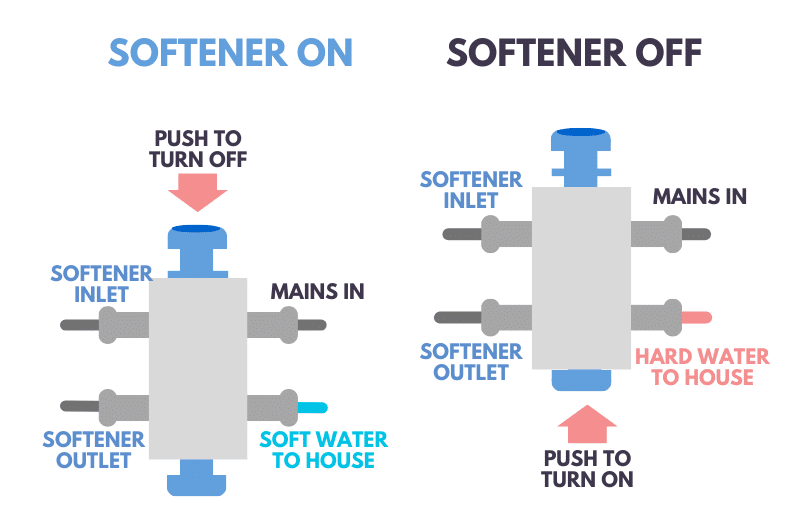
The typical setup is a three-valve bypass. Two are on the inlet and outlet pipes. One is a little bridge valve connecting them. Think of it as a secret handshake for your plumbing.
If you only have one valve, it’s a single-valve bypass. That’s even easier. It’s usually a knob you turn 90 degrees. Boom. Done.
The Naked (But Totally Safe) Bypass Procedure
Here’s the fun part. You’re about to become a temporary plumber. No tools required. No adult supervision needed—but maybe tell someone so they can laugh at your effort.
Step one: Locate the bypass valve(s). If you’re saying, “Where? I’m blind,” trace the pipes back from the softener tank. They always start there.
Step two: If you have a three-valve system, close the two valves on the inlet and outlet pipes. Turn them clockwise until they stop. Don’t hulk them—just snug.
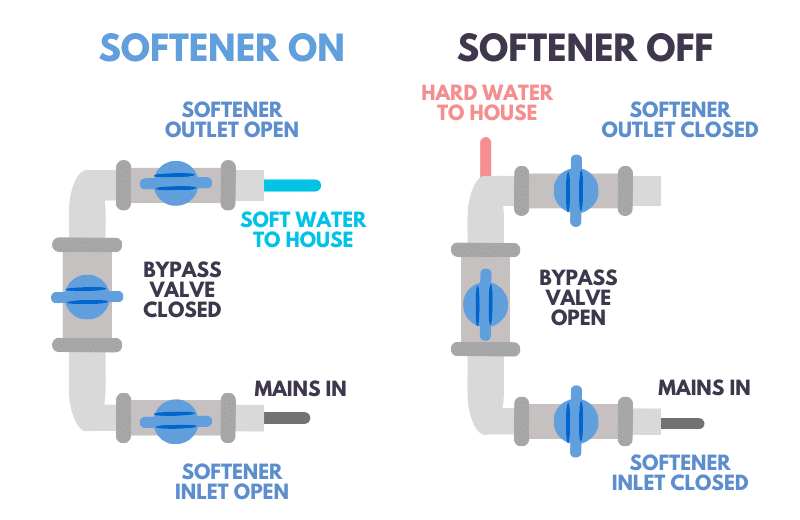 How to Bypass a Water Softener (Diagram Included)
Step three: Now open the bridge valve. This is the short pipe connecting the other two. Turn it counterclockwise. You are now physically rerouting water around the softener. It’s magic.
Step four: For a single-valve system, just rotate the big knob or lever to the “bypass” position. The arrow on the valve will point away from the tank. If you see a picture of a circle with a line through it, that’s your “off” symbol for the softener.
A Quirky (And Critical) Fact About Hard Water
When you bypass, you get hard water. That’s the stuff that leaves white spots on your glasses. It’s also the reason your great-grandma had hair like a lion—full of minerals.
Funny thing: hard water actually tastes better. Seriously, taste tests show people prefer the mineral zing. Your tap water might now taste like a spring in the Alps.
But be warned: your soap won’t lather as well. You’ll feel like you’re washing your hands with a sad brick. That’s the price of temporary freedom.
What To Expect After You Bypass
First, run a faucet for about two minutes. This flushes out the soft water sitting in your pipes. You’ll probably hear a few gurgles—that’s the sound of success.
Now, use the water as you normally would. Wash dishes. Take a shower. Notice how your hair feels a bit “crunchier”? That’s the calcium and magnesium doing their thing.
If your bypass valve drips a little, don’t panic. That’s normal. Put a dish towel under it and pretend it’s a quirky pet. It will stop when you return the system to service.
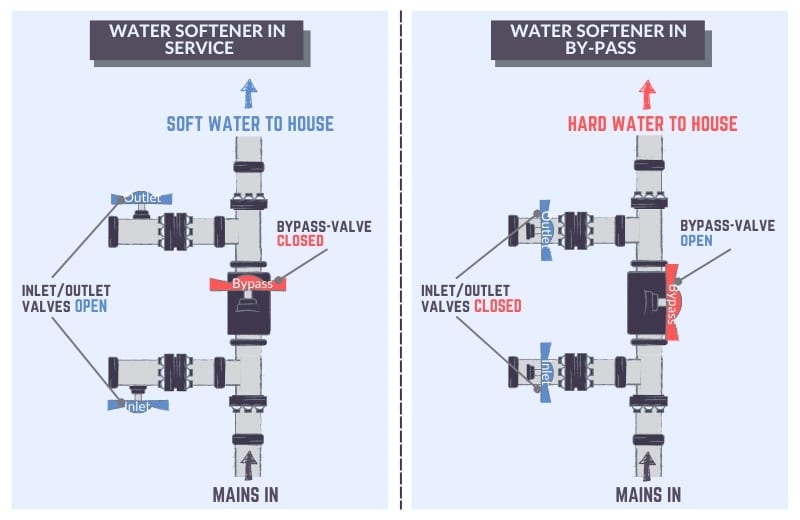 How to Bypass a Water Softener (Diagram Included)
The Reverse Bypass (Or How To Undo Your Genius)
When you’re ready to re-engage your softener, just reverse the steps. Close the bridge valve. Open the inlet and outlet valves. For single-valve, turn the knob back to “service.”
Do it in the right order. If you open the inlet first while the bridge is still open, you might get a mini geyser. Not dangerous—just embarrassing. It’s the plumbing version of a burp.
Fun, Weird, And Slightly Dangerous Tricks (Don’t Do These)
Some people try to bypass by just unplugging the unit. Big mistake. That fills the tank with bacteria. You’ll grow a science experiment, not drinking water.
Others use tape. Or a hammer. Please don’t be that person. The bypass valve is designed to be the only point of control. Honor the valve.
And here’s a quirky truth: the bypass valve is usually installed upside-down by accident. If yours is, congratulations. You now own a plumbing oddity. It still works, but it looks silly.
Why This Topic Is Secretly Hilarious
Think about it. We spend thousands of dollars to remove minerals from water. Then we bypass to put them back. We are basically fighting nature with a lever.
It’s like buying a super-soft chair, then sitting on the floor because you miss the hard floor. We’re complicated creatures.
And the best part? Your bypass valve could be decades old. That little plastic knob has been waiting its whole life for this moment. You just gave it purpose.
So go ahead. Give your water softener a time-out. Bypass it, laugh at the hard water spots, and enjoy your temporary mineral bath. You’ve earned it.
