How To Make Charcoal For Filtering Water

So, you want to make your own charcoal for filtering water? Sounds like a weekend project from a survivalist blog, right? But honestly, it’s way simpler than you think, and th...
So, you want to make your own charcoal for filtering water? Sounds like a weekend project from a survivalist blog, right? But honestly, it’s way simpler than you think, and the science behind it is basically magic you can hold in your hand.
Think of it this way: that lump of black, crumbly stuff you toss on the grill is actually a super-powered sponge for impurities. It’s not just for burning burgers; it’s one of the oldest water filters known to humanity. And the best part? You can absolutely make it in your own backyard.
Why Bother? Isn’t Store-Bought Easier?
Sure, you can buy activated charcoal at the store. But making your own is oddly satisfying, like baking sourdough from scratch or carving a spoon. You control every step, and you get that smug feeling of self-reliance.
Must Read
Plus, it’s a fantastic way to repurpose wood scraps or even coconut shells. Ever wonder why your camping trip water tastes like plastic? That’s because store filters sit in warehouses. Homemade charcoal? That’s a story you can tell.
The Secret: Oxygen Starvation
Here’s the deal: wood is mostly carbon, but it’s also full of water and volatile goo that makes it taste funky. To make good filter charcoal, you need to "burn" the wood without actually letting it catch fire. Think of it like a controlled, panicked burnout in a sealed container.
You’re essentially baking the wood in its own smoke. This process, called pyrolysis, drives off the nasty stuff while leaving behind a pure, porous carbon skeleton. That skeleton is what grabs the bad guys—chemicals, odors, and some bacteria—like a magnet.
Your Backyard Pyrolysis Lab
Grab a metal paint can (clean, please!), a shovel, and some dry hardwood—oak, maple, or even fruitwood work great. Avoid softwoods like pine; they leave too much resin and taste like a Christmas tree threw up in your glass.
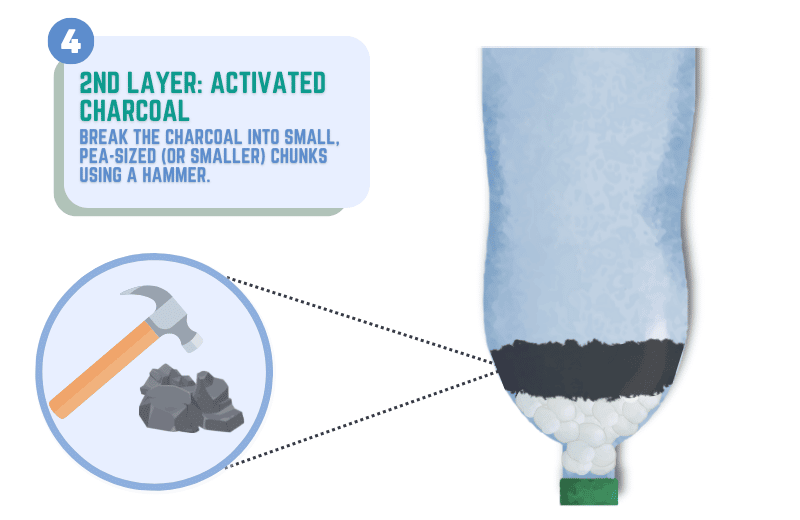
Drill a small hole in the lid of the can. Stuff the can with wood chunks, then shut the lid tight. Now, build a small fire around the can, or bury it in a bed of glowing coals. Let it sit for two to three hours while the can turns into a mini volcano of smoke.
 How to Make a Homemade Water Filter (4 Easy DIY Projects)
During that time, the wood is screaming "let me out!" but the tiny hole is the only exit. That’s where the magic happens—the smoke escapes, but the carbon stays locked inside, creating a labyrinth of microscopic tunnels. Actually, it’s more like a fossilized coral reef made of carbon.
Cooling Down Without the Crunch
This is the moment most beginners mess up. Do not open the can while it’s hot! If you let fresh air rush in, the charcoal will instantly combust into a pile of white ash. You’ll end up with a very sad, very hot bucket of nothing.
Let the whole thing cool for at least 24 hours. When you finally pop the lid, you’ll see beautiful, shiny, black charcoal chunks that ring like a bell when you tap them. That’s the sound of success, my friend.
Activation: The Glow-Up
Plain charcoal works okay, but activated charcoal is the gold standard. Activation is just a fancy word for "make it even more porous." You do this by grinding the charcoal into a fine powder, then mixing it with a solution of calcium chloride (from pool supply stores) or lemon juice.
Boil the mixture for about 30 minutes, then rinse it with clean water until the pH is neutral. Dry it in the sun. The result is a powder that has a surface area the size of a football field per gram. No joke—it’s that porous.
 DIY Charcoal Water Filter Instructions
Building Your Filter
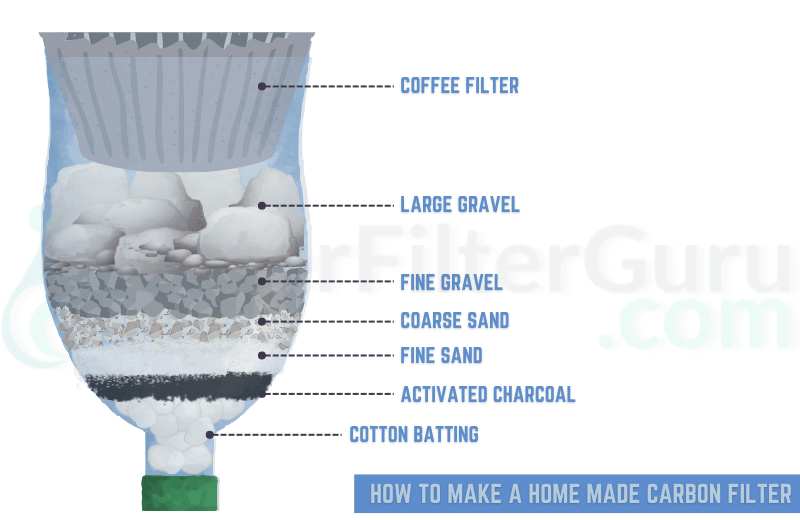
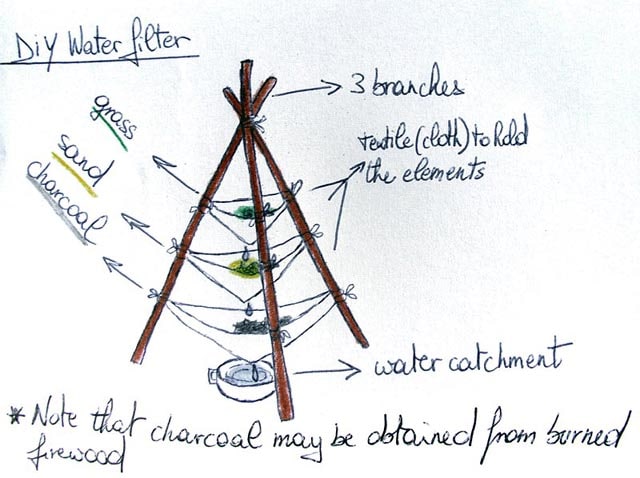
Don’t expect to run river water through a sock full of this stuff. For a DIY water filter, use a plastic bottle cut in half. Layer in: small rocks, then sand, then a thick layer of your charcoal, then more sand, and a coffee filter on top.
Pour in murky water and watch it drip out clearish. It won’t remove viruses (you’ll need to boil the end result), but it will knock out heavy metals, chlorine, and bad tastes. It’s like having a Brita filter that you built from a tin can, which is rad.
Is It Actually Safe?
Look, I’m not a chemist, and you shouldn’t drink filtered swamp water without boiling it first—ever. But for camping, emergency prep, or creating better-tasting tap water? Yes, this method works.
I use mine to remove the "tap essence" from my morning coffee. It makes the brew taste like I bought it from a hipster cafe in Portland. Honestly, half the fun is the process itself—watching smoke snake out of a paint can while you roast marshmallows over the same fire.
The Takeaway
Making charcoal for filtering is a primitive skill that feels deeply satisfying. You get a material that’s lighter than a cloud, blacker than a moonless night, and more useful than a Swiss Army knife in a power outage.
Why buy a plastic filter at the store when you can burn a log, crush it, and turn it into a water-cleaning superhero? Give it a try. Your future self, sipping clean water from a jar you made with fire and dirt, will thank you.
