How Much Water Per Day Is Too Much

My friend Dave once decided to “hack” his health by drinking a gallon of water a day. Within three days, he was peeing so often he looked like a caffeinated hummingbird, and b...

My friend Dave once decided to “hack” his health by drinking a gallon of water a day. Within three days, he was peeing so often he looked like a caffeinated hummingbird, and by day four, he had a headache so bad he Googled “brain swelling.” Turns out, Dave had accidentally stumbled into the danger zone of overhydration—and he’s not alone.
We’re all told to chug water like it’s a miracle cure, but here’s the secret nobody shares: yes, you can drink too much. It’s a thing, and it’s called hyponatremia, which is just a fancy way of saying you’ve diluted your blood’s sodium into a sad, watery soup.
So, how much is too much? Let’s dive in, but maybe don’t bring your gallon jug. (You’re welcome.)
Must Read
The “Magic Number” Myth
You’ve heard the “8x8” rule: eight glasses of eight ounces each. That’s about 1.9 liters, which is fine for most people. But fine isn’t the same for a marathon runner, a desk jockey, or your friend who lives in Arizona.
Your body isn’t a calculator—it’s a picky houseplant. Needs vary by weight, sweat, and even the saltiness of your lunch. Too much for one person might be a refreshing sip for another.
Think of it like this: if you chug a liter in ten minutes, your kidneys will panic. They can only pee out about 0.8 to 1.0 liters per hour. Go over that, and the water starts crashing your cells’ party.
Signs You’ve Crossed the Line
Your body has a loud, annoying alarm system for overhydration. First comes that nausea—like you’re on a boat in a storm, but you’re lying on your couch. Then your head throbs because your brain cells are literally swelling from too much water.
If you start feeling confused or foggy, that’s your brain waving a white flag. In extreme cases, you can seize or slip into a coma. Yes, from water. It’s rare, but it happens—usually in marathons or water-drinking contests (please don’t enter those).
One clue: your pee should be pale yellow, not clear as vodka. Clear is your body saying, “Dude, we’re drowning.”
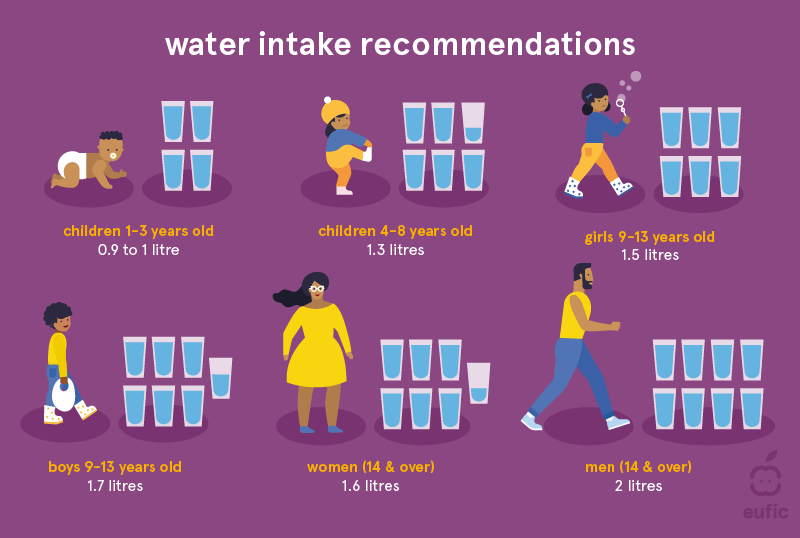 Recommended Water Intake Recommended Values And Statistics For
The Irony of the Wellness Trend
We’re obsessed with “flushing toxins” and “staying hydrated,” but we forget that water isn’t magic—it’s chemistry. Balance is the goal, not a gold medal in consumption. I swear, if water had a publicist, it would tell us to chill out.
Here’s the kicker: your food contains water too. That salad? About 90% water. Your coffee? Mostly water. You’re probably already hydrating without trying. (See? You’re a genius.)
The real problem is that we drink out of anxiety, not thirst. We see a water bottle and think, “Better sip or I’ll die.” Spoiler: you won’t die. You’ll just pee a lot and feel bloated.
So, What’s the Safest Guide?
Forget the gallon challenge. Instead, listen to your body’s dullest but most reliable signal: thirst. If you’re thirsty, drink. If you’re not, stop. It’s that simple, but we overcomplicate it because we love rules.
For a rough estimate, men need about 3.7 liters total per day (including food), and women about 2.7 liters. But that’s total, not just from a bottle. And if you’re sweating buckets at the gym, add a bit, but don’t chug a half-gallon in ten minutes.
Color check: dark yellow? Drink. Clear? Stop. Pale yellow? You’re a hydration wizard. The secret is moderation, which is boring but saves you from ending up in an ER where doctors have to explain that you drank yourself sick.
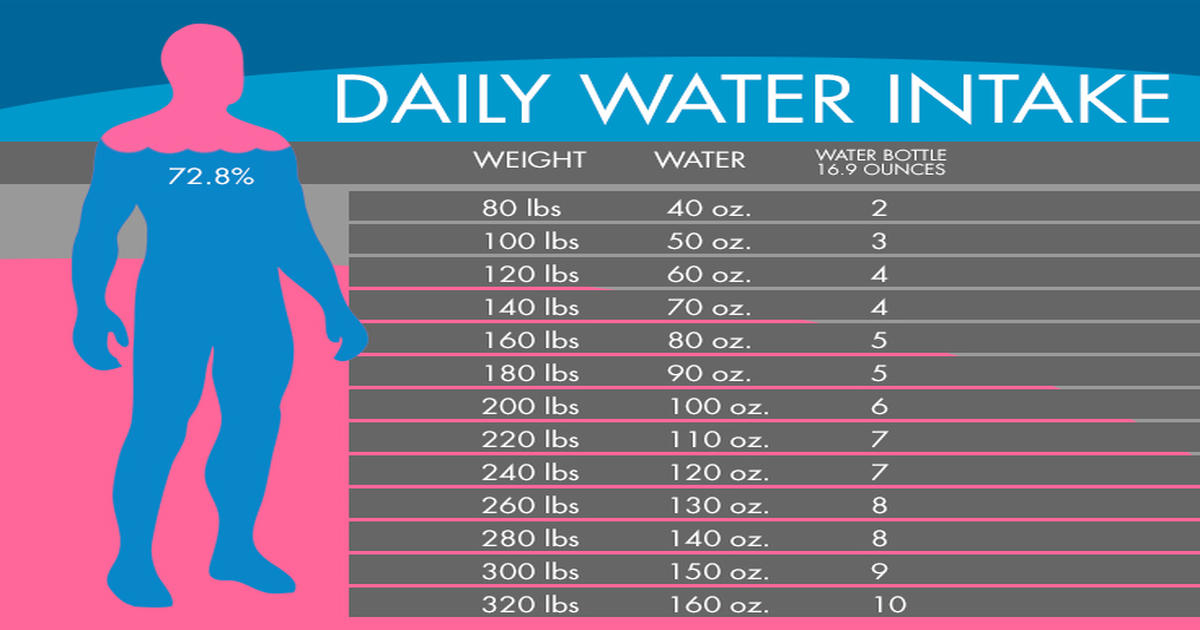 Water Consumption Per Day Chart – LFMP
When Overhydration Gets Real
I remember a story about a woman who drank too much water during a weight-loss cleanse and ended up in the hospital with hyponatremia. She thought she was “purifying” herself. Instead, she spent the night getting IV fluids to fix her sodium levels—the irony.
Marathon runners are classic victims. They guzzle water during a race, sweat out salt, and then—bam—their sodium crashes. Electrolytes matter. That’s why sports drinks exist, and they’re not just for marketing. (Okay, partly for marketing, but you get the point.)
Bottom line: if you’re running a marathon, don’t skip the salt. If you’re binge-watching Netflix on a rainy day, you’re probably fine with a normal glass.
A Final, Sardonic Tip
Here’s my unsolicited advice: keep a water bottle on your desk, but don’t treat it like a challenge. Sip when you feel like it. If you’re forcing yourself to swallow because “it’s time,” that’s a red flag. You’ll know you’ve had too much when you start feeling full, sloshy, and annoyed at how often you need to pee.
One more thing: if your pee is literally clear and you have a headache, eat a pretzel. The salt will help. Your body isn’t a machine; it’s a drama queen that needs a little sodium to function.
So, drink up, but don’t drown in virtue. Your kidneys will thank you, and your friends won’t have to hear you talk about your “water hack.” Dave stopped his gallon crusade, by the way. He now drinks like a normal human, and his bathroom break schedule is back to a respectable fifteen minutes.
