What Is Nsf Certified Water Filter

Ever stared at a wall of water filters in the store and felt your brain turn to mush? You’re not alone. There’s a jungle of claims out there—removes this, reduces that—but who...
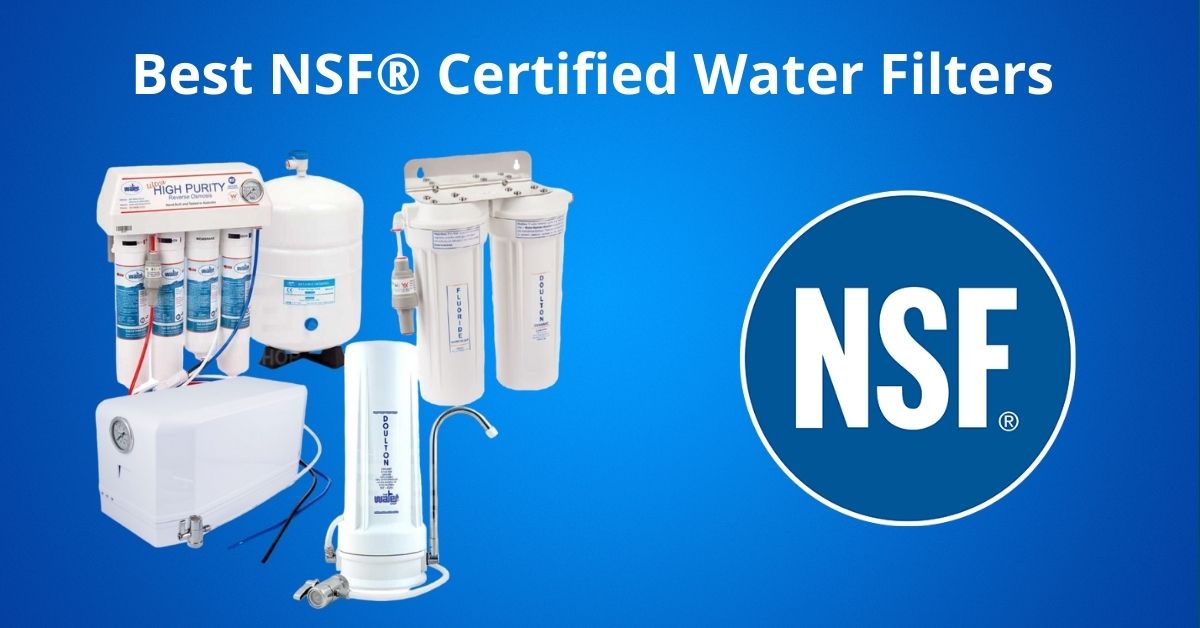
Ever stared at a wall of water filters in the store and felt your brain turn to mush? You’re not alone. There’s a jungle of claims out there—removes this, reduces that—but who’s actually checking the homework? That’s where the NSF certified label comes in, and honestly, it’s way cooler than it sounds.
NSF stands for NSF International, a group of public health and safety nerds who’ve been around since 1944. They don’t make filters; they test them like a hawk eyeing a field mouse. When a filter says “NSF certified,” it means a third-party lab actually proved it does what it claims. No hype, no tricks—just proof.
So, what makes it different from the generic “tested” claims?
Imagine you’re hiring a babysitter. Would you trust their own claim that they’re “great with kids”? Or would you want to call their references and watch a few hidden-camera tapes? NSF certification is that hidden-camera footage. It’s not just a one-time check either—they pop in unannounced to the factory every year to make sure the filter still performs.
Must Read
This means your water isn’t just running through a cartridge of clever marketing. It’s actually removing the stuff you worry about: lead, chlorine, cysts like Cryptosporidium, and even certain pesticides. The label will tell you exactly which contaminants it was tested for—no vague promises. Pretty cool, right?
But wait—doesn’t every filter do that? Eh, not exactly.
Some cheap filters might reduce a few big particles but leave behind the microscopic bad guys. Others might work great for a month, then fizzle out faster than your phone battery. NSF certification assures you that the filter keeps working for its entire rated lifespan. Think of it as a marathon runner with a pacemaker, not a sprinter who collapses at the finish line.
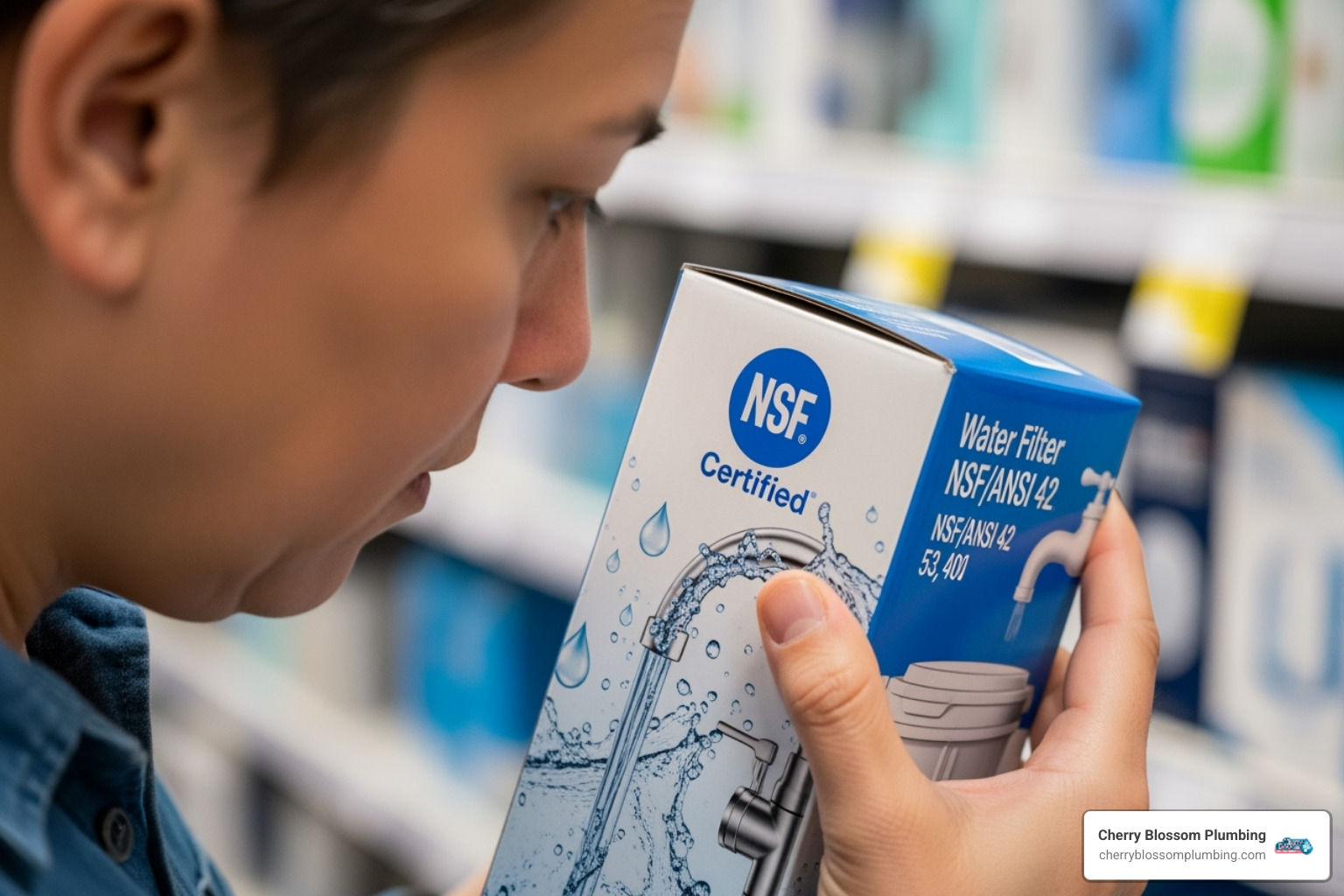
You’ll see different NSF standards like 42 (for taste and odor), 53 (for health-related stuff like lead), 401 (for emerging contaminants like pharmaceuticals), or P473 (specifically for PFAS or “forever chemicals”). If your filter is certified under NSF/ANSI 53, for example, you know it’s been tested to reduce things that could actually make you sick. That’s not just cool—it’s a tiny shield on your counter.
 Point of Use Water Filter Arlington VA: Top 3 Essential Choices
Why should you, the busy human, care?
Because you are not a water chemist. Unless you’ve got a home lab and a lot of spare time, you can’t test your tap water every Tuesday. NSF certification hands you the trust on a silver platter. It’s like buying a helmet that says “CPSC certified” for biking—you don’t question it, you just know it’ll save your noggin.
Plus, it saves you money in the long run. A certified filter that actually works means you’re not wasting cash on fancy plastic that does nothing. And let’s be real—plastic waste is bad enough without drinking crummy water through it.
How do you spot the real deal?
Look for the tiny blue circle or the words “NSF certified” right on the box or filter cartridge. But don’t stop there—check the model number against the NSF database online. Some sneaky brands put “tested to NSF standards” but never actually paid for the full certification. That’s like saying you “trained for a marathon” while binge-watching Netflix. Run the number; it takes 20 seconds.
 NSF Certification: Boost D2C Water Purifier Trust
And here’s a fun comparison: think of NSF certification as the Michelin star of water filters. Any restaurant can claim to make great pasta, but a Michelin star means a secret inspector came, ate the whole meal, and didn’t get food poisoning. Your water filter’s star tells you the inspector drank the entire tank.
So, is an NSF certified water filter worth the extra few bucks?
Ask yourself this: do you trust the smiling face on the bottle, or do you want to see the lab report? If you’re like me, you want the report—but you also want to keep it simple. NSF certification is that sweet spot where curiosity meets chill confidence. You install it, you forget it, and your morning coffee tastes like actual coffee, not a chemistry set.
Whether you’re chasing cleaner hydration, better tea, or just peace of mind about that slightly metallic tap, this little label is your secret weapon. It’s not a miracle; it’s just science you can trust. And that, my friend, is something to raise a glass to.
So next time you’re water-filter shopping, give a nod to the NSF folks. They’re the quiet heroes making sure your glass is half full of actual, certified goodness. Cheers to that.
