How To Know If You Have Lead Pipes

Ever wondered what’s lurking inside your walls, beyond the peeling paint and creaky floorboards? I’m talking about the pipes that bring water to your tap. It’s a bit of a myst...

Ever wondered what’s lurking inside your walls, beyond the peeling paint and creaky floorboards? I’m talking about the pipes that bring water to your tap. It’s a bit of a mystery, and today we’re playing detective on a very specific suspect: lead.
Why Should You Even Care?
Look, lead pipes aren’t just some ancient history trivia. They’re still out there, hiding in millions of older homes. And here’s the thing—lead is a silent, stealthy squatter that can leach into your drinking water.
You can’t see it, taste it, or smell it. That’s what makes it so sneaky, right? But don’t worry—figuring it out is easier than you think, and honestly, it’s kind of fascinating once you start looking.
Must Read
The Scratch Test: Your First Clue
Grab a coin or a house key and head to your basement or under the kitchen sink. Find the pipe that feeds your main water line—usually the one coming through the floor or wall.
Now, give it a gentle scratch with your metal object. If the pipe is lead, you’ll see a shiny, silver-gray streak—like a pencil mark on a smooth rock. If it’s a dull, coppery orange, that’s copper, and you’re probably safe.
Think of it like checking if your chocolate bar is real or fake: the shine tells the story. Silver and soft? That’s lead’s calling card.
The Magnet Trick: A Fun Little Shortcut
Here’s a party trick for your plumbing. Grab a small refrigerator magnet and hold it against your pipe. Most metal pipes aren’t magnetic—copper and lead definitely aren’t.
If the magnet sticks, you’ve got steel or galvanized iron, not lead. But if it falls right off? That doesn’t rule out lead, but it keeps the mystery alive. It’s like a magic trick where the coin just… disappears.
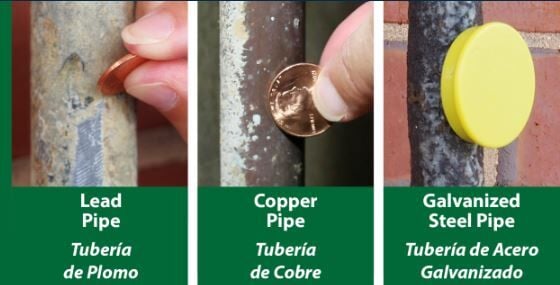 Do you have lead pipes leading to your property? The city of Greensboro
The Sound Test: Listen Up
Tap the pipe gently with a metal spoon or a wrench. Lead makes a dull, soft thud, almost like tapping a thick rubber eraser. Copper or steel? They ring like a bell—clear, sharp, and loud.
Close your eyes and listen. It’s like comparing a wooden drum to a metal gong. Your ears are actually better detectives than you gave them credit for.
Size Matters (And So Does Age)
Lead pipes are usually thicker and more swollen than modern ones, often with a little bulbous joint where they connect. They also tend to be from homes built before 1986, when lead was banned in plumbing.
If your house was built in the 1950s or earlier, you’re in the prime suspect zone. It’s like finding a vintage car in a garage—it’s cool, but you should probably check the engine.
The Water Test: The Science Lab Approach
If you’re still not sure, or if you just love a good experiment, buy a home lead test kit from a hardware store. They’re cheap—like, coffee-and-a-donut cheap. You just rub a swab on a scratch, and if it turns red, you’ve got lead.
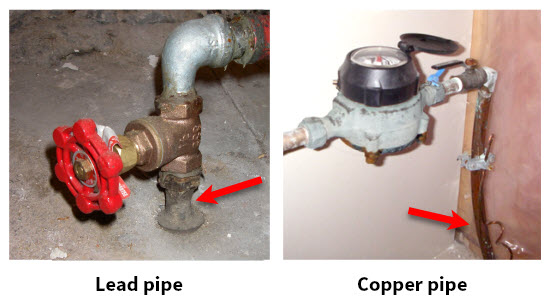 Identifying lead pipes and fixtures - Water - Water and Waste - City of
For the real gold standard, send a water sample to a certified lab. It costs about $20–$50, and they’ll tell you the exact number. It’s like sending your water in for a DNA test, but way less dramatic.
What If You Find Lead? Don’t Panic
Okay, so you found a suspect. That doesn’t mean you’re doomed to drink poison. Lead is only dangerous if it actually gets into your water, and that happens when water sits in the pipes for hours.
Your first move: flush the tap for 30 seconds to a minute before drinking. It’s like waking up your pipes and saying, “Hey, clear out the stale stuff.” Also, use cold water for drinking and cooking—hot water leaches more lead. Simple as that.
The Big Picture: It’s Actually Kind of Cool
Here’s the thing: plumbing is our silent infrastructure, the hidden veins of our homes. Knowing what your pipes are made of is like learning the secret language of your house. You become the home whisperer.
Plus, it’s a great conversation starter at parties. “Oh, you’re still on copper? I discovered my entire water system is made of historically significant lead.” Sounds way more impressive, doesn’t it?
So grab your keys, your magnet, and your curiosity. Go scratch a pipe. You might just uncover a hidden story—and protect your health while you’re at it.
