How To Set Water Softener Hardness

So, you’ve got a water softener. Nice. You’re probably noticing how your soap actually lathers now, and your dishes don’t look like they’ve been through a dust storm. But lurk...
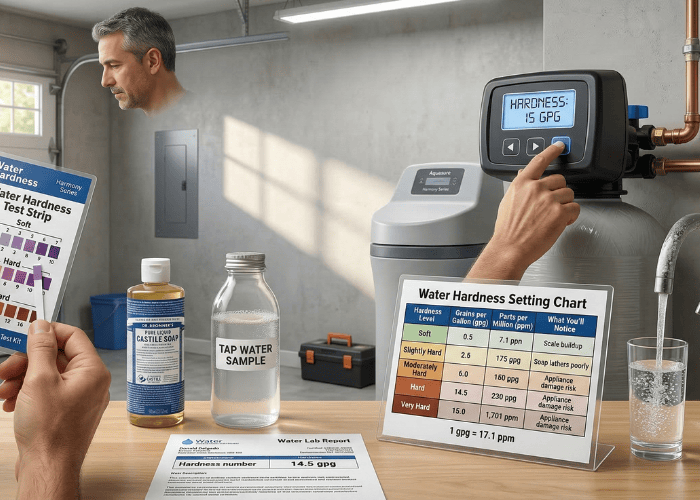
So, you’ve got a water softener. Nice. You’re probably noticing how your soap actually lathers now, and your dishes don’t look like they’ve been through a dust storm. But lurking in the background is this little setting: “hardness.” And you’re like... what do I even put there?
It feels a bit technical, right? Like you’re programming a spaceship instead of a home appliance. But guess what? Setting the hardness is the single most important tweak you can make for how well your softener works. And I promise, it’s way easier than assembling flat-pack furniture.
Why Make This Thing a Big Deal?
Think of your water softener as a hungry little robot. That robot has a job: to grab onto calcium and magnesium—the stuff that makes water “hard”—and swap it for nice, soft sodium or potassium. The hardness setting tells the robot exactly how much food it needs to eat.
Must Read
If you set the number too low, your robot stays hungry. It leaves hard minerals in your water, and you’re back to soap scum and crusty showerheads. Boring. If you set it too high, the robot eats too much salt and then wastes it all in a regeneration cycle you don’t need. That’s just throwing money down the drain (literally).
So, getting the number right is like finding the Goldilocks zone for your pipes. Not too hard, not too wasteful. Just right.
The Fun Part: What’s Your Water’s Secret Number?
Here’s where we get our hands dirty—or, you know, we look at a test strip. You need to start by testing your raw water (the water coming into your house before it hits the softener). Most hardware stores sell a little kit for like ten bucks. It’s basically a chemistry experiment for grown-ups.
You’ll dip a strip in a glass of tap water, wait a few seconds, and then compare the color to a chart. The result is usually a number like 10, 15, or 25 grains per gallon (GPG). That’s your starting point. Write it down. Treat it like a secret code.
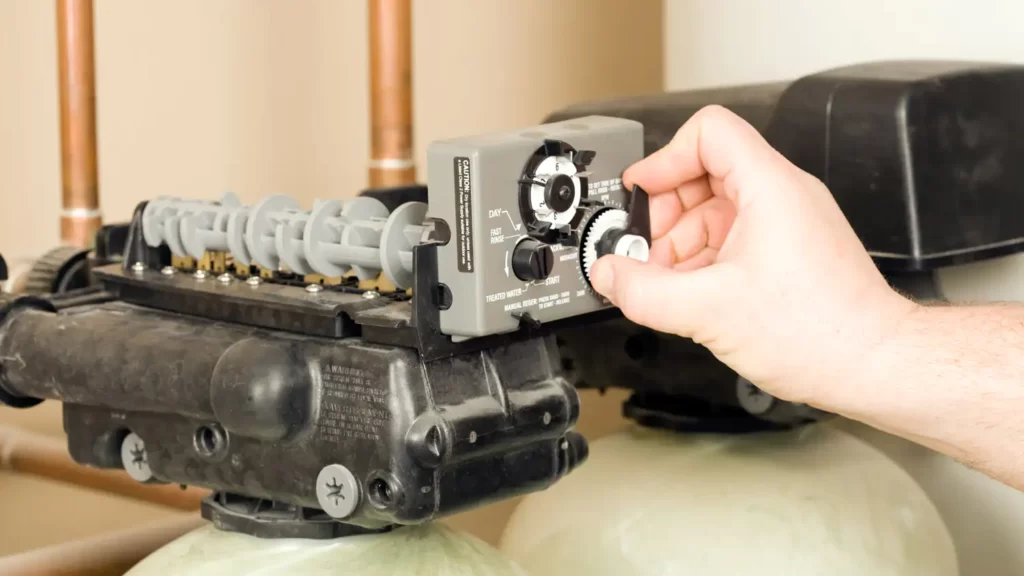 How To Set Water Softener Hardness Level - Dean Ouncoung
But wait—science experiment isn’t over yet. Pure water hardness is nice, but real life has a twist. If you have iron in your water, it behaves like an extra-hard jerk. A general rule? Add 4 GPG to your hardness number for every 1 ppm (part per million) of iron you detect.
So if your test says 15 GPG hardness and you have 2 ppm iron, you’re not setting the dial to 15. You’re setting it to 23 (15 + (2 x 4) = 23). See? You’re basically a water detective now.
But What About the Programming Wheel?
Now comes the chill part. Once you have your adjusted number (let’s say it’s 23 GPG), you walk over to your softener’s control panel. It might have a dial, some buttons, or a scary-looking digital screen. Don’t sweat it. You’re just telling the machine, “Hey buddy, we’re working with a 23 today.”
Some fancy new softeners ask for your water’s “Hardness in Grains” or they want you to calculate a “Capacity” setting. If it’s a simple dial, just turn it to 23. If it’s digital, type it in. That’s literally it. Your robot now knows exactly how many minerals to steal.
 How To Set Water Softener Hardness Level (Here's a Good Number) - Aqua
Think of it like this: if your softener were a bartender, the hardness number is the recipe for your drink. Set it wrong, and you get a watered-down cocktail. Set it right, and you’re sipping perfection.
One Weird Trick: The “Slightly Higher” Secret
Okay, here’s a pro tip that feels a little rebellious. Set the hardness 2 to 4 points higher than your calculated number. Why? Because your softener’s efficiency can drop over time as resin beads get tired. A tiny buffer means you’ll never get a surprise hard water day.
It’s like adding an extra blanket to your bed on a cold night. A little insurance never hurt anyone. You use a tiny bit more salt, but you never wake up shivering from hard-water showers. Worth it.
And if you ever get confused, just remember: “Hardness” isn’t about how tough your water is. It’s just a math equation. A fun math equation (yes, I said fun). You’re in control of the robot. Go set that dial, and enjoy your silky-soft towels.
Now go test your water. I’ll wait. You’ve got this.
