How To Remove Radiation From Water

Look, I get it. You’re not exactly chugging reactor coolant, but maybe you’ve heard some scary stuff lately. The thought of radiation sneaking into your tap water is about as...

Look, I get it. You’re not exactly chugging reactor coolant, but maybe you’ve heard some scary stuff lately. The thought of radiation sneaking into your tap water is about as welcome as finding a hair in your soup. It’s one of those vague anxieties, like forgetting if you locked the front door, but with more potential for glowing in the dark.
Let’s be real: the kind of radiation you need to worry about in water doesn’t come from your microwave. It’s usually from natural sources like radon seeping up from the ground, or the occasional nuclear accident in a movie you forgot to turn off. But hey, being informed makes you feel like a superhero, even if your only superpower is nerding out about plumbing.
The Simple Truth: You Can’t Boil It Away (Sorry)
Here’s the first thing everyone gets wrong. Boiling water is the go-to for killing bacteria, but it’s useless for removing radioactive particles. Think of it like trying to un-bake a cake—heat just makes the problem more concentrated.
Must Read
When you boil water, the pure H2O turns to steam and floats away, but the nasty radioactive stuff stays behind. You end up with less water and the same amount of radiation. It's like skipping leg day but expecting your jeans to fit better—doesn’t work that way.
So, step one: stop boiling. Grab a big cup of sanity and read on. Your kettle deserves a break, anyway.
Reverse Osmosis: The Overachiever
This is your all-star. Reverse osmosis (RO) systems are like a bouncer at an exclusive club who lets nothing past. They use a semi-permeable membrane that basically says, “Sorry, radioactive particles, your name isn’t on the list.”
These systems can remove up to 90% of common radioactive contaminants like cesium and strontium. It’s like having a personal bodyguard for every glass of water you drink, except the bodyguard lives under your sink and occasionally makes a gurgling noise.
The downside? They waste a little water (about four gallons of “reject” for every gallon of clean) and they’re not cheap. But hey, neither is peace of mind when you’re convinced your water is plotting against you.
Distillation: The Old-School Ninja
Remember those high school science experiments with the cloudy glass beaker? Distillation is just that: boil the water, catch the steam, let it condense back into liquid. The theory is solid, like a brick wall made of patience.
It works because most radioactive elements have a higher boiling point than water. So they sit in the pot, grumbling, while the clean steam escapes. It’s effective at removing over 99% of everything—including radium and uranium—but it takes forever.
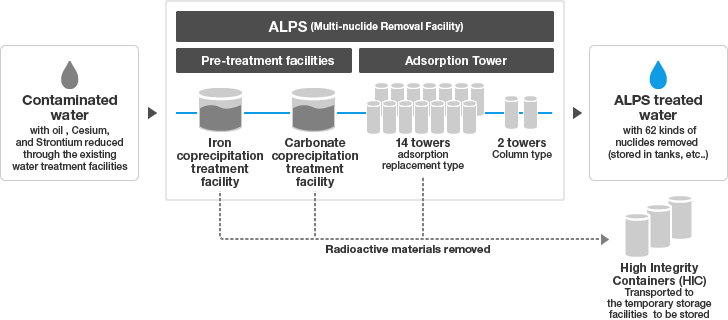 TEPCO : Contaminated Water Treatment
Distilling a gallon of water is like waiting for your computer to update when you just want to watch one video. You’ll become best friends with the sound of bubbling. Use it for emergencies, but don’t quit your day job to become a water distiller.
Carbon Filters: The Friendly Helpers
Don’t knock a good carbon filter. It’s like that friend who’s not the strongest, but they’ll carry your groceries anyway. Activated carbon is great at trapping organic compounds and some heavy metals, but it’s hit or miss for radiation.
Some carbon filters can reduce radon levels because radon is a gas that gets absorbed into the carbon. But for solid radioactive particles? It’s like trying to catch a bullet with a butterfly net—noble, but probably not your best bet.
Pair a carbon filter before a reverse osmosis system for the dream team. It’s like putting on socks before shoes—technically optional, but much more comfortable.
Deionization: The Science Lab Move
This one sounds fancier than it is. Deionization (DI) uses special resins that swap radioactive ions for harmless ones. It’s like a chemical handshake that says, “Hey, you’re radioactive, I’ll take that and give you a glass of water instead.”
It’s incredibly effective—like 99.9% effective—but the resins get exhausted fast and need replacing. You’ll know it’s time to swap when your water starts tasting like a laboratory experiment.
DI is usually used in combination with RO for the really paranoid folks. If you ever see a YouTuber testing their water with a Geiger counter and laughing, they probably have a DI system.
The Biggest Trick: Know Your Enemy
Before you buy any system, test your water. Your town’s water report usually tells you if there’s a radon or uranium issue. Don’t guess—you wouldn’t buy snow tires in July without checking the weather, would you?
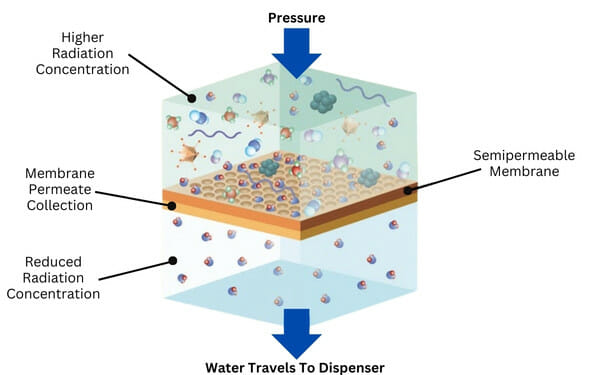 Does Reverse Osmosis Remove Radiation From Drinking Water?
You can get a simple radon-in-water test kit online. It’s cheaper than a therapist and gives you the same level of relief. Once you know what you’re dealing with, you can pick the method that fits your life—and your wallet.
And here’s the funny thing: most tap water in developed countries is perfectly safe. The fear of radiation water is often bigger than the actual problem. It’s like being scared of a garden snail when there’s a giraffe in your backyard—mostly imaginary, but still a little weird.
When All Else Fails, Buy Bottled (But Be Smart)
Let’s be honest: if you’re really panicking, grab a case of distilled water from the store. It’s already been processed for you. Just don’t hoard it like you’re preparing for a zombie apocalypse—one case is fine.
The irony is that bottled water isn’t always tested for radiation, so you might be paying for fancy packaging with zero guarantees. Check the label for “distilled,” “purified by reverse osmosis,” or “deionized.” If it just says “spring” or “mineral,” it’s just tap water with a marketing budget.
Remember that time you spent $4 on an artisanal water that tasted like a rock? Yeah, that’s the opposite of what you want.
The Zen of It
At the end of the day, removing radiation from water is a lot like flossing—great for your health, but you’ll probably skip it if the threat feels far away. The real key is not panicking. A few radon atoms in your water won’t turn you into a glowing superhero (or villain).
So, get a decent RO filter if you’re anxious, test your well water if you have one, and relax. The world is full of things to worry about—let’s not add radioactive tap water to the list unless you’re literally living next to a melted reactor. And if you are, maybe move. Just a thought.
Now go pour yourself a glass of filtered water. You’ve earned it. Cheers. No glow sticks required.
