How To Remove Iron From Well Water

You know that moment when you pour a glass of water, and it looks like someone brewed tea with a rusty nail? That was my first morning in the new house. I lifted the glass, sa...

You know that moment when you pour a glass of water, and it looks like someone brewed tea with a rusty nail? That was my first morning in the new house. I lifted the glass, said "cheers" to no one, and immediately noticed a metallic, almost bloody smell. I knew I had a problem: iron was crashing my otherwise perfect well-water party.
That brownish-red tint isn’t just ugly—it stains your sinks, your laundry, and your sanity (okay, maybe not your sanity, but close). The good news? You don’t have to live with it. You just need to figure out which type of iron is haunting your pipes.
The "Dissolved" vs. "Solid" Iron Showdown
Here’s the tricky part: iron in well water shows up in two main flavors. You’ve got ferrous iron, which is completely dissolved—so your water looks clear when first poured, but turns rusty after sitting out for a bit. It’s like a magic trick nobody wants.
Must Read
Then there’s ferric iron, which is already solid and gives the water that instant orange-brown look. Think of it as the angry, visible iron that stains everything it touches. Most people have a mix of both, because water loves to be complicated.
Your first step? Fill a clear glass from the tap right now—go ahead, I’ll wait. If it’s clear and turns rusty in 30 minutes, you’ve got dissolved iron on your hands. If it’s already rusty, you’re dealing with the solid stuff. Knowing this decides your strategy.
Shock Chlorination: The "Nuclear Option" for Minor Issues
Sometimes the iron isn’t coming from the water itself, but from bacteria that feed on iron and leave red slime in your toilet tank. Gross, right? If you see that, bacteria could be your real enemy. In this case, you flood your well with a heavy dose of bleach—literally called "shock chlorination."
It’s not a permanent fix. You’ll need to run hoses for hours to flush it out, and your water will smell like a swimming pool for a day. But it kills the iron bacteria, which stops the staining at its source. Use this only once or twice a year—your nose will thank you.
Side note: do this on a day when your neighbors are away, or they’ll wonder why you’re turning your yard into a bleach factory. Trust me, I learned that lesson.
 How to Remove Iron from Well Water - YouTube
The Simple Softer: Water Softeners for Low Iron
If your iron level is under 3 parts per million (PPM), a standard water softener might be your easiest win. These use a resin that swaps iron ions for sodium ions, basically tricking the iron out of your water. It’s like sending the iron to a prison camp.
But here’s the catch: softeners struggle with high iron. Go above 3 PPM, and the resin gets "fouled" with rust, requiring special cleaners. Also, softeners don’t remove ferric (solid) iron—it just clogs the system. So if your water is orange at the tap, skip this step.
You’ll also need to check your salt regularly. I once forgot for three months, and my water turned into a science experiment. Set a phone reminder—your laundry will thank you.
The Heavy Hitter: Oxidation Filters
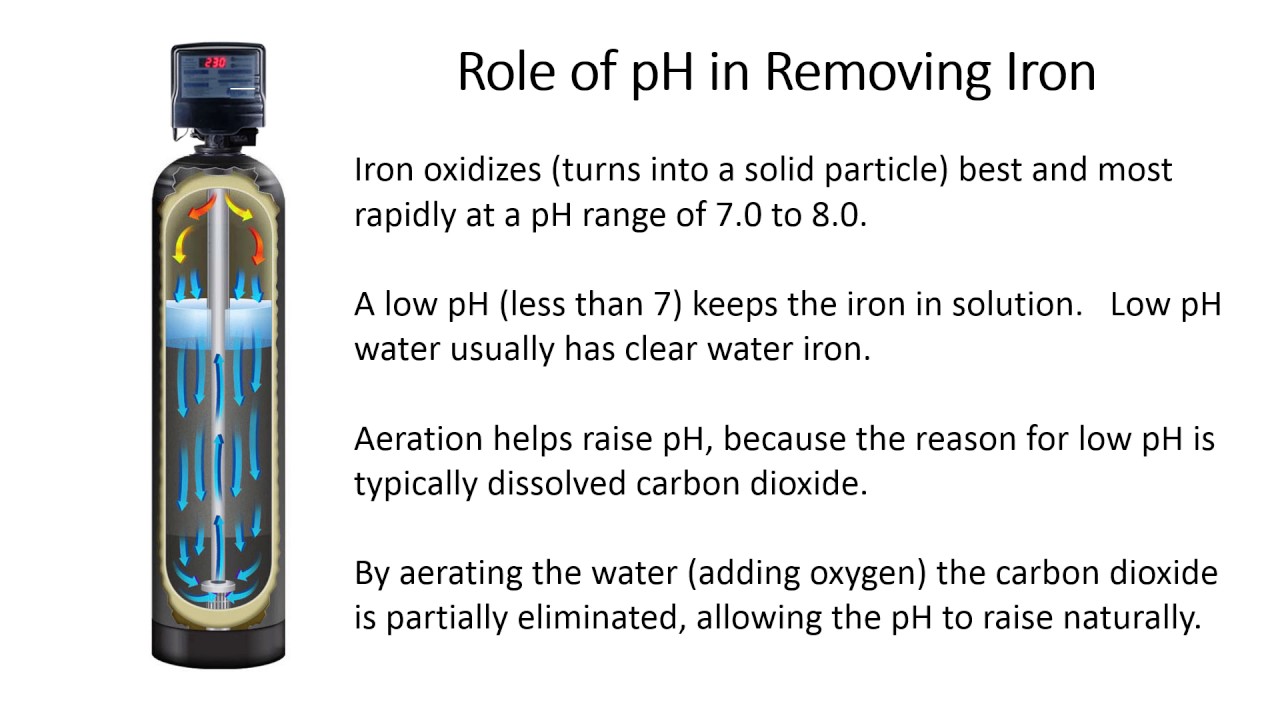
For stubborn iron (5-15 PPM), you enter the world of oxidation filtration. This system blasts the water with air, chlorine, or a special media (like manganese greensand—yes, that’s a real name) to turn dissolved iron into solid particles. Then, a filter catches those particles.
These filters are workhorses. They handle both ferrous and ferric iron, plus often remove sulfur (the rotten egg smell) and manganese. The downside? They’re pricier—think $1,000-$3,000 installed. But if you’ve already replaced three white shirts due to orange splotches, the math works out.
One warning: these units need backwashing (flushing out the trapped iron), which uses water. If your well pump is weak, you might need an extra pressure tank. Not fun, but neither is drinking from a rusty straw.
 Removing Iron From Well Water Systems at Edward Oneal blog
The "Dollar Store" Trick: Chlorine Injection & Sediment Filters
If your iron levels are extreme (over 15 PPM), welcome to the big leagues. You can inject a small amount of chlorine (or peroxide) directly into your water line. This chemically grabs the iron, turns it into solid rust, and then a sediment filter catches it.
It sounds like chemistry class, but modern injection pumps are automated. Literally set it and forget it—just refill the chlorine tank every few months. It’s the same principle as a swimming pool, but for your drinking water.
I’ve seen this system fix water that looked like mud. The only catch is you need a licensed pro to size the pump correctly, or you’ll end up with either too little (still stained) or too much (chlorine taste). Get a water test first—I can’t emphasize that enough.
When to Call in the Pros (And When to DIY)
Let’s be real: some things are fun to fix yourself, like unclogging a drain. But if you’re dealing with iron over 10 PPM, or if you have bacteria in your well, please hire a professional. Drilling a new well costs thousands; fixing a bad filter setup costs a lot less.
That said, maintenance is totally doable: replacing sediment filters, adding salt, flushing your pressure tank. You can be the hero of your own water system. Just don’t become the guy who mixes bleach and acid—that’s a bad day.
Remember my rusty tea glass? After installing an oxidation filter and a softener, that glass is now clear, cold, and oh-so-drinkable. It took a weekend of research and a Tuesday afternoon of plumbing, but I won. You will too—just match the solution to your iron type, and stop staining everything you own.
