How To Filter Radiation From Water

Let’s be honest: filtering radiation from water sounds like something you’d do in a sci-fi movie, right after you fight a mutant cockroach. But here’s the kicker—it actually h...
Let’s be honest: filtering radiation from water sounds like something you’d do in a sci-fi movie, right after you fight a mutant cockroach. But here’s the kicker—it actually hits closer to home than you think. Ever heard of radon seeping into your well water, or that weird news story about a nearby nuclear plant? Yeah, me neither, until my buddy Dave started checking his tap with a Geiger counter he bought on eBay. Suddenly, “filtering radiation” feels less like a secret agent mission and more like an awkward conversation with your plumber.
First off, don’t panic. The radiation you’re likely dealing with isn’t glowing green goo—it’s usually dissolved particles like uranium, radium, or cesium. Think of them as the unwanted houseguests that show up in your water glass uninvited. They sneak in from natural rock formations or old industrial spills, and they’re not great for your kidneys or your family’s long-term health. The good news? You don’t need a hazmat suit to kick them out—just a solid filter strategy.
What are you actually filtering?
Most scary radiation headlines talk about nuclear waste, but your tap water’s creepy vibe is usually from alpha and beta particles. Imagine alpha particles as tiny, lazy bullets that can’t even get through a piece of paper—but if you swallow them, they become obnoxiously clingy in your body. Beta particles are a bit more energetic, like a grumpy toddler throwing a tantrum. To stop them, you need a filter that’s basically a bouncer for microscopic jerks.
Must Read
Here’s the funny part: most standard Brita or pitcher filters do absolutely nothing against radiation. They’ll make your water taste great—removing chlorine and dirt—but they’re about as effective as using a napkin to stop a leaky nuclear reactor. I learned this the hard way when I proudly showed Dave my new filter, and he just laughed. “Cute,” he said. “But you’re only filtering your guilt, not the radium.”
The heavy hitters: reverse osmosis and ion exchange
If you want to actually kick radiation to the curb, you need reverse osmosis (RO) or ion exchange. Think of RO as a very picky bouncer at a club—only pure water molecules get in; everything else, like uranium particles, is left outside crying. It’s common in under-sink systems, and you’ll notice it because your water suddenly tastes like you’re drinking from a mountain spring (plus a little bit of plastic if the hoses are cheap). The downside? It wastes a fair amount of water—like that friend who pours out half a drink because it’s “not cold enough.”
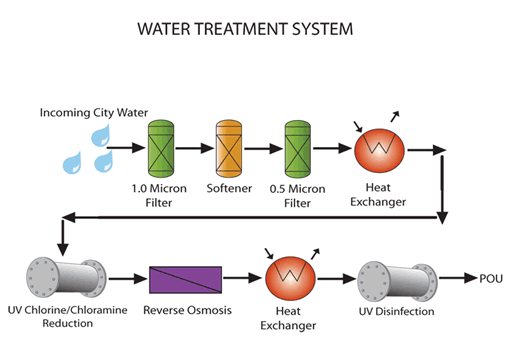 Titan Advantec Malaysia: Products - Ultraviolet (UV), TOC Sterilizer
Ion exchange, on the other hand, is like swapping seats on a crowded bus. It trades bad-for-you radioactive ions (like radium) for harmless ones (like sodium or potassium). It’s often used in whole-house water softeners, and it’s great because you don’t have to think about it—until you realize your water tastes slightly saltier. I once joked with Dave that his“soft water” made my morning coffee taste like a pretzel. He didn’t laugh. He was too busy checking his radon levels.
Activated carbon: the overrated friend
Don’t get me wrong—activated carbon is awesome for removing chemicals and bad smells. But for radiation? It’s like bringing a butterfly net to a sword fight. It can trap some larger radioactive molecules if they happen to stick to the carbon, but it’s not reliable for most isotopes. I once had a salesperson try to convince me their carbon block filter “neutralizes radiation.” I nodded politely, then silently imagined that poor carbon fighting off cesium-137 with a tiny sword. Spoiler: it lost.
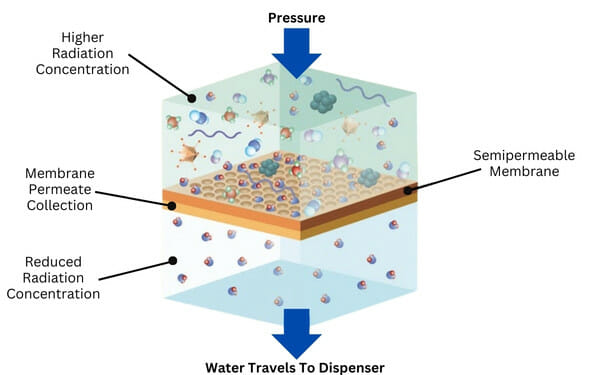 Does Reverse Osmosis Remove Radiation From Drinking Water?
The real trick is layering. Use a sediment filter first to catch dirt and rust, then a carbon block for taste and chemicals, then a reverse osmosis membrane for the big guns. It’s like a water-treatment lasagna—every layer does its job, and the radiation is the sad, stuck-on cheese. I built one of these setups in my garage, and it looked like a plumber’s fever dream. But when Dave tested my water? Clean as a whistle. I practically glowed with pride—though not literally.
What about boiling? Don’t even think about it.
Here’s a classic myth: “I’ll just boil the radiation out.” No, no, no. Boiling concentrates most radioactive particles because the water evaporates but the nasties stay behind. It’s like trying to clean a stain by adding more stain. The only exception is if you have radon gas in your water—then boiling can release it into the air, which is slightly less dangerous than drinking it, but still not great. I tried boiling my water once after a news alert, and I felt like a medieval alchemist. My kitchen smelled like a science experiment gone wrong, and my water tasted like defeat.
A final, easy-going tip
Before you drop crazy money on a filter, test your water first. Many counties offer free radon and uranium tests, or you can buy a mail-in kit for twenty bucks. I ignored this advice and bought a $600 RO system—only to find my water was cleaner than the air in a forest. My wallet still weeps, but at least my tea tastes like victory. Pair your filter with a decent carbon pre-filter, and you’ll sleep better knowing you’re not accidentally becoming a superhero origin story. And remember: if your water tastes weird, don’t panic. Just filter, test, and maybe switch to coffee for a while. You’ve got this.
