What Does Electrolytes Do For You

Let’s be honest: most of us think of electrolytes as that fancy science-y word printed on a bottle of bright blue sports drink. You know, the one you chug after a workout like...

Let’s be honest: most of us think of electrolytes as that fancy science-y word printed on a bottle of bright blue sports drink. You know, the one you chug after a workout like you’re a Formula 1 car refueling. But in reality, electrolytes are less about race cars and more about keeping your internal plumbing from staging a full-blown mutiny.
Think of your body as a slightly leaky, very dramatic apartment building. Your cells are the tenants, and electrolytes are the tiny but essential maintenance crew. They don’t fix the roof, but they make sure the electricity works, the water pressure is right, and nobody short-circuits the coffee maker. If they go on strike, everything goes haywire—fast.
So, what do these little charged minerals actually do for you? Let’s break it down without the lab coat, shall we?
Must Read
They’re the Bouncers at the Cell Club
Your cells have a very strict door policy. Sodium and potassium are the two main bouncers. They decide who gets in and who gets kicked out. This process, called an electrical gradient, is how your nerves tell your brain, “Hey, that pan is hot, drop it!”
Without enough electrolytes, that message turns into a garbled whisper. You might touch a hot pan and just stand there, feeling vaguely uncomfortable, like your body is buffering on a slow Wi-Fi connection. Not ideal.
Funny anecdote time: Ever yawn during a morning run, and suddenly your calf muscle screams like a tiny violin string snapping? That’s magnesium and potassium quitting their jobs because you forgot to feed them. They’re very petty that way.
Your Personal Water Management System
Water is great, but your body doesn’t just let it slosh around like a fish tank. Electrolytes act like tiny traffic cops, directing water exactly where it needs to go. Sodium holds onto water outside your cells, while potassium pulls it inside. It’s a delicate, constant tug-of-war.
If you chug plain water after a sweaty workout, you’re essentially flooding the system without the traffic cops. The result? You feel bloated, your head starts pounding, and you might even feel worse than before you drank anything. That’s nature’s way of saying, “Where’s the salt, dummy?”
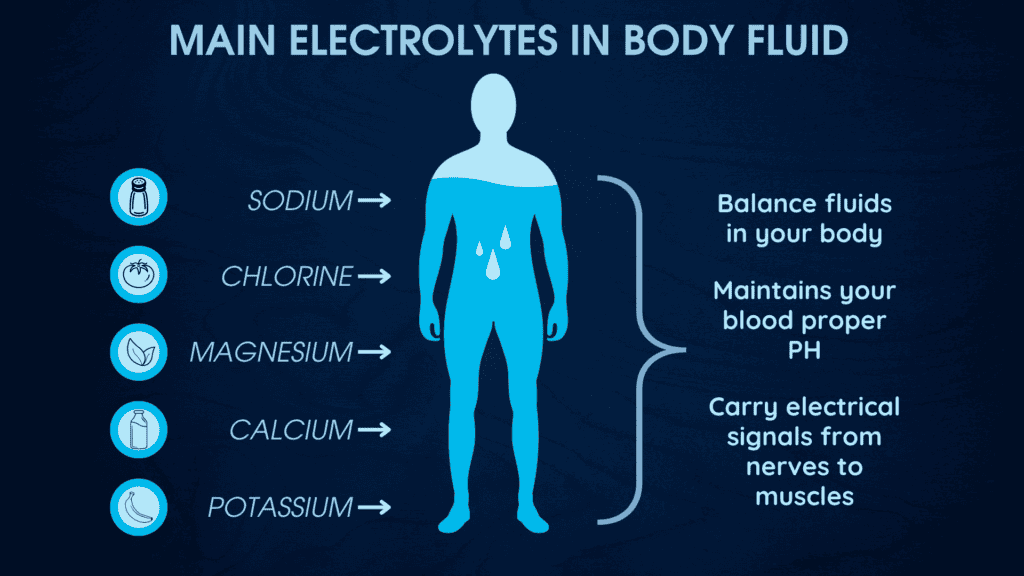 Summer Juice Ice Cubes – Vegetarian Recipes for Mindful Cooking
This is why Gatorade exists. It’s not magic; it’s just water with its bouncers and traffic cops still attached. Your body nods and says, “Ah, there you are. Now I can work.”
Muscle Contractions: The Silent Dance Partners
Every time you move a finger, blink, or walk to the fridge, you’re using calcium and magnesium. These two are like an old married couple. Calcium shouts, “Contract!” and magnesium whispers, “Okay, now relax.” If they’re out of sync, you get cramps, twitches, or that weird eye-spasm that makes you look like you’re winking at a ghost.
Imagine trying to do a bicep curl while your bicep is also trying to do a bicep curl in the opposite direction. That’s a charlie horse, my friend. That’s what happens when your electrolyte dance partners lose the rhythm.
Next time your foot suddenly jerks while you’re falling asleep (that weird “hypnic jerk”), thank a little potassium gradient misfiring. It’s your body’s way of saying, “I almost shut down, but you surprised me.”
Brain Function: Don’t Be a Fog Machine
Your brain is essentially a wet, squishy computer that runs on electricity. Electrolytes are the wires. If your sodium levels dip too low, your thinking gets fuzzy. You walk into a room and forget why. You put the milk in the cupboard and the cereal in the fridge. You start a sentence and… what was I saying?
This is why a hangover feels like your brain is wrapped in bubble wrap filled with bees. Alcohol is a diuretic—it literally flushes your electrolytes down the toilet. The next morning, your brain has no power. Water alone won’t fix that. You need the holy trinity: sodium, potassium, and a little sugar to carry them across the finish line. That’s why a greasy bacon sandwich (hello, salt!) or a banana (hello, potassium!) is a biological lifesaver, not just a comfort food.
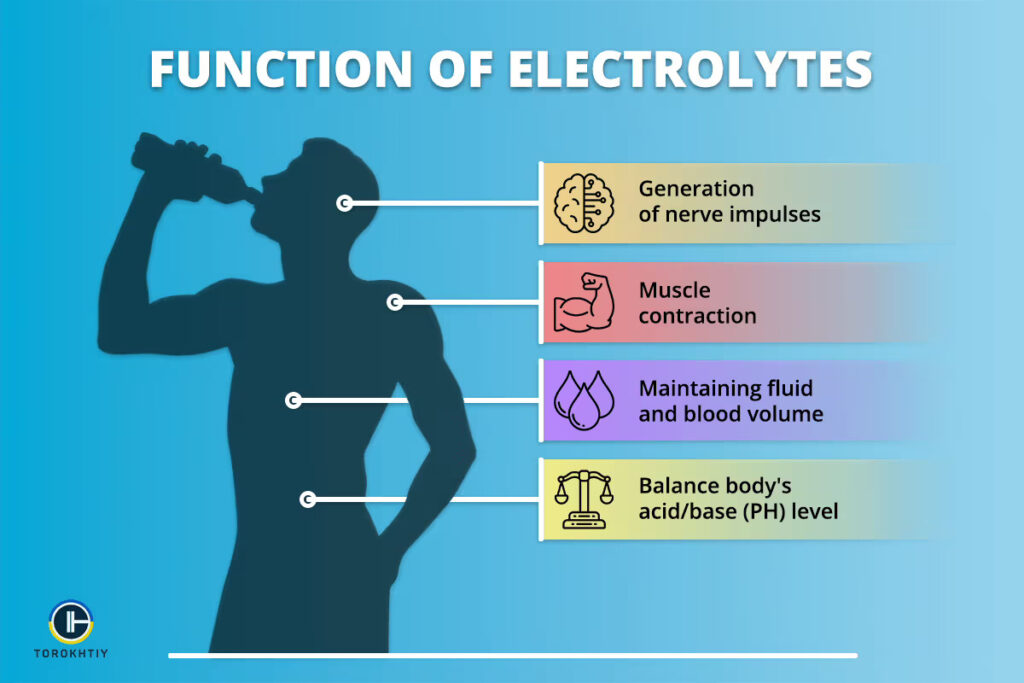 Ultimate Electrolyte Supplements Guide: Do You Need Them?
Hangry? That’s also partly electrolytes. Low blood sugar plus low sodium equals a monster with a headache. Eat a pickle. I dare you not to feel 10% better.
When Do You Actually Need to Care?
You don’t need to chug an electrolyte packet while binge-watching Netflix on your couch. Your kidneys are excellent accountants; they keep the books balanced just fine from a normal diet. But there are clear offenders: sweating like a sinner in church, a stomach flu, a night of heavy drinking, or a long run in August.
Pro tip: If your sweat tastes salty and leaves white stains on your hat, you’re a “salty sweater.” You lose more sodium than the average person. You are officially the office drama queen of hydration. Own it. Carry a bag of salty almonds.
Also, if you’re on a keto diet or fasting, you’ll need to pay attention. Your body dumps water and sodium in the first few days. This is why people get “keto flu.” It’s not a flu; it’s your electrolytes screaming into the void. A pinch of salt in your water is the cure. Don’t be a hero.
A Final, Unnecessary Analogy
Here it is: Electrolytes are like the traffic lights and road signs of your body’s highway. You don’t think about them until one is missing, and suddenly you’re in a four-car pileup at the intersection of “I’m Tired” and “My Leg Won’t Stop Twitching.”
So, treat them with respect. Eat a banana. Put a little salt on your food. Drink a sports drink after you sweat, not because the ad said it will make you look like an Olympic athlete. Your cells will thank you by not sending you embarrassing, crampy memos in the middle of the night. You’re welcome.
