Where Does Ground Water Come From

You know that moment when you’re hiking, parched, and you find a clear, cold spring bubbling out of a rock face? You cup your hands, drink, and think, “Wow, where did this com...

You know that moment when you’re hiking, parched, and you find a clear, cold spring bubbling out of a rock face? You cup your hands, drink, and think, “Wow, where did this come from?” It feels like magic—or maybe the Earth just got thirsty too.
I had that exact thought last weekend, staring at a tiny stream that literally appeared from a crack in the hillside. It wasn’t raining. There was no river nearby. So, seriously, how does water just… show up out of solid ground?
The Not-So-Obvious Answer
Spoiler alert: It’s not magic. It’s a slow, patient process that involves rain, dirt, and a lot of waiting. Groundwater is basically rainwater that went rogue.
Must Read
When rain hits the ground, it has three choices (it’s a dramatic moment for every drop). It can run off into rivers, evaporate back into the sky, or—if it’s lucky—it can infiltrate. That means it starts seeping downward, like a toddler sneaking cookies into a sofa cushion.
But here’s the kicker: the ground isn’t a solid block of rock. It’s more like a sponge full of tiny holes and cracks. Geologists call these spaces pores—and yeah, I know that word sounds weird out of context.
The Underground Sponge Layer
That sponge-like layer of sand, gravel, or cracked bedrock is called an aquifer. (Say it with a French accent if you want to feel fancy.) Aquifers are nature’s secret water towers, storing the water that trickles down over months—or even decades.
Not all dirt is equal, though. If you’re standing on solid clay, good luck—clay is like a bouncer that refuses to let water through. But if you’re on sandy soil, water falls through it like a pro in a slip-and-slide.
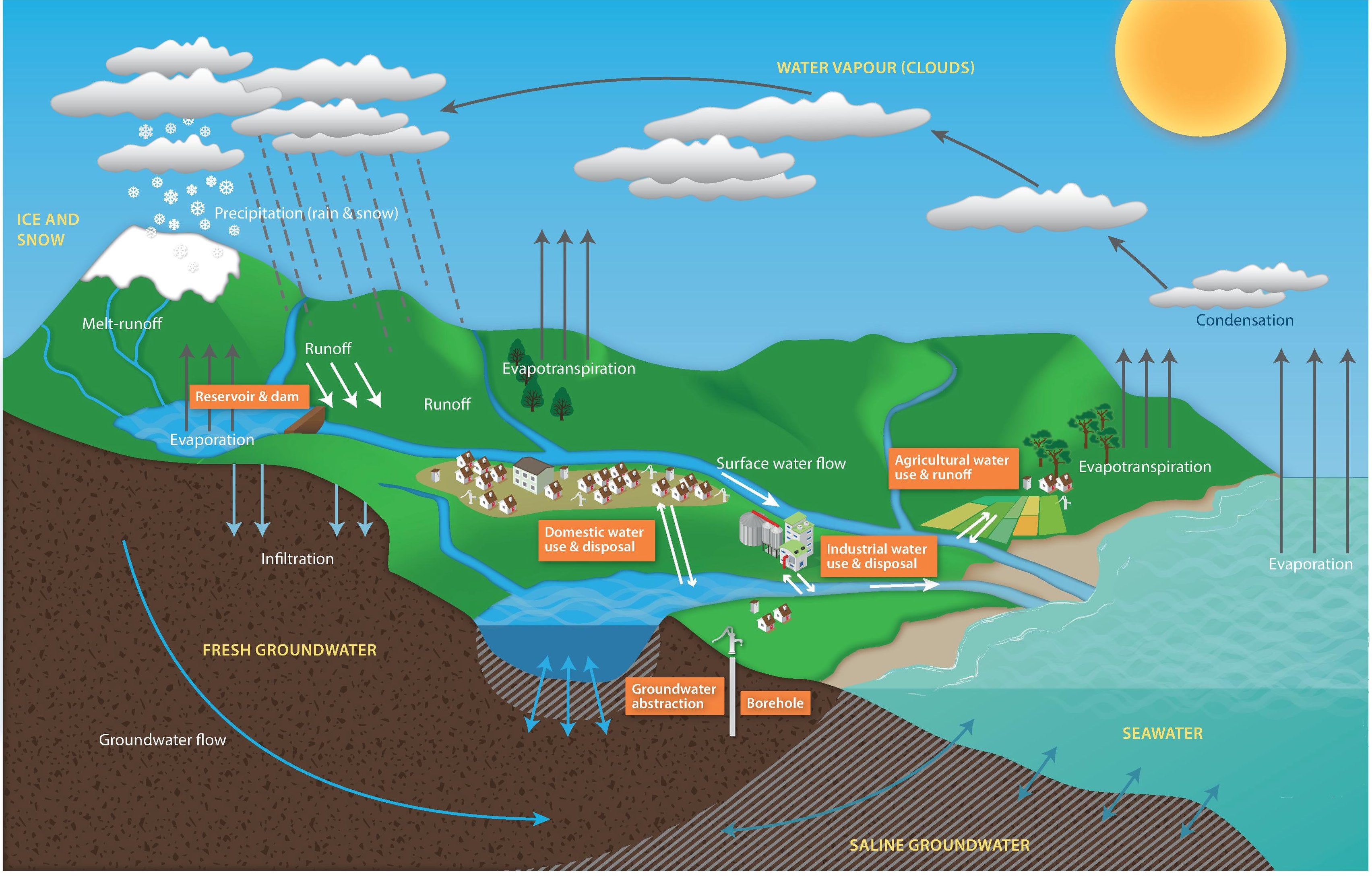 Groundwater Flow Definition Geography Simple at Ivan Flores blog
The water doesn’t stop until it hits a layer it can’t get past—like dense bedrock or a thick clay sheet. That’s when it starts to pool, filling up all the cracks and hollows underground. And that pool? That’s groundwater.
Wait, How Deep Are We Talking?
Deep. Like, really deep. In some places, groundwater sits just a few feet down. In others, it’s thousands of feet below your sneakers. (Kind of creepy to think about, right? All that water just… chilling under your house.)
Thankfully, it’s not just a random puddle. Because the water moves incredibly slowly—usually about a few centimeters per year—it gets naturally filtered by the sand and rock. That’s why well water often tastes so clean and crisp. (Unlike your tap water, which probably had a bath in chlorine.)
This slow movement also means the water you drink from a well could be thousands of years old. Let that sink in: you might be sipping water that fell as rain during the Roman Empire. #oldwater.
 Groundwater Diagram Labeled
But It Has to Come Back Up, Right?
Yes, because groundwater is not a permanent hostage. It returns to the surface in two main ways. First, through springs—like the one I started with—where the water table simply meets the land surface. Second, through wells, where we humans drill down to pump it up.
And here’s a mind-bender: groundwater also feeds rivers and lakes. That stream you thought was fed by rainfall? Nope. During dry months, up to 80% of that flow comes from groundwater seeping back up. It’s like the Earth is constantly giving a subtle hiccup of water.
The Ironic Part (Because There’s Always One)
So, where does groundwater come from? Rain. Simple. But here’s the irony: we spend billions on desalination plants and cloud seeding, while the biggest reservoir of fresh water sits directly under our feet. It’s like complaining you’re thirsty while standing next to a hidden soda fountain.
Of course, that fountain isn’t infinite. If we pump it too fast (like in massive farming areas such as the Ogallala Aquifer), it takes centuries to refill. Oopsies.
So next time you turn on a faucet or find a spring on a hike, give a little nod to the rain that fell in a past life. And maybe pour a glass of groundwater for your ancestors. They probably did drink it first.
