Does Hard Water Cause Frizzy Hair

Picture this: you step out of a blissfully warm shower, feeling fresh and ready to conquer the world. But then you catch a glimpse in the mirror, and your hair looks like you...
Picture this: you step out of a blissfully warm shower, feeling fresh and ready to conquer the world. But then you catch a glimpse in the mirror, and your hair looks like you just wrestled a startled cat. It’s dry, it’s puffy, and it has a mind of its own.
If this scene feels painfully familiar, you might be pointing a finger at your shampoo or that fancy new conditioner. But what if the real culprit is something hiding in plain sight?
We’re talking about hard water – that mineral-rich stuff that comes out of your tap. And yes, it might just be the sneaky reason your hair is throwing a frizzy tantrum.
Must Read
What exactly is hard water, anyway?
Let’s boil it down (pun intended). Hard water is simply water that has picked up a lot of minerals, mostly calcium and magnesium, as it traveled through the ground. It’s not dangerous to drink, but it can be a real drama queen when it comes to your hair and skin.
You’ve probably seen the signs of hard water before. Think of those white, crusty deposits on your shower head or the way your soap refuses to lather up into a nice, bubbly cloud. That’s the minerals getting in the way.
Now, imagine those same minerals throwing a party on your hair strands. Not a fun party, but the kind where someone spills their drink all over the dance floor.
How hard water messes with your hair shaft
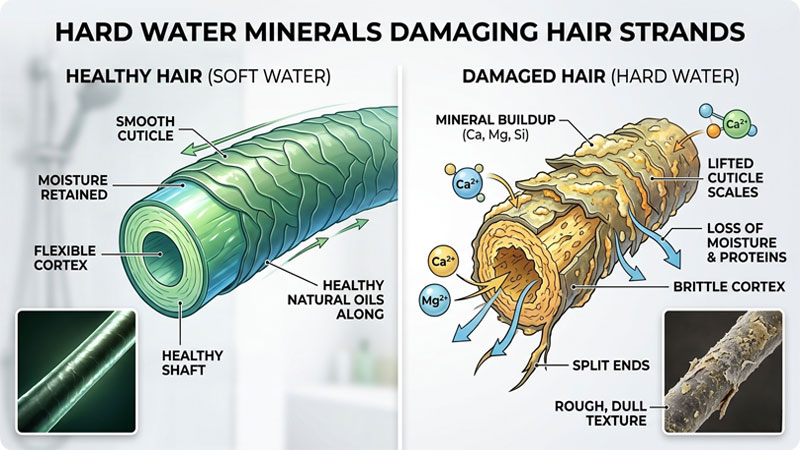
Here’s the science bit, made super simple. Your hair has a protective outer layer called the cuticle, which is made of overlapping scales, like shingles on a roof. When those scales lie flat, your hair is smooth, shiny, and happy.
Hard water minerals are like sticky, microscopic magnets. They bind to the proteins in your hair and cling to those scales. Over time, this mineral buildup creates a rough, uneven surface.
This rough surface is the enemy of smooth hair. It prevents moisture from getting in, and it also lifts those cuticle scales up. And what happens when the cuticle is lifted and rough? You guessed it: frizz.
It’s like the difference between a polished marble floor and a gritty gravel path. Your hair is trying to glide, but it keeps stumbling over mineral bumps.
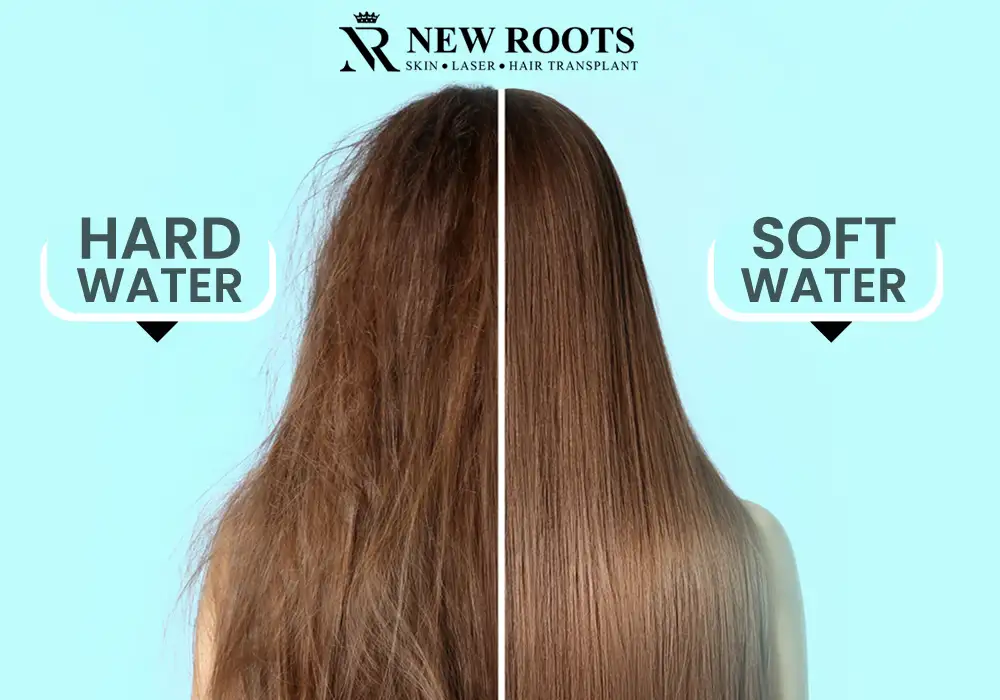 Hard Water On Hair Symptoms – Water Damage To Hair – CRHM
Does every drop of hard water lead to frizz?
Not necessarily, and this is where it gets interesting. Your hair’s reaction to hard water depends on a few things, like your hair type, your porosity, and even the exact mineral mix in your local water supply.
If you have naturally curly or coily hair, you might be more prone to frizz anyway because those lovely spirals have more cuticle layers that can lift. Hard water just turns the volume up from “soft wave” to “galactic explosion.”
Interestingly, water that’s too soft can also be a problem. It can leave a slippery film and make hair feel limp. So, we’re not saying hard water is evil; we’re just saying it’s a feisty character that doesn’t play well with everyone.
The telltale signs (besides the frizz)
Your hair isn’t just frizzy? It might also feel stiff, dull, or straw-like. You might notice that your hair color fades faster, or that it feels heavy and weighed down, even after a fresh wash.
Another big clue: does your shampoo struggle to get foamy? If you need a ton of product just to feel clean, that’s a classic sign of hard water fighting your suds. It’s like trying to wash a greasy pan with cold water – the soap just doesn’t want to cooperate.
Your scalp might also join the protest. Buildup from minerals can lead to dryness or flakiness, which only adds insult to injury for your frizzy ends.
So, what can a frizz-fighter do?
Don’t worry, you don’t have to move to a place with perfectly soft water (though that would be a fun excuse for a vacation). There are some clever tricks to outsmart those mineral monsters.
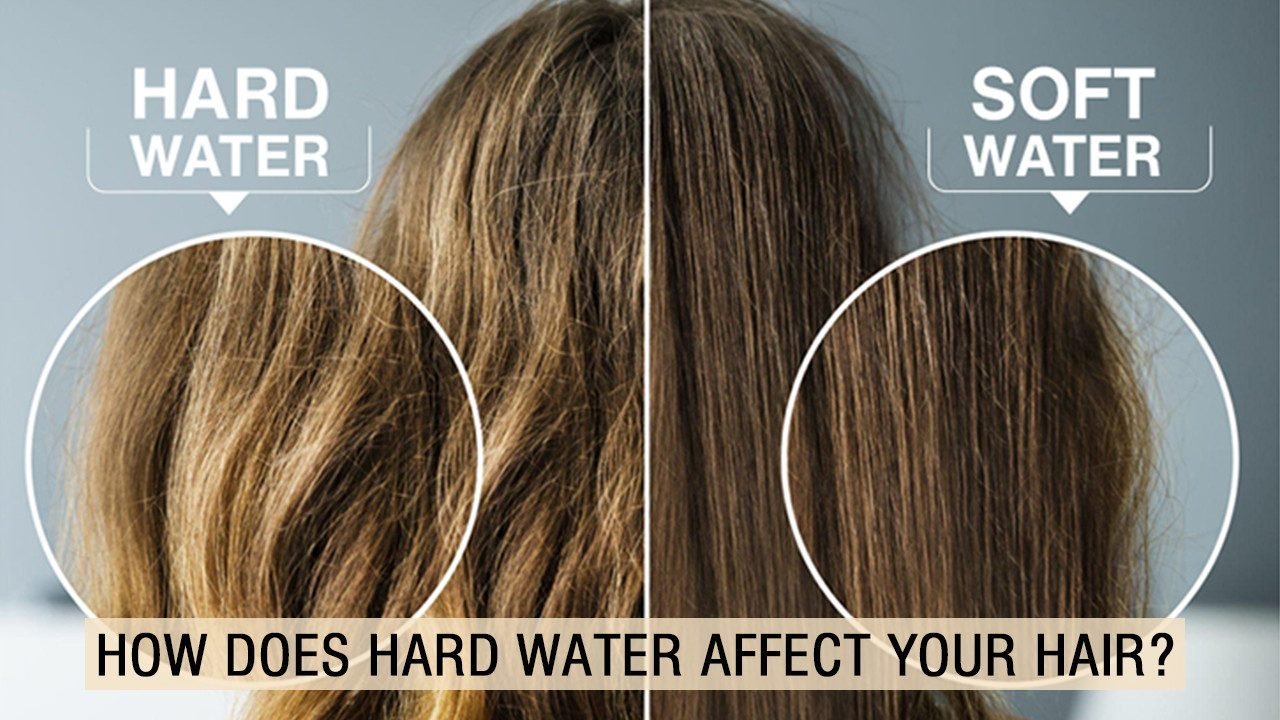 Is Your Shower Water Causing Hair Fall? How to Protect and Recover Your
First, try a chelating shampoo every few weeks. That’s a fancy word for a shampoo specifically designed to grab and remove mineral buildup. It’s like a deep-clean detox for your hair, stripping away the crunchy stuff.
Second, consider an acidic rinse. Rinsing your hair with diluted apple cider vinegar or a little lemon juice can help lower the pH and smooth down those lifted cuticles. Your hair will feel much sleeker afterwards.
And for a longer-term fix? A shower head filter is a total game-changer. They’re easy to install and act like a bouncer, keeping a lot of those calcium and magnesium guests from crashing your hair party. It’s a small investment for a big difference in softness.
Finally, don’t forget your deep conditioner. Hard water strips moisture, so you need to give it back. A weekly hydrating mask can help rebuild your hair’s happy, smooth vibes.
The bottom line: it’s a cool mystery
Is hard water the only cause of frizzy hair? Probably not. Humidity, heat styling, and genetics all play their part. But it’s a fascinating, often overlooked piece of the puzzle.
Next time you see that puffiness in the mirror, don’t just blame your shampoo. Give your tap water a suspicious side-eye. It might be the secret influencer your hair has been battling all along.
The cool part? You now have the tools to fight back. With a few tweaks, you can turn that frizz fiasco into a smooth, shiny victory. And that’s a pretty awesome feeling, isn’t it?
