How Does A Well Water System Work

Ever wonder where your water comes from when you’re off the city grid? It’s not magic. It’s a well water system. And it’s way more interesting than you think. The Big Hole in...
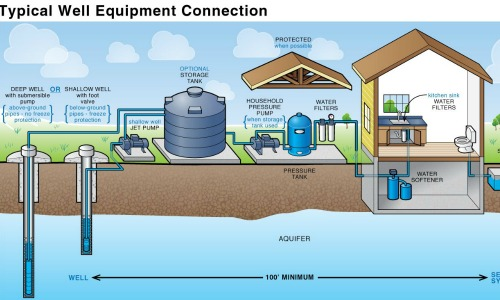
Ever wonder where your water comes from when you’re off the city grid? It’s not magic. It’s a well water system. And it’s way more interesting than you think.
The Big Hole in Your Yard
First, you need a hole. A deep, dark hole. Not for buried treasure, but for groundwater.
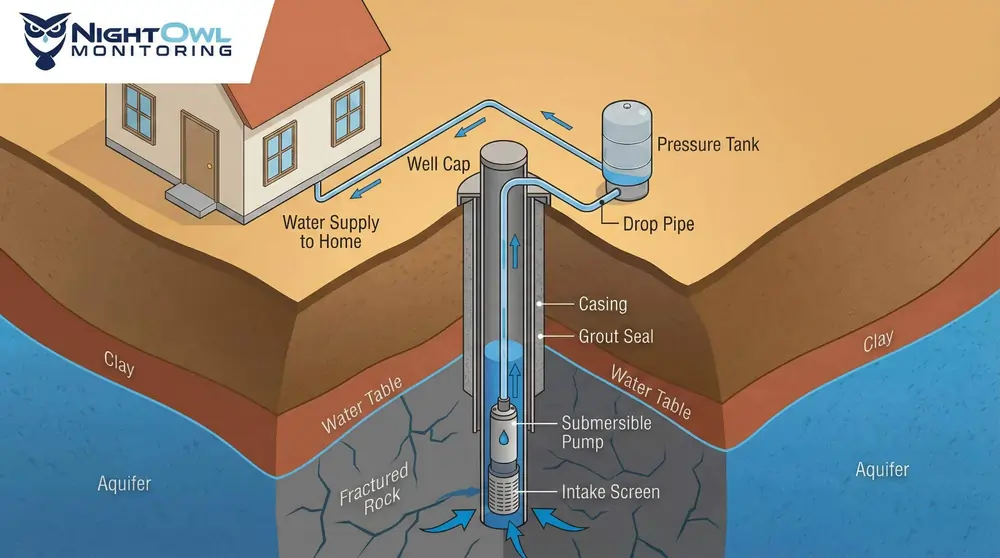
Professionals drill it down until they hit an aquifer. That’s a giant, soggy sponge of rock deep underground. It’s like finding a secret lake under your lawn.
Must Read
Fun fact: Some wells go down hundreds of feet. That’s taller than a 20-story building, just for your morning shower.
The Pump That Does the Heavy Lifting
Water doesn’t just jump up to say hello. You need a pump. It sits at the bottom of your well, deep in the dark.
This pump is a hard worker. It turns on and off like a tiny, wet robot. When you flush the toilet, the pump grumbles and pushes water up a long pipe.
Quirky fact: Most well pumps are submersible. They live underwater their entire lives. Imagine your home office like that. No coffee breaks needed.
The Pressure Tank: Your Water’s Bouncer
So the water arrives at your house. Now what? It doesn’t just spray everywhere like a fire hose. It enters a pressure tank.
Think of it like a battery for water. The tank stores water under pressure. When you turn on a faucet, it pushes it out smoothly. No pump needed for every single drop.
Funny detail: Inside the tank is a big rubber balloon filled with air. The water squishes into the balloon. It’s basically a water-filled stress ball. It takes the pressure so you don’t have to.
The Control Box: The Brain
Near the tank is a small, boring-looking box. That’s the control box. It’s the traffic cop for your whole system.
It tells the pump: “Get to work! The pressure is low.” Or: “Stop! We have enough water.” Without it, your pump would run forever. And it would get very, very tired.
 How Does a Water Well Work | Residential Well System Explained
Don’t call it a genius. It’s more like a dim-witted but reliable buddy who only knows two commands: ON and OFF.
The Pipes: Your Underground Highway
From the well to your house, water travels through pipes. Not boring white ones you see under a sink. These are heavy-duty, buried deep in the ground.
They have to be tough. They fight against rocks, tree roots, and freezing cold. And they snake through your basement or crawlspace.
Quirky truth: That pipe is your personal water metro. It ferries H2O from a huge underground lake to your kitchen sink. No tickets required.
Where’s the Filter?
Well water is raw. It can taste like dirt. It might have minerals. Or sand. Or tiny bits of iron that turn your toilet orange.
That’s where filters come in. A sediment filter catches the sand. A carbon filter makes it taste fresh. Some systems even have a water softener to remove rock-hard calcium.
Funny image: A whole-house filter is like a giant Brita pitcher. But the size of a trash can. And it lives in your basement like a shy metal monster.
Why It’s Actually Hilarious
Think about it: Your water comes from a hole in the ground. It gets sucked up by an underwater robot. Then it’s stored in a balloon tank. All so you can brush your teeth.
It’s a Rube Goldberg machine hidden in your yard. A series of improbable steps that works perfectly 99% of the time. And when it breaks? You discover the true meaning of “dry spell.”
 Parts Of A Water Well Pump - Infoupdate.org
No water bill, though. That’s the punchline. You own your own water utility. It’s a tiny power plant just for your family. And it works best when you don’t think about it too much.
When Things Go Wrong (The Good Part)
Power goes out? No pump. No pump? No water. Suddenly you’re a pioneer. Time to haul buckets from a neighbor. Very dramatic.
Or a relay switch fails. Your pump chatters on and off like a broken toy. You’ll hear it in your sleep. A little “click-pump-squeak” lullaby all night long.
But fixing it is empowering. You can replace a pressure switch for $20. You feel like a well wizard. You own the underground realm.
The Deepest Quirks
Some wells are artesian. That means water shoots up naturally. Like a natural fountain in your yard. Fancy.
Other wells are shallow. Just 30 feet deep. They can dry up in a drought. Then you’re drinking from a mud puddle. Not fun.
Longest well in the world? It’s 40,000 feet deep. That’s deeper than the Titanic. Just for water. We are obsessed with finding it.
The Bottom Line
A well water system is brilliant. It’s simple. It’s ancient. It’s also a little weird.
You turn a tap. Water appears. But behind the wall, a whole underground circus is performing. Pumps, tanks, pipes, and filters. All working in harmony.
So next time you take a long drink, pause. Thank the deep, dark hole. Thank the underwater robot. Thank the squishy balloon. They did the hard work so you could stay hydrated. Cheers to that.
