What Is Hard Water And Soft Water

We’ve all been there. You step out of a hot shower, skin feeling oddly tight, hair a little flat, and there’s a chalky white film clinging to the shower door. Or maybe you’ve...

We’ve all been there. You step out of a hot shower, skin feeling oddly tight, hair a little flat, and there’s a chalky white film clinging to the shower door. Or maybe you’ve noticed your kettle has a crusty, almost geological deposit inside. Welcome to the world of hard water—but it’s only half the story.
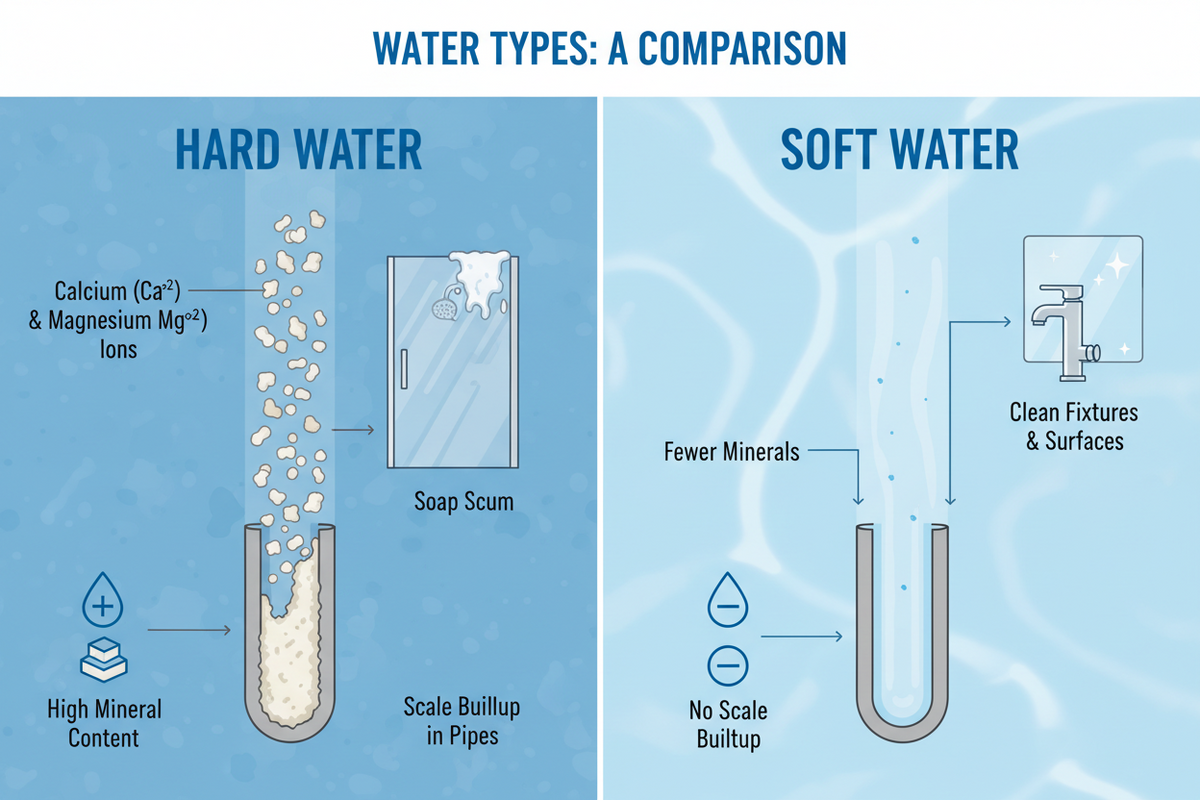
Let’s get scientific for a second. Hard water is simply water that’s picked up a lot of dissolved minerals—mostly calcium and magnesium—as it traveled through limestone and chalk deposits underground. Soft water, by contrast, has very little of those minerals. It’s essentially nature’s blank canvas.
The difference between them isn’t just a chemistry-class footnote. It affects everything from your morning latte to the lifespan of your washing machine. Over 85% of U.S. homes have hard water, making it the default for millions, yet we rarely talk about it.
Must Read
The Telltale Signs in Your Home
Think of hard water as a friendly but overzealous guest. It leaves white spots on your dishes like a calling card. Your soap struggles to lather, so you end up using twice as much—and you’re still left with that dreaded soap scum ring in the tub.
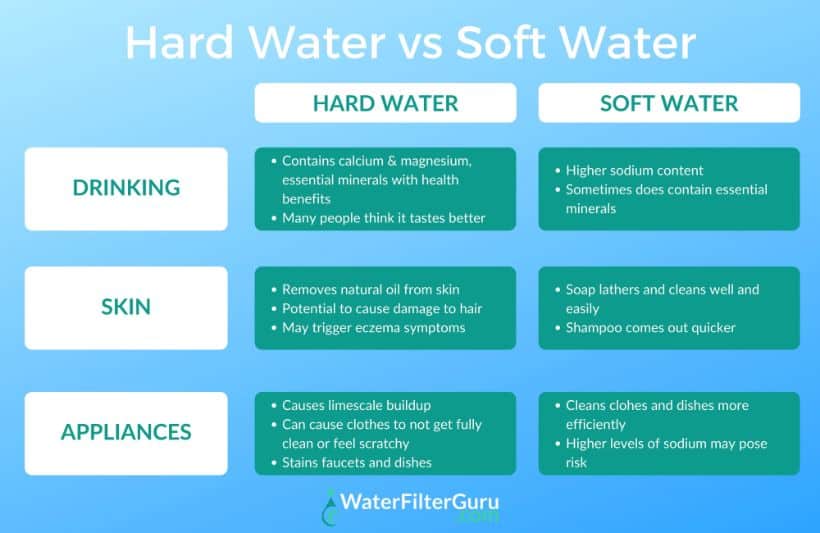
Soft water, on the other hand, is the effortless host. It makes your shampoo sudsy almost immediately. Your skin feels smoother after a shower, and your laundry comes out brighter, feeling less stiff. But here’s the twist: soft water can feel slippery to some people.
That “squeaky clean” feeling you get with hard water? That’s actually soap residue left behind, not cleanliness. With soft water, you’re truly rinsed clean, which explains the silky-smooth sensation—your natural oils aren’t stripped away.
Pop Quiz: Which One Does Hollywood Prefer?
Think of those old movies where actresses washed their hair with rainwater. That wasn’t just romantic—it was soft water. Rainwater is naturally soft, and it gave that iconic, bouncy hair look without any product. Meanwhile, residents of hard-water cities like London or Las Vegas have to work extra hard to avoid dull-looking locks.
Fun fact: In Tokyo, where water is famously soft, baristas often claim they can make a better pour-over coffee. The minerals in hard water can bind to coffee compounds, muting flavor. If your morning brew tastes flat, your water might be the culprit, not the beans.
 Hard vs. Soft Water Explained | Synergy Science™ – Echo Water
The Not-So-Silent War on Your Appliances
Hard water is a pipeline bully. Over time, those calcium deposits—often called “limescale”—build up inside your pipes, water heater, and dishwasher. This scale acts like an insulator, making your appliances work harder and shortening their life by years. It’s estimated hard water can cut an appliance’s efficiency by up to 30%.
Soft water is much kinder to your machines. But there’s a catch: softened water often contains sodium added during the ion-exchange process. If you’re on a low-sodium diet, you might want to keep a separate tap for drinking water. It’s a small trade-off for bathwater that feels like a spa treatment.
And here’s a wild cultural note: In some parts of Scotland, locals say you can taste the hardness in the water. They’re not wrong. Water sommeliers—yes, that’s a real job—can identify the mineral profile of a glass of tap water blindfolded.
Practical Tips: How to Survive and Thrive
First, find out what you’re dealing with. Grab a clear plastic bottle, fill it with tap water, add a few drops of pure liquid soap, and shake. If you get a tall, fluffy mound of bubbles, you’ve got soft water. If it’s a thin, milky foam with few suds, welcome to hard-water territory.
If you’re stuck with hard water, don’t panic. A water softener system is the nuclear option, but for renters, try a showerhead filter—it’s a cheap upgrade that makes your skin and hair happier. Vinegar is your best friend: a weekly rinse of your kettle and coffee maker with white vinegar dissolves limescale instantly.
For soft water—which can leave your hair feeling a bit “flat” due to lack of mineral grip—use a clarifying shampoo once a week. This strips any excess product buildup that soft water doesn’t easily wash away. Also, consider a reverse-osmosis filter for your drinking tap if the sodium content bothers you.
 Hard Water vs Soft Water Explained: What's the Difference?
The Environmental Angle
Hard water makes you use more soap, detergent, and energy. That’s not just bad for your wallet—it’s extra chemical load going down the drain. Soft water can help you cut detergent use by half, which is a win for your local water ecosystem.
But softening water has its own environmental cost. The brine discharge from water softeners (the salty water used to regenerate the system) can harm freshwater ecosystems if not disposed of properly. It’s a classic trade-off: personal comfort vs. planetary impact.
Some modern cities are experimenting with centralized water softening—treating all water before it reaches homes. It’s expensive but effective. Until then, we’re all Taylor Swift at a Grammy afterparty: trying to look perfect while dealing with the chemistry of our local tap.
A Short Reflection on Daily Life
Water is the most ordinary miracle we touch every day. We rarely think about it until our soap won’t lather or our hair feels like straw. But whether yours is hard or soft, it’s a mirror of your local geology, your infrastructure, and your personal choices.
Maybe the real lesson here is about balance. Hard water teaches us resilience—you learn to manage buildup, to scrub a little harder, to adapt. Soft water invites ease, a gentler routine that lets you save time, soap, and energy. Neither is “wrong”—they’re just different starting points for the same goal: a clean, comfortable life.
So next time you fill your kettle or step into the shower, pause for a second. Thank your water for its quirks. Then go ahead and add that extra splash of vinegar—you’ve got this.
