How To Test For Bacteria In Water

Let’s be honest—most of us don’t think twice about the water coming out of the tap. We fill our morning coffee, rinse our produce, and let the kids splash in the sprinkler wit...
Let’s be honest—most of us don’t think twice about the water coming out of the tap. We fill our morning coffee, rinse our produce, and let the kids splash in the sprinkler without a second thought. But sometimes, that crystal-clear water can be hiding uninvited guests: bacteria. Before you panic, know that testing for bacteria is easier than remembering your neighbor’s dog’s name—and way more important.
Why should you even care?
Imagine you’re at a backyard BBQ, and someone brings a mysterious potato salad. You’d probably ask, “How long has this been sitting out?” That’s exactly how you should think about your water. Bacteria like E. coli or coliform can sneak in after heavy rain, a cracked pipe, or even a well that’s seen better days.
And no, “it tastes fine” isn’t a reliable test. Bacteria don’t always change the flavor. Your water might look like a mountain stream but contain enough microscopic party crashers to ruin your week.
Must Read
But here’s the good news: testing is simple. It’s not like assembling IKEA furniture. It’s more like checking the date on a milk carton—quick, cheap, and totally doable.
The first step: Listen to your water
Think of your water as a quiet friend. Sometimes it gives subtle hints. If you notice a rotten egg smell (that’s hydrogen sulfide), a musty taste, or a funny color (brown, yellow, or cloudy), it might be waving a little flag. But don’t rely on your senses alone—bacteria can be completely invisible.
My own wake-up call came after a heavy spring storm. The water looked perfectly fine, but my toddler developed a mild stomach bug. Our county health department’s advice? “Test it before you blame the water.” So we did.
Grab a kit, skip the lab coat
You don’t need a degree in microbiology. Home test kits are sold at most hardware stores, pharmacies, or online. They usually cost between $10 and $30—less than a fancy pizza night. Look for kits that test for total coliform bacteria and E. coli. Those are the main culprits.
What’s in the box?
A typical kit includes a sterile bottle or vial, a pair of gloves, and clear instructions. It’s basically a science kit for grown-ups, but with way less pressure. The instructions will tell you to collect water from a specific tap (usually the kitchen faucet) and avoid touching the inside of the container. Think of it like collecting a pristine sample—no sneezing into the bottle, please.
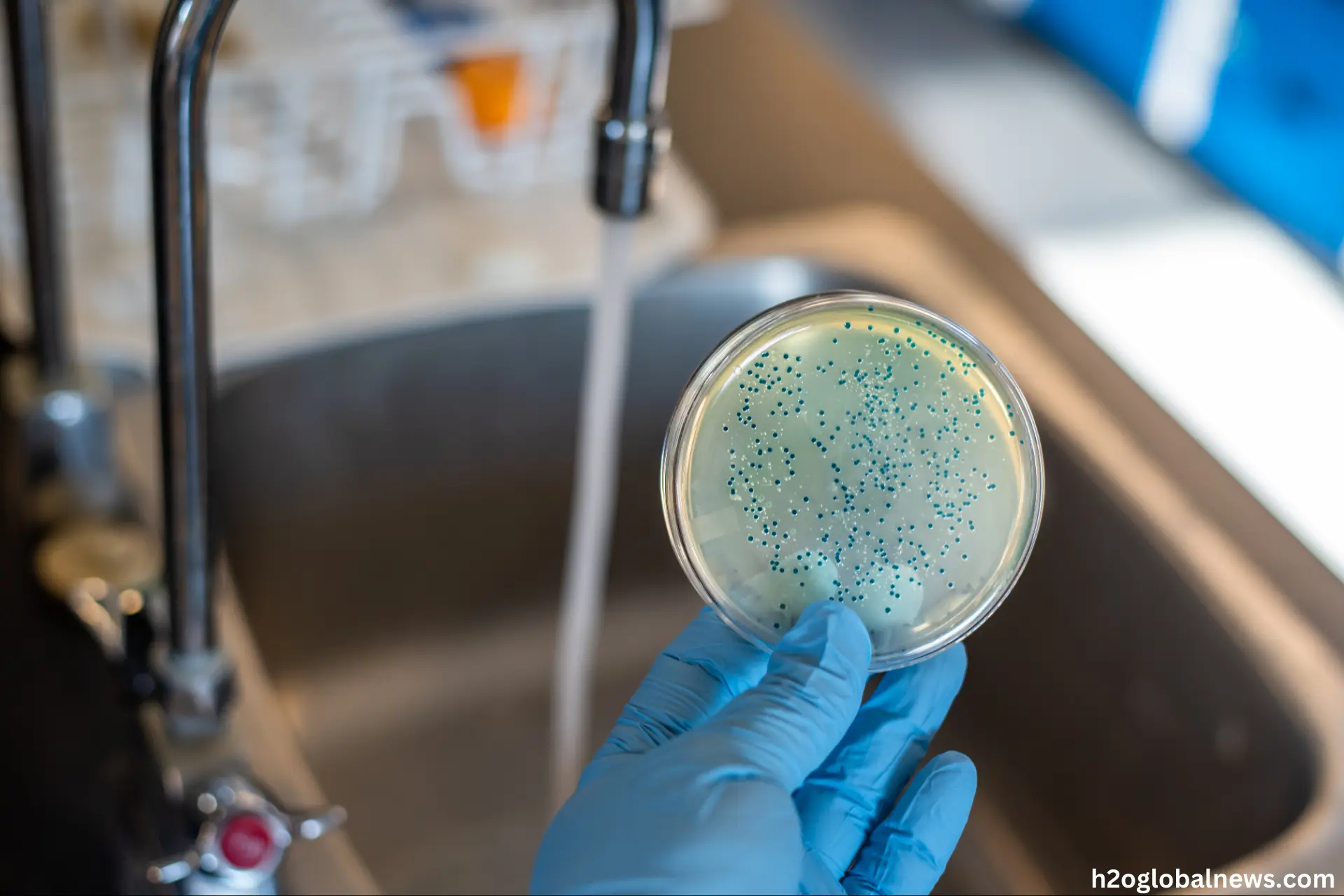 Clean Water: Understanding and Testing for Water Contaminants | H2O
Pro tip: If you have a well, test it at least once a year. If you’re on city water, the utility does regular testing, but after a flood or a pipe repair, it’s smart to double-check. Better safe than spending the weekend hugging the bathroom floor.
The simple DIY test
Most home kits work with a little vial and a nutrient powder. You fill the vial with your water sample, add the powder, and wait 24 to 48 hours. It’s like waiting for sourdough starter to bubble, only less delicious.
After the wait, check the color chart. If the liquid turns bright yellow or cloudy, you’ve got company. If it stays clear and colorless, your water is likely safe. Some kits even use a little petri dish you can watch—a kind of “grow-your-own-bacteria” adventure, but without the potato salad.
Just remember: No color change is a good sign. And if you see a color change, don’t panic. It doesn’t mean you need to move to the mountains. It means you need to take the next step.
What to do if your water fails
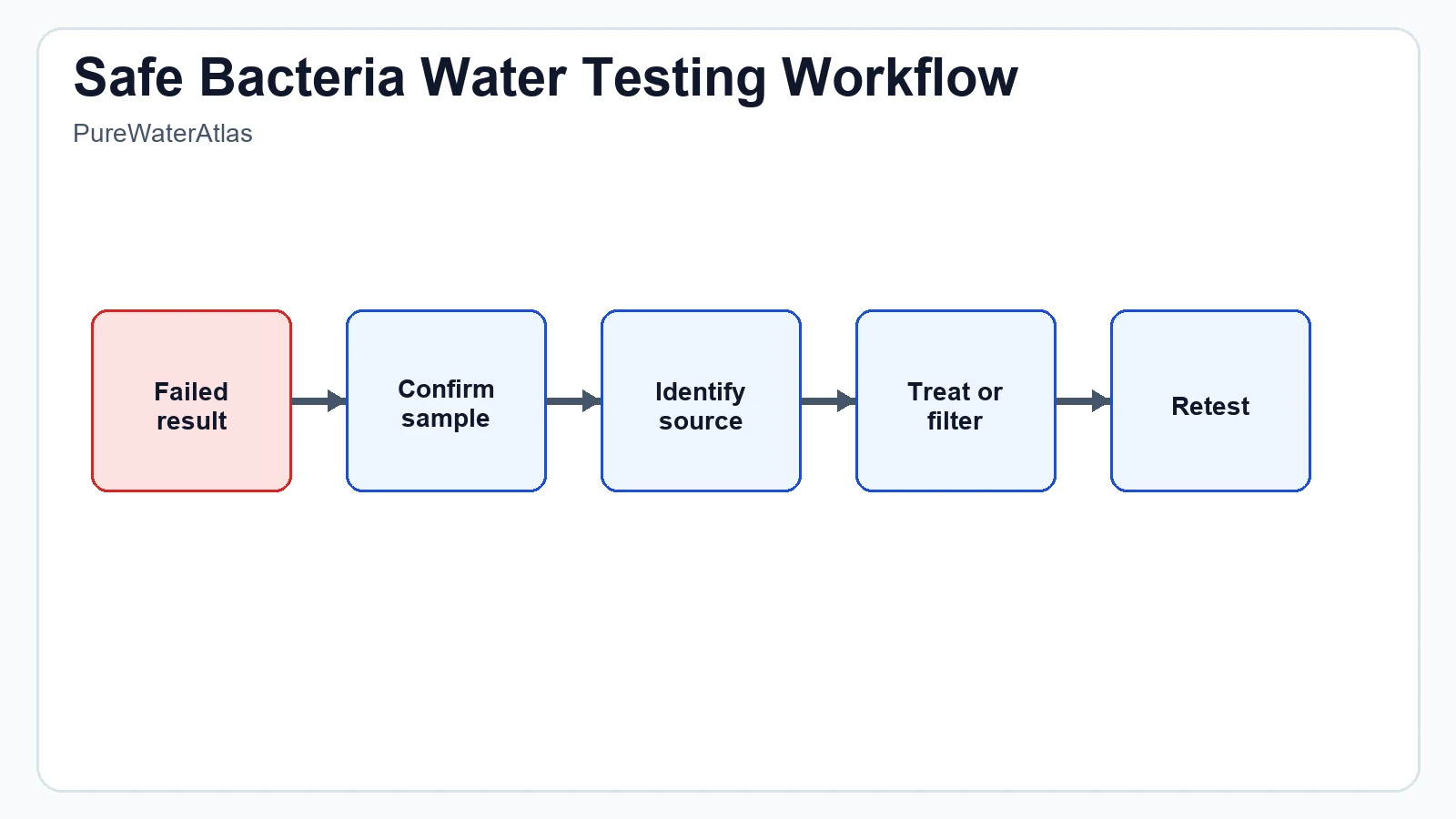
First, breathe. A positive test doesn’t mean “toxic waste.” It just means you need a deeper look. Call a certified water testing lab—your county health department can recommend one. They’ll run a more detailed test to identify the specific bacteria and source. This is like calling a doctor instead of Googling your symptoms.
 Mua 10- Minute Coliform Bacteria Water Test Kit - Detects E. coli
In the meantime, boil your water for at least one minute (three if you’re above 6,500 feet in elevation). Boiling kills most bacteria. You can also use a certified water filter—look for ones labeled “NSF 53” or “NSF 58” for bacterial reduction. Store-bought water is fine for drinking and cooking until you sort things out.
The fix is often simple
Often, the cause is something like a cracked well cap, a leaky pipe, or storm runoff. A quick repair, a dose of chlorine shock in your well, or a new filter can clear it up. I once had my well tested and found a friendly family of coliform hiding in the screen—a $50 part fixed it. No drama, just clean water.
And let’s not forget: testing is empowering. You’re not a worrywart—you’re a water detective. You’re taking charge of what flows into your coffee, your pasta, and your pet’s bowl.
A final, easy-going thought
So next time you fill a glass, give it a little nod. It’s probably fine. But for the cost of a movie ticket, you can know for sure. Testing for bacteria isn’t about fear; it’s about peace of mind. It’s like checking your tire pressure before a road trip—unsexy, but oh-so-reassuring.
And hey, if you do find a problem, you’ll be the hero of your own kitchen. You’ll fix it, learn something new, and sleep better. Now go grab that test kit—your water is waiting for its close-up.
