How To Filter Fluoride From Water

Let’s talk about fluoride. It’s the mineral that saved your teeth, then got super controversial. Some folks love it. Others want it gone from their tap water. Where do you si...
Let’s talk about fluoride. It’s the mineral that saved your teeth, then got super controversial. Some folks love it. Others want it gone from their tap water.
Where do you sit? Maybe you just don’t want that extra chemistry experiment in your morning coffee. That’s totally fine.
Filtering fluoride is tricky. It’s not like chlorine, which evaporates if you leave a glass out. Fluoride clings to water like a stubborn toddler on a sugar rush.
Must Read
But don’t worry. You can kick that mineral out. It just takes the right tool for the job.
The Usual Suspects (That Don’t Work)
First, let’s bust some myths. Boiling water does nothing to fluoride. In fact, it concentrates it! You’re just making super-fluoride tea.
Pitcher filters? The basic Brita or Pur ones? Nope. They’re great for taste, but fluoride laughs at their carbon filters. Hilarious, right?
Freezing water into ice cubes? Please. Fluoride doesn’t care about temperatures. It’s a tough little customer.
The Heavy Lifter: Reverse Osmosis
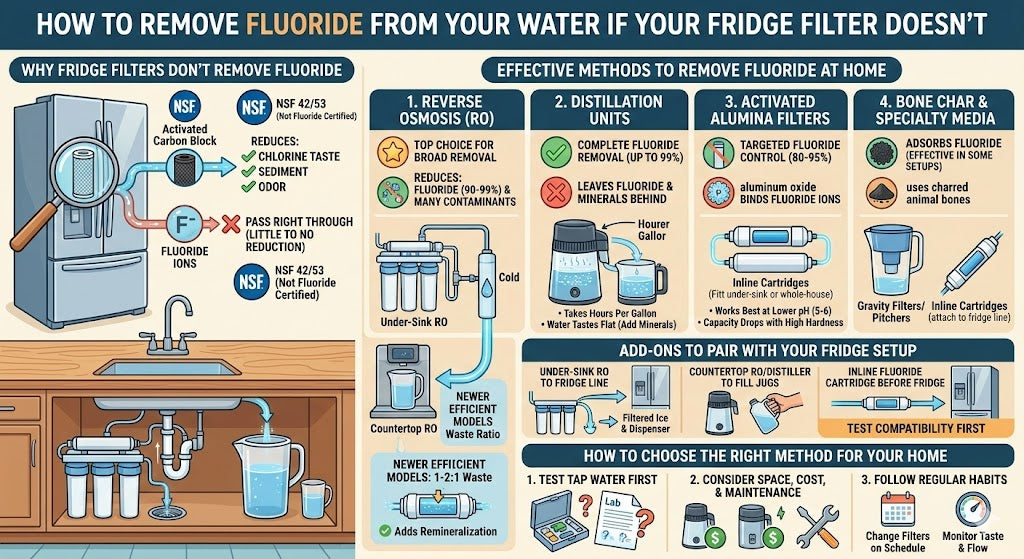
This is the king of fluoride removal. Reverse osmosis systems push water through a semi-permeable membrane. It’s like a bouncer at the club for minerals.
Fluoride molecules are too big to get through. They get tossed out with the wastewater. You get pure, fluoride-free H2O.
These systems sit under your sink. They look a bit like a sci-fi prop. Expect to remove 90-95% of fluoride. That’s a win.
Funny downside? They waste water. For every gallon you drink, you might dump three gallons down the drain. Your plants will forgive you.
 3 Ways to Filter Fluoride from Water - wikiHow Life
The Ninja Warrior: Activated Alumina
This one sounds like a magic spell. Activated alumina is a gritty, porous material. It acts like a sponge for fluoride.
You can find it in special countertop filters or whole-house systems. Water flows through, and the alumina grabs fluoride ions. It’s a chemical hug, but the fluoride doesn’t survive.
These filters are cheap, but they’re fussy. They work best at a specific pH level. Too acidic or too basic, and they take a nap. Check your water’s pH if you’re a perfectionist.
The Old School Hero: Distillation
Welcome to science class! Distillation boils water, collects the steam, and condenses it back into liquid. It’s like making rain in your kitchen.
Fluoride has a higher boiling point than water. So when the water turns to steam, fluoride stays behind in the boiling chamber. You pour out pure water.
Downside? It’s slow and uses a lot of electricity. Also, distilled water tastes flat. Add a pinch of sea salt to bring back the zing. Your taste buds will thank you.
The Budget Buster: Bone Char
Here’s the weirdest one. Bone char carbon filters use crushed animal bones. Yes, really. Bones are naturally great at grabbing fluoride.
This is an ancient technique. Native Americans used bone char for water purification. It’s caveman tech that works.
You can buy bone char filter cartridges online. They’re rare and a bit creepy on your counter. But they remove up to 95% of fluoride. Your ancestors would be proud.
 3 Ways to Filter Fluoride from Water - wikiHow Life
What About Bottled Water?
Cheater move! Check the label. Many bottled waters do contain fluoride. Some brands add it back for dental health. Look for “purified” or “distilled.”
Spring water? It often has natural fluoride. You’re just paying someone else to filter it for you. Lazy? Maybe. Effective? Sure.
But plastic bottles are a headache for the planet. Try a home filter instead. It’s cheaper in the long run and less annoying.
Why Even Bother? (Quirky Reasons)
Maybe you have a paranoid streak. That’s fun! Researching water is a fantastic rabbit hole. You’ll learn more than your dentist ever told you.
Maybe you have a weird endocrine system. Some studies suggest too much fluoride can mess with your thyroid. A filter gives you control.
Or maybe your cat refuses to drink tap water. Seriously, cats are picky about fluoride. Install a filter, and Fluffy might finally hydrate. That’s a win for everyone.
Filtering fluoride is a conversation starter. Imagine telling guests: “My water is bone-filtered.” They’ll either be horrified or fascinated.
Bottom line? You don’t need to be a chemist. Pick a method that matches your vibe. Slow distillation for the patient. Reverse osmosis for the tech enthusiast. Bone char for the adventurous.
Now go hydrate, you beautiful, fluoride-aware human. And if someone asks why you’re boiling water with a bone in the kitchen, just smile and say: It’s for science.
