How To Remove Hard Water Deposits

Let’s be honest—hard water deposits, that chalky white crust on your faucets and shower doors, are not a glamorous topic. But picture this: you walk into your bathroom, and ev...

Let’s be honest—hard water deposits, that chalky white crust on your faucets and shower doors, are not a glamorous topic. But picture this: you walk into your bathroom, and everything gleams like a spa in a five-star hotel. That, my friend, is the magic we’re about to unlock together.
Why Your Fixtures Look Like a Ghost Town
Hard water is simply water packed with minerals like calcium and magnesium. When it dries, those minerals get left behind, forming that stubborn, cloudy film we all love to hate.
Think of it as nature’s confetti—but the kind that doesn’t clean up by itself. The good news? You don’t need a chemistry degree or expensive, harsh chemicals to banish it.
Must Read
The Superstar Solution: White Vinegar
Grab that bottle of humble white vinegar from your pantry. It’s acidic, which makes it a mineral-dissolving ninja. It’s cheap, it’s safe, and it smells like a pickle for a few minutes—but so worth it.
For faucets and showerheads, fill a plastic bag with equal parts vinegar and warm water. Secure it over the fixture with a rubber band, and let it soak for about 30 minutes. Then, just wipe away the crust with an old cloth—no scrubbing required.
But Wait—What About Glass Shower Doors?
Ah, the glass door—the place where hard water deposits go to show off. Spray a 50/50 mix of vinegar and water onto the glass, let it sit for 10 minutes, then scrub with a non-abrasive sponge.
Pro tip: After rinsing, squeegee the water off every time you shower. It’s a one-second habit that halts deposits in their tracks. You’ll feel like a scientist controlling an experiment—and winning.
Baking Soda: The Gentle Giant
For tougher, built-up spots (like on your toilet bowl rim or kitchen sink), sprinkle some baking soda over the vinegar-soaked area. It will fizz like a science fair volcano—so fun—and the gentle abrasion will lift the gunk without scratching.
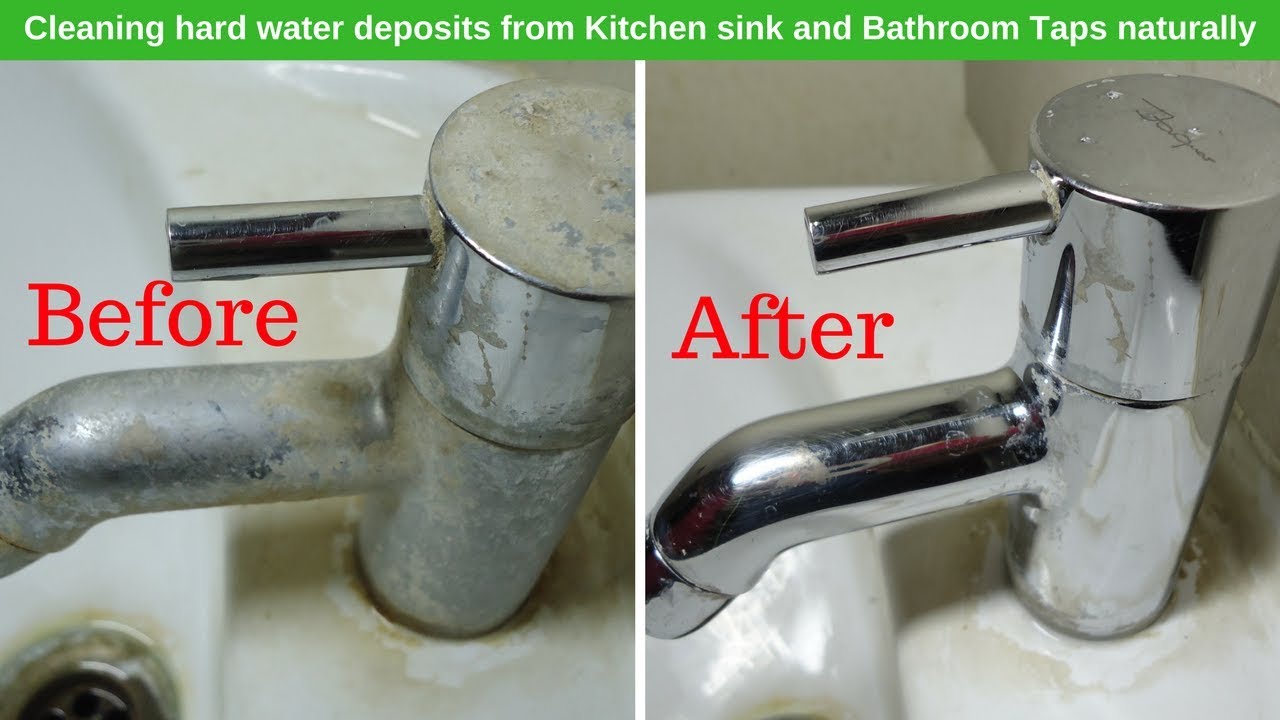 How to clean bathroom and kitcken taps - Clean Hard water deposits from
Let that paste sit for 15 minutes, then scrub with a soft brush. Rinse, and boom—your sink looks like it just had a spa facial.
Lemons: Nature’s Brightener
Cut a lemon in half and rub it directly on faucets or chrome fixtures. The citric acid cuts through deposits while leaving behind a fresh, zesty scent that beats vinegar any day.
Bonus: Lemon juice is also a natural bleach for cloudy glass. Just rub it on, let it sit for five minutes, and rinse. Your grandmother would approve.
What About That Weird Ring in the Toilet?
Pour a cup of vinegar into the bowl, let it sit for an hour, then add a cup of baking soda. The fizz will attack the mineral ring like a tiny army. Scrub with a pumice stone (dipped in water first—always wet) for stubborn spots.
That ring? Gone. You’ll feel like you just conquered a mini kingdom. Pop a celebratory fizzy drink after—you earned it.
 Clean Hard
A Quick Warning: Know Your Surfaces
Vinegar and lemon are acids, so avoid using them on natural stone (like marble or granite). They can etch the finish. For those, use a store-bought cleaner made specifically for stone—or just wipe with a dry microfiber cloth after each use.
When in doubt, test a tiny hidden spot first. This is the adult version of “look before you leap,” and it keeps your surfaces happy.
Why Bother? Because Little Wins Spark Big Joy
Removing hard water deposits isn’t just about clean fixtures. It’s about reclaiming your space—making it sparkle with minimal effort and maximum satisfaction. You don’t need fancy tools, just everyday pantry staples and a little curiosity.
Think of it as a tiny, repeatable victory in your week. Each time you wipe away that crust, you’re saying, “I got this.” And that feeling infects other parts of your life.
So go ahead. Soak that faucet. Fizz that sink. Squeegee that door. You are now the person who knows how to make water work for you, not against you. And that’s not just clean—it’s inspiring.
Curious about tackling other household mysteries? The same playful, no-fuss energy applies to everything from stovetop spills to sticky drawer handles. Your home is a lab of fun projects—and you, my friend, are the brilliant, resourceful scientist at the helm.
