How To Filter Rain Water To Drink

So, you want to drink the sky? That’s wild. And honestly? It’s kind of awesome. Rainwater is nature’s free drink. But it’s not a clean glass of tap water straight from the clo...
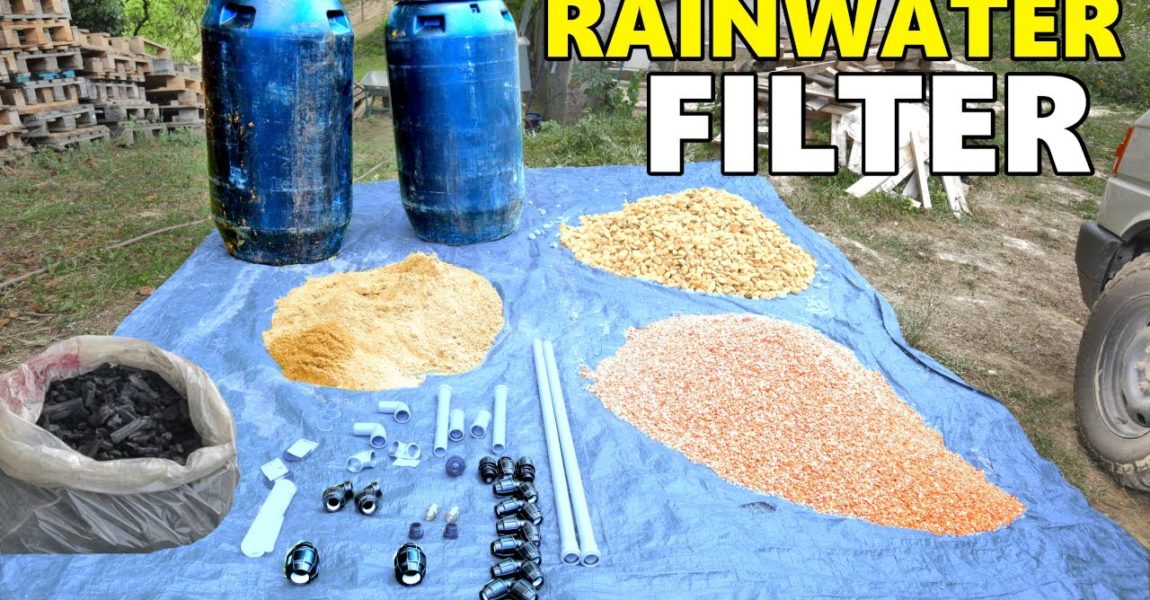
So, you want to drink the sky? That’s wild. And honestly? It’s kind of awesome.
Rainwater is nature’s free drink. But it’s not a clean glass of tap water straight from the clouds. A raindrop is a little sky-surfer—it picks up dust, bird secrets, and roof gunk on the way down.
Don’t worry. You can fix that. Filtering rainwater is like giving it a fancy spa day.
Must Read
Let’s dive in. We’re keeping this casual, not post-apocalyptic.
Step One: Catch the Rain Like a Boss
Your collection point matters. A gutted-downspout or a clean barrel works. Avoid asphalt roofs—that’s just making chemical soup.
Metal roofs are rainwater royalty. Clay tiles are nobles. Wood shakes? They’re like a moldy sponge. Skip those.
First-flush diverter is your new best friend. It dumps the first dirty splash—the one loaded with bird gifts and dust. Let the roof wash itself before you catch the good stuff.
Step Two: The Pre-Filter (aka The Obvious Move)
Grab a fine mesh screen. Put it over your barrel. This keeps out leaves, bugs, and the occasional confused frog.
You don’t want frog tea. Trust me.
This simple layer handles big junk. It’s the bouncer at your water party. No floaters allowed.
Step Three: Sediment Settles (Get It?)
Let the water sit for 24 hours. Gravity does the heavy lifting. Anything heavy—sand, dust, tiny roof grit—drifts to the bottom.
You can siphon the clear water from the top. This is called “decanting.” Fancy, right?
Don’t stir up the bottom gunk. That’s the “sludge layer.” Nasty name, even nastier taste.
Step Four: The Big Guns – Ceramic and Carbon
Now we get serious. A ceramic filter is like a rock-star sponge. It has microscopic pores that squeeze out bacteria and protozoa.
These little pores are 0.2 microns. That’s smaller than a wide-awake amoeba. No critters get through.
Pair it with an activated carbon filter. Carbon grabs chemicals, bad smells, and weird tastes. It’s the flavor magician. Rainwater can taste flat—carbon fixes that.
Step Five: Boil if You’re Nervous (No Shame)
Boiling is the “I want zero risk” method. A rolling boil for one minute kills everything. Even the drama.
 How To Filter Rain Water To Drink: Safe & Easy Methods Explained - RO
It’s old-school. It’s reliable. Your grandma would approve.
Boiling won’t remove dirt, though. So filter first, then boil. Don’t drink muddy hot water.
Step Six: UV Light – The Sci-Fi Option
Portable UV pens exist. They zappity-zap bacteria and viruses in seconds. It’s like a lightsaber for your water.
You need fairly clear water for it to work. Cloudy water hides microbes from the light.
UV is fast. It’s fun. It makes you feel like a tech wizard. But it doesn’t remove sediment, so pre-filter always.
Step Seven: Distillation – The “I Have No Enemies” Path
Distillation boils water, catches the steam, and condenses it back to liquid. It leaves everything else behind.
You get water so pure it’s almost dumb. No minerals. No nothing. Perfect for survivalists or people who hate flavor.
Distilled water tastes flat. That’s fine for emergencies. But add a pinch of salt if you drink it long-term—your body needs some minerals.
Quirky Fact: The Sky Factory
One inch of rain on a 1,000 square foot roof equals about 600 gallons. That’s enough water to fill a giant kiddie pool… and keep you alive for months.
You’re basically farming clouds. That’s ridiculous and magnificent.
Cloud farming. Say that three times fast.
Funny Detail: The Guest You Don’t Want
Roofs collect pigeon memories. Literally. Pigeon poop can carry nasty stuff like cryptosporidium or E. coli.
Your filter game must be strong. Ceramic + carbon + UV = a pigeon’s kryptonite.
Don’t be grossed out. Just be smart. Your roof is not a salad bar for bacteria.
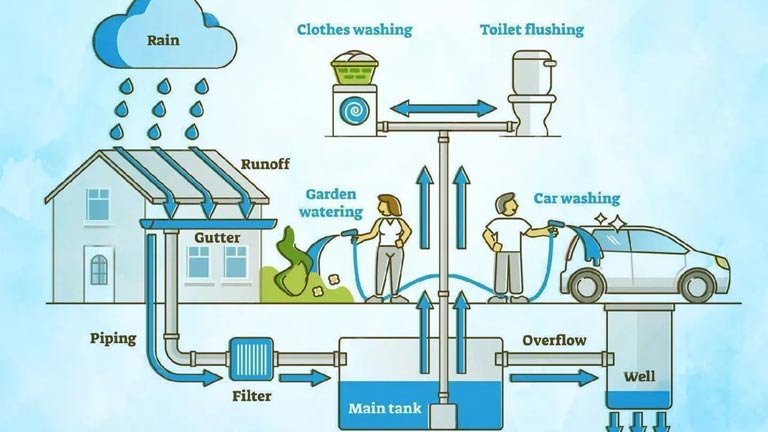 How to Filter Rain Water and Use It for Drinking & Other Purposes
Storage: Keep It Chill, but Dark
Store filtered water in opaque containers. Light grows algae. Algae turns your crisp water into swamp-juice.
Use glass, BPA-free plastic, or stainless steel. Keep it cool (below 70°F) to slow any microbial parties.
Add a few drops of food-grade hydrogen peroxide for long-term storage. It keeps things stable. It’s like a tiny security guard for your water.
Why This Is Just Fun
You are engineering a system for something that falls from space. Every raincloud is a delivery truck. And you’re the receiving manager.
It’s a conversation starter. “Yeah, I drink sky-juice. No big deal.” People will think you’re a rugged genius.
Or a weirdo. Either way, you’ll have water.
The Golden Rule: Test Your Water
Buy a simple test kit. Check for pH, heavy metals, and bacteria. Don’t trust your taste buds alone. Rain can taste fine and still hide trouble.
Test it once a season. Your health isn’t a guessing game.
Better safe than taking a weird nap.
Final Pro-Tip: The “No-Filter” Option (Kidding... Kinda)
If you’re truly desperate, boil rainwater for 10 minutes and run it through a clean T-shirt. That’s the caveman method.
It works in a pinch. But don’t make it a habit. Your T-shirt isn’t a ceramic filter.
And please—don’t drink from puddles. That’s not rain. That’s street soup.
So go set up a barrel. Be the person who casually sips the sky. It’s free, it’s renewable, and it makes you look secretly powerful.
Plus, you’ll never fear a drought again. You’ll just grin, point at the clouds, and say, “My turn.”
