How Does The Water Softener Work

So, you’ve got hard water, huh? That stuff that leaves your shower glass looking like a crime scene and makes your soap feel like it’s given up. It’s basically water that’s be...
So, you’ve got hard water, huh? That stuff that leaves your shower glass looking like a crime scene and makes your soap feel like it’s given up. It’s basically water that’s been on a mineral-collecting road trip, picking up calcium and magnesium along the way.
The hero of this story? A water softener. It’s like a tiny, hardworking spa for your entire plumbing system, and it works in a surprisingly simple (and kind of magical) way. Let’s pull back the curtain.
The Big Swap: Ions on the Dance Floor
Imagine your water softener is a nightclub bouncer. Hard water rolls up with these big, heavy calcium and magnesium ions—the troublemakers. The bouncer says, “Sorry, you can’t come in unless you swap with someone else.”
Must Read
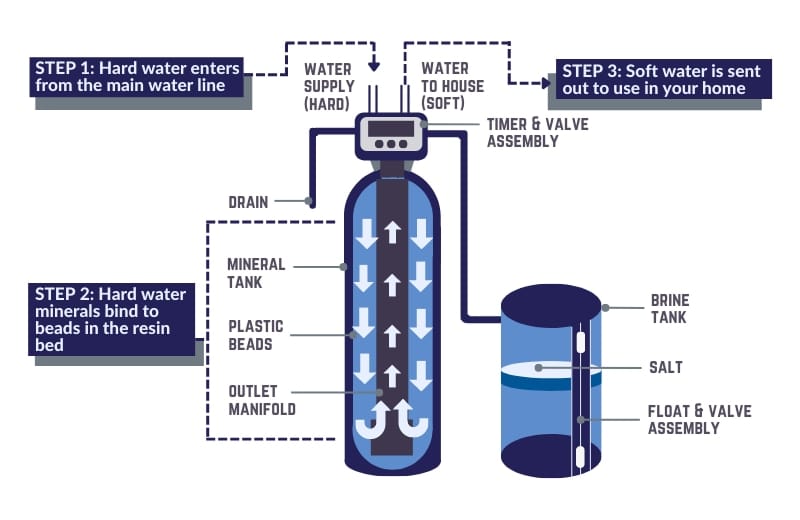
That someone else is a friendly little sodium ion (aka salt). Inside the softener’s tank are millions of tiny resin beads, each coated in these sodium ions. When hard water flows through, the beads grab the calcium and magnesium, and in return, they release their sodium. It’s a chemical swap party.
The result? The water that leaves your tap now only has sodium—no scale, no spots, no drama. Your appliances breathe a sigh of relief, and your hair stops feeling like straw. You’re welcome, hair.
The Resin Beads: Tiny Hairy Heroes
Those resin beads are the real MVPs. They look like tiny, yellow BBs, but they’re full of negative charges—like little sticky hands that love grabbing positively charged mineral ions. Think of them as Velcro with a sweet tooth for calcium.
But here’s the kicker: these beads can only hold so many minerals before they get full. After a while, they’re like a stuffed turkey after Thanksgiving—useless. That’s where the next step comes in.
And it involves salt. Lots of it. Which, let’s be honest, is the most satisfying part of owning a water softener.
The Brine Tank: The Saltwater Jacuzzi
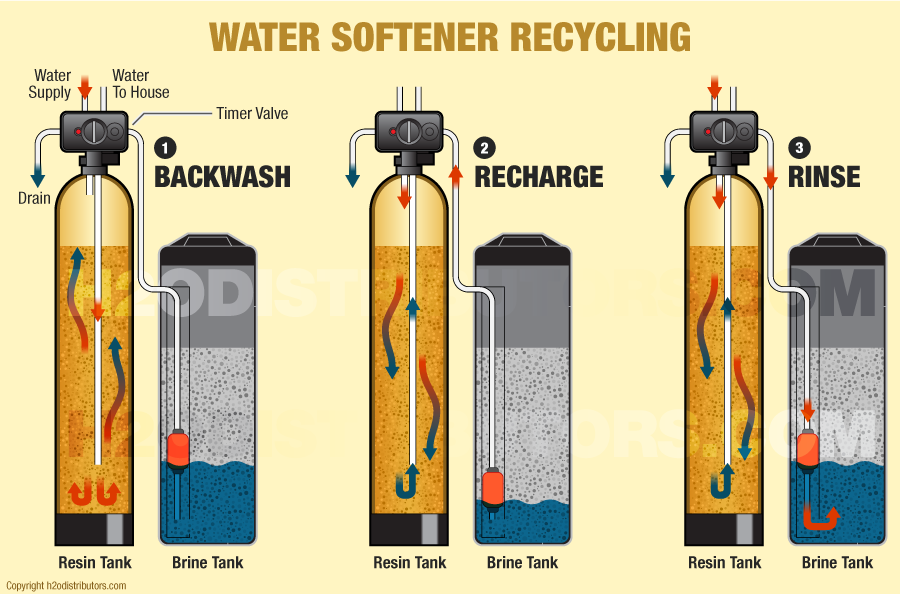
Your water softener has a second tank—the brine tank. This is where you dump those big bags of solar salt or pellets. It’s like a saltwater jacuzzi for the resin beads, and it’s crucial.
When the resin beads are full of calcium, the softener does something brilliant: it backwashes a super salty solution (called brine) through the tank. This brine is crazy concentrated—so much so that it forces the calcium and magnesium to let go and get flushed down the drain.
 How Does A Water Softener Work Step By Step | Detroit Chinatown
But here’s the fun part: the beads then reload with fresh sodium from the brine. They’re regenerated, like a video game character that just found a health pack. Good as new!
This whole regeneration cycle happens automatically—usually in the middle of the night, when you’re dreaming of fluffy towels and squeaky clean dishes. It’s basically a robot janitor for your water.
Why Salt? Why Not Just Use Magic?
Great question. Salt is cheap, abundant, and its ions are the perfect size to slip onto those resin beads. Also, magic isn’t real (sorry to disappoint). Sodium just happens to be the ideal “candy” that the beads want to trade.
Some people worry about the extra sodium in their water. Good news: it’s usually negligible—about as much as a slice of bread. If you’re on a strict low-sodium diet, you can use potassium chloride instead. Your wallet will cry, but your heart will thank you.
So, no magic. Just chemistry. And if you ask me, chemistry that fixes your dishes is pretty magical anyway.
The Bypass Valve: Your Water’s Secret Exit
Here’s a little-known secret: most softeners have a bypass valve. This is a handle or knob that lets you route water around the softener. Why would you do that?
Maybe you need to water your plants (they prefer hard water’s minerals) or fill a fish tank (sodium can upset the fishy balance). Or maybe your softener is having a bad day and needs a nap. The bypass valve is your emergency exit.
 Water Softener How They Work | How Does a Water Softener Work? Parts
It’s like a backstage pass for your tap—only use it when you need to, but it’s nice to know it’s there.
When Things Go Wrong: The Singing Softener
Sometimes your softener will make noises. Gurgles, clicks, or a sound like a grumpy walrus. Don’t panic—it’s probably just air in the system or the resin beads shifting during regeneration.
But if you hear a hissing or a loud bang, that’s your softener’s way of saying, “Hey, I need maintenance!” Check the salt level first. A softener without salt is like a teenager without Wi-Fi—totally useless.
Pro tip: Don’t ignore the salt. Keep it topped up, and your softener will be the quiet, loyal friend you never knew you needed.
The Final Rinse: Soft Water Life
So, there you have it. A water softener is a simple machine that uses resin beads, a salty bath, and a clever swap trick to turn hard, scaly water into something that feels like a silk pillow on your skin.
Your dishes will sparkle. Your laundry will be softer than a cloud’s pajamas. And your water heater? It’ll live a long, mineral-free life, free from the crusty buildup that makes it die young.
You’re basically giving your home a hug every time the softener kicks in. And that’s pretty cool, right?
So go ahead—pat your water softener on its metallic tank. It’s doing the heavy lifting so you can enjoy a clean glass of water without a side of chalk. Cheers to that, friend! Soft water for the win. 🎉
