How Does Uv Light Kills Bacteria

So, you’ve probably heard that UV light can kill bacteria, and you might be imagining a sci-fi laser zapping germs into oblivion. Honestly, it’s not far off—just with way less...

So, you’ve probably heard that UV light can kill bacteria, and you might be imagining a sci-fi laser zapping germs into oblivion. Honestly, it’s not far off—just with way less drama and no dramatic sound effects. Let’s break down how this invisible superhero actually works.
The Secret Weapon: Ultraviolet Photons
Think of UV light as tiny, invisible wrecking balls flying around at the speed of light. Unlike the gentle, sunburn-causing UV you get at the beach, we’re talking about UVC light—the strong stuff.
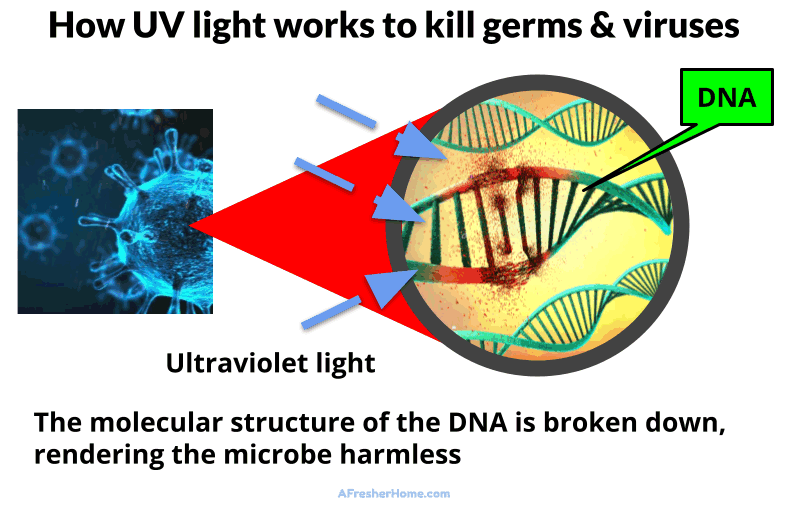
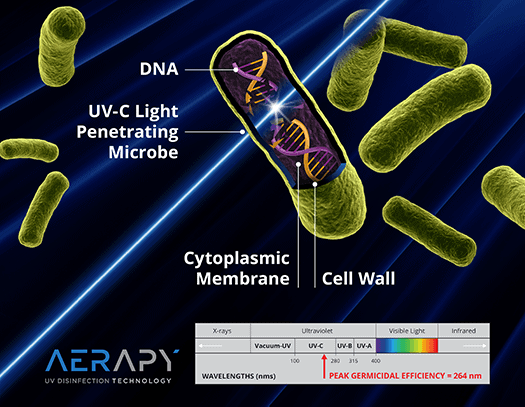
When UVC light hits a bacteria, it doesn’t just bounce off. Instead, its high-energy photons punch straight through the microbe’s outer shell and into its DNA.
Must Read
Imagine a bacteria’s DNA as a complex instruction manual for making more bacteria. UV light comes along and writes giant scribbles all over it.
The “Bully” Effect on DNA
Here’s the nerdy part, but I’ll make it fun: UV photons have just enough energy to break chemical bonds inside the DNA. They specifically target the bonds between the building blocks—called thymine bases—and force them to stick together in a weird clump.
This clump is called a thymine dimer. And to a bacteria, it’s like having a bulldozer parked in your living room—you can’t use the space anymore.
With that clump in the way, the bacteria’s DNA can’t unzip to copy itself. No copying means no reproduction. And without reproduction, the bacteria becomes a lonely, useless little loner.
Why Doesn’t the Bacteria Just Fix Itself?
Most bacteria have a repair crew called photolyase—like a tiny molecular handyman. But here’s the trick: if you hit them with enough UV light all at once, you overwhelm their repair crew.
Think of it like trying to fix ten flat tires on a car while raindrops keep melting the rubber. The bacteria’s repair guys just give up and cry.
 Uv Light Effect On Bacteria at Johnathan Olivar blog
Eventually, the DNA damage becomes so severe that the bacteria cannot function. It basically gets a fatal case of “DNA tummy ache” and shuts down permanently.
Wait, Is This Safe for Humans?
Great question, and the answer is: not directly. That same UVC light can also damage your skin and eye cells, which is why you never stare at a UV sanitizer lamp.
But clever engineers have made it safe by containing the light. Handheld wands, phone sanitizers, and water filters all encase the UV so it only touches the germs.
Some even use a special type called far-UVC, which is too weak to hurt human cells but still strong enough to annihilate bacteria. Science, baby!
Real-life Examples of UV at Work
Hospitals now use UV robots that roll into empty rooms and blast everything with light. The robots look like friendly R2-D2 units, except their only job is to destroy Staphylococcus.
Water treatment plants also use UV to kill E. coli and Giardia. They don’t boil the water—they just flash it with light like a vampire getting sun exposure.
Even your phone can get cleaned with a UV case. Pop your phone in, close the lid, and poof—every fingerprint that had germs is now a germ ghost town.
 How Does Uv Light Kill Bacteria | Gas Furnace
But Does It Kill Everything?
UV light is amazing at killing bacteria and viruses, but it’s not a magic eraser. It can’t remove dust, dirt, or grime—those need soap and water.
Also, some spores have armor-like shells that block UV rays. Think of them as the medieval knights of the microbe world—hard to kill directly.
That’s why UV is often used with other cleaning methods. It’s the team player that finishes the job after soap did the heavy lifting.
The Verdict: Sun Power, Simplified
UV light kills bacteria by sabotaging their DNA with so many errors that they can’t reproduce or live. It’s nature’s way of saying, “Don’t mess with the sun’s little cousin.”
And the best part? It works without any chemicals. No bleach fumes, no toxic residue—just pure, clean light doing its thing.
So next time you see a UV sanitizer, remember: it’s basically a miniature, controlled sunbeam on a mission. And those bacteria? They never saw it coming.
Uplifting Conclusion: Isn’t it wonderful that we can fight invisible monsters with something as simple as light? In a world that feels messy sometimes, know that the very same photons that paint sunsets also keep your water safe and your phone clean. So go ahead—blast away the bad stuff, let the good light in, and smile. The germs don’t stand a chance against a little bit of sunshine.
