How Much Is Water Bill Per Month

Let’s be real—nobody dreams about their water bill. You’re more likely to daydream about winning the lottery or finding a forgotten twenty in your jeans. But hey, we all need...

Let’s be real—nobody dreams about their water bill. You’re more likely to daydream about winning the lottery or finding a forgotten twenty in your jeans. But hey, we all need to know: How much is a water bill per month anyway? Grab a glass of H2O (tap water, obviously—we’re on a budget here), and let’s dive in.
The Short Answer (Because You’ve Got Places to Be)
On average, a U.S. household pays about $40 to $60 per month for water. Yes, that’s less than your Netflix-and-takeout habit.
Of course, your mileage will vary—especially if you’re watering a botanical garden or have a teenager who takes hour-long showers. Steve, we’re looking at you.
Must Read
What Makes Your Bill Go Up or Down?
Your water bill is like a moody friend. It changes based on where you live, how many people are in your home, and how much you water your lawn. Cities in the Northeast? Expect higher rates (hello, aging pipes). Out in the Southwest? You might pay more for conservation fees—even if you just own a single cactus.
Household size matters too. A single person might pay $20 to $30, while a family of four often hits $60 to $100. Sorry, big families—your laundry is the real MVP here.
The Secret Ingredients in Your Bill
Your water bill isn’t just “water.” It’s a sneaky mix of usage charges, sewer fees, and sometimes trash pickup. Yes, you’re paying to flush AND throw away banana peels. Who knew waste management was such a multitasker?
About 40% of your bill is actually for wastewater treatment. So, every time you flush, you’re funding a tiny chemical engineer in a lab coat. You’re welcome, science.
How to Read Your Bill (Without a Decoder Ring)
Look for the term “CCF” or “hundred cubic feet”—it’s like the metric system’s mysterious cousin. One CCF equals about 748 gallons. That’s roughly the amount of water you’d use to fill a small swimming pool. Or, you know, take 15 super-long showers.
The average American uses about 80 to 100 gallons per day. That’s a lot of dishwashing, dog bathing, and accidentally leaving the tap running while you check Instagram.
How to Lower Your Bill (Without Living in a Cave)
Want to save money? Fix that dripping faucet. A single drip per second wastes over 3,000 gallons a year. That’s like pouring your savings down the drain—literally. Drip, drip, drip… there goes your latte fund.
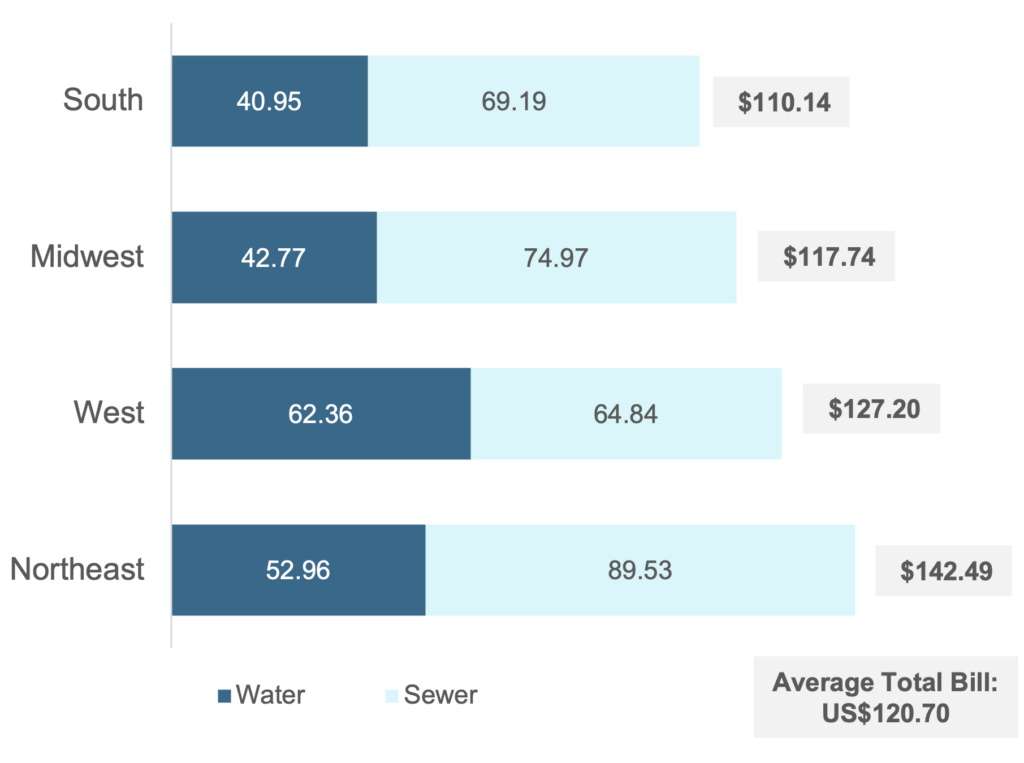 Local Water Challenges Drive US Water Utility Rates Up 4%
Also, try shorter showers (say, five minutes instead of a full album-length epic). And only run the dishwasher when it’s full. Unless you enjoy paying extra to wash one plate and a spoon. You do you, but your wallet might object.
The Sneaky Water Hogs in Your Home
The toilet is the biggest culprit—it uses about 27% of your indoor water. If your toilet is from the 1990s, it’s probably flushing away cash. Older models use 3.5 gallons per flush; modern ones use 1.28. That’s like upgrading from a gas-guzzler to a hybrid. Your toilet deserves a green award, honestly.
And don’t forget the washing machine. Front-loaders use less water than top-loaders, so pick wisely—or just accept that your clothes will smell fine either way.
Regional Drama: Who Pays the Most?
Water bills vary wildly by state. Washington, D.C. residents pay around $70 per month (fancy water, I guess). In Wisconsin, it’s closer to $35. So, if you’re moving for cheaper showers, you now have a map.
Los Angeles? You might pay $85—but that includes the privilege of complaining about drought while watering a palm tree. Priorities, people.
What About Apartments vs. Houses?
Living in an apartment? Your water bill might be bundled into rent. Lucky you—you’re paying for it anyway, but at least it’s hidden. If you’re in a house, you see every drop. Pros: control. Cons: the anxiety of watching your lawn dry up in July.
Pro tip: If your landlord says “water is included,” smile and take a long shower. Justice served, one hot stream at a time.
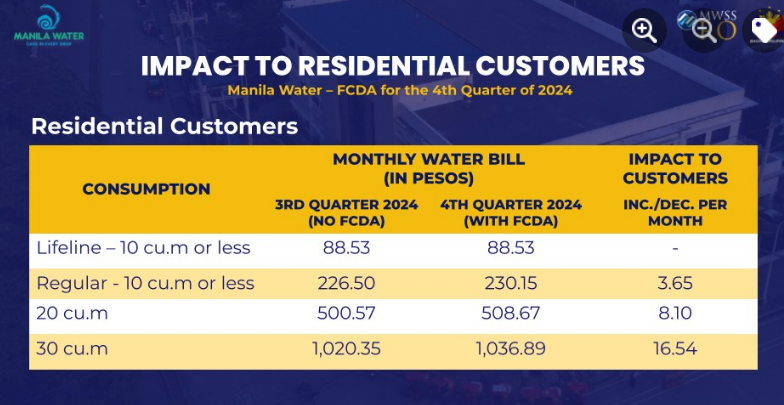 Manila Water customers face higher bills, Maynilad rates to decrease
Can You Predict Your Exact Bill?
Not really—water rates change like your favorite coffee shop’s prices. But a good rule of thumb: $0.005 to $0.01 per gallon. So, 1,000 gallons costs you about $5 to $10. Do the math during boring meetings—it’s surprisingly fun.
Or just use an online calculator. There’s an app for everything these days, including “how much did I spend on watering my begonias?” You’re welcome, modern world.
The Fun Part: Compare Your Bill to Fun Stuff
Think of your $50 monthly water bill as: one movie ticket (with popcorn), half a tank of gas, or three fancy coffees. Or you could think of it as the price of life itself. No pressure.
But honestly? Compared to internet bills ($60) or electricity (sometimes $150), water is a bargain. It’s the unsung hero of your budget. Water bill, I salute you.
Final Splash: Uplifting Conclusion
So, next time you open that water bill, don’t groan. Smile. Because for forty or fifty bucks, you’re getting the elixir of life delivered right to your faucet—no camel rides or well-digging required. You get to take a hot shower, wash your favorite jeans, and hydrate your plants (and yourself) without a second thought.
And hey, if it feels too expensive, just remember: people pay way more for bottled water with a fancy label. Your tap water is basically the same stuff, minus the marketing budget. You’re already a genius.
Keep flowing, keep saving, and never apologize for the occasional ten-minute shower. Life is short—enjoy the warm water. And if all else fails, just blame the leaky toilet. You deserve that peace of mind.
