How Much Does Water Testing Cost

So, you want to know how much water testing costs? Maybe you’ve got a weird taste in your tap water, or you’re suddenly suspicious of your well. Let’s dive in—pun fully intend...

So, you want to know how much water testing costs? Maybe you’ve got a weird taste in your tap water, or you’re suddenly suspicious of your well. Let’s dive in—pun fully intended—and figure out what you’re actually paying for.
First, a little truth bomb: water testing isn’t a one-size-fits-all thing. The cost can range from less than a fancy coffee to more than a nice dinner out. It all depends on what you’re looking for and how paranoid you want to get.
The Bare Bones: Basic Testing
If you just want to know if your water is safe to drink, a basic bacteria test is your cheapest option. You’re looking at around $20 to $50. That usually checks for coliform bacteria and E. coli—the nasty stuff that can make you sick. It’s like a quick health check-up for your H2O.
Must Read
You can also buy a home test kit for $10 to $30. These are great for a quick “is this water weird?” vibe check. But fair warning: they’re not super accurate. Think of them as the horoscope of water analysis—fun, but don’t base your life on them.
The DIY vs. Lab Showdown
Lab tests are the gold standard, and they cost more for a reason. A standard potability test (bacteria + basic chemicals like nitrates, pH, and hardness) runs $100 to $200. That’s the “I’m moving into a new house and need to be sure” package. It’s like hiring a detective for your pipes instead of guessing.
Pro tip: many local health departments offer cheap or even free bacteria tests. Seriously, call them up. It’s like finding a $20 bill in an old coat—unexpected but amazing. They want you to have safe water almost as much as you do.
The Middle Ground: Fancy Chemicals
Now we’re getting into “what else is in there?” territory. Want to test for lead, copper, pesticides, or arsenic? That’ll bump the price up to $150 to $400. Each individual contaminant adds a little more to the bill. Lead testing alone is typically $30 to $60. Copper? Similar price. It’s like ordering a la carte at a restaurant—you pay for every extra ingredient.
If you have a private well, you really should test for nitrates and bacteria every year. It’s not glamorous, but it’s smarter than playing Russian roulette with your water glass. One bad batch of nitrates can turn your well into a science experiment gone wrong.
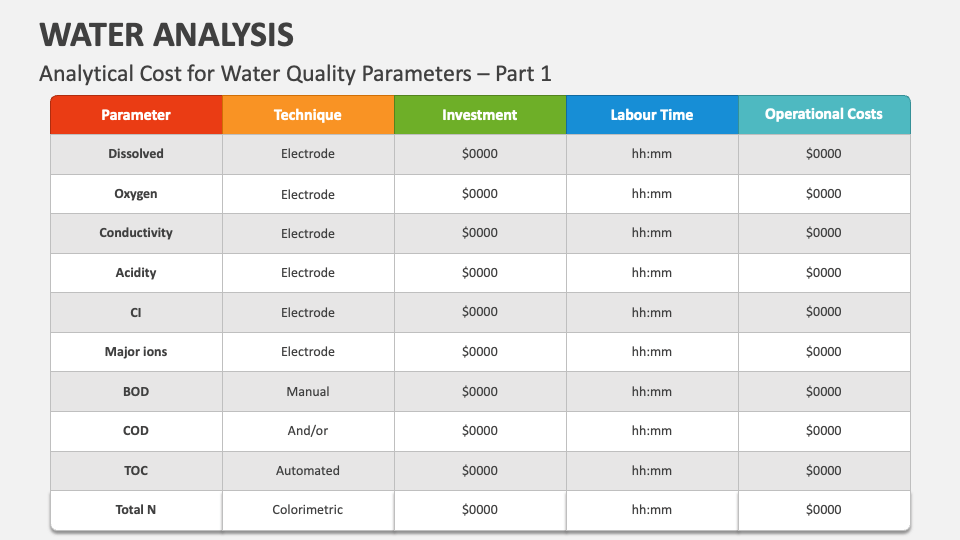 Water Analysis PowerPoint Presentation Slides - PPT Template
The “Make Me a Scientist” Package
For the truly curious (or the truly worried), there are comprehensive panels. These test for everything: over 80 contaminants including heavy metals, volatile organic compounds, and radiological stuff. That costs $400 to $1,000. Yes, that’s real money. But if you’re buying a house with an old well or a mysterious water source, this is your insurance policy.
Think of it this way: a full test is cheaper than a single emergency room visit. And it doesn’t come with a side of anxiety. Plus, you get a fancy report that makes you feel like a water expert. Frame it. Show it off at parties.
Hidden Costs (and Hidden Savings)
Don’t forget the sampling fee. Some labs charge $25 to $50 just to take the water from your faucet. That’s basically a “we touched your sink” tax. You can save by collecting the sample yourself—just follow the instructions exactly. No licking the bottle. I mean it.
Shipping costs are another sneaky one. If you’re mailing a water sample to a faraway lab, you might pay $10 to $30. It’s like sending a very boring package to a very important scientist. Pack it well, or you’ll be testing for “spilled Sprite” instead of actual contaminants.
Here’s the best part: you can often bundle tests. Many labs offer a “well water package” for $100 to $250 that includes bacteria, nitrates, pH, and hardness. It’s like the combo meal at a fast-food joint—more bang for your buck, and no weird aftertaste.
The Great Regional Price Rift
Where you live matters. Testing in rural Alaska? That’ll cost you more than testing in suburban Ohio. Labs in big cities often have lower prices because of competition. Your local lab might be cheaper than a national chain. Always compare three quotes. It’s like shopping for a used car, but with fewer high-pressure sales tactics and more test tubes.
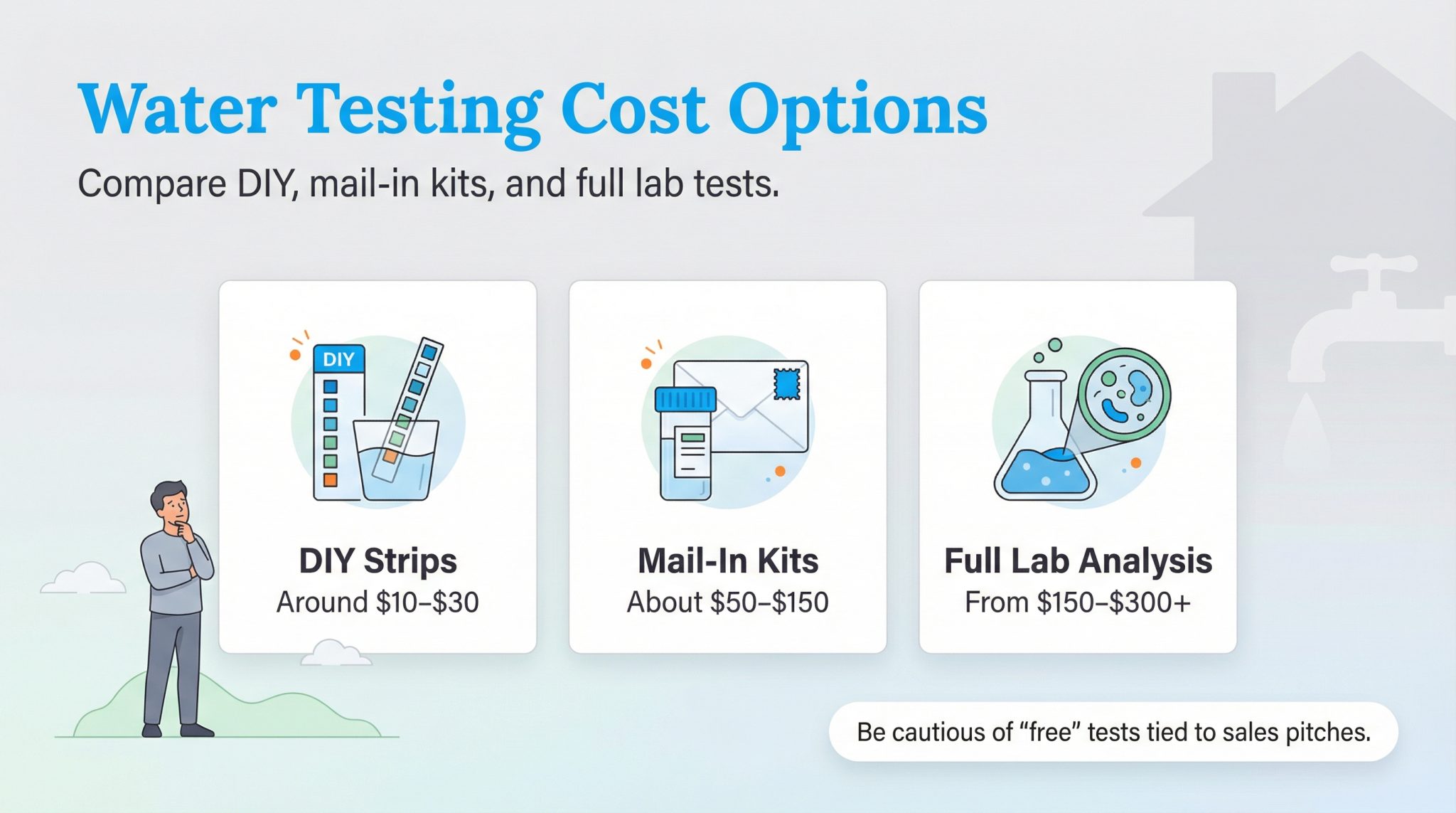 How to Test Water Quality at Home: DIY Kits vs. Professional Labs
Also, ask about state-certified labs. They’re the real deal. The price might be a tad higher, but the results are legally valid. That matters if you’re dealing with a home sale, a lawsuit, or an angry landlord. Trust me, no one wants to argue in court with a home test kit from a hardware store.
Should You Just Buy a Bottle of Water Instead?
Not so fast. Bottled water isn’t magic. It’s often just filtered tap water from someone else’s city. Testing your own water gives you actual data, not just marketing hype. For the price of a month’s worth of bottled water (say, $30 to $50), you could do a basic lab test and know the truth forever.
Plus, think of the plastic waste! You’ll feel like an environmental hero while sipping from your tap with confidence. That’s a win-win.
The Uplifting Ending (I Promise)
Water testing costs between $20 and $1,000, but here’s the secret: knowledge is priceless. When you know your water is safe, you stop worrying. You take a big, happy gulp without a second thought. You can even make terrible jokes about “H2-oh-my-god-it’s-delicious.”
And if your water tests bad? You can fix it. Filters, softeners, or a simple call to a plumber. Testing isn’t about scaring you—it’s about giving you power. You’re the captain of your own glass. You’re the boss of your hydration.
So go ahead. Spend a little money, get a little peace of mind, and then drink up. Your water is about to become your favorite thing. Cheers to that—and to never wondering, “What is that… flavor?” ever again. 🚰✨
