What Is A Ro Water Filter System

So, you’ve heard the term “RO water filter system” thrown around. Maybe at a party, or from that friend who suddenly became a water snob. Honestly, it sounds like something fr...

So, you’ve heard the term “RO water filter system” thrown around. Maybe at a party, or from that friend who suddenly became a water snob. Honestly, it sounds like something from a sci-fi movie, right? It’s not. It’s just a fancy way to say “we squeeze water through a really, really tight sieve.”
First things first: what does RO even stand for?
RO is short for Reverse Osmosis. I know, the name is hilariously clinical. Osmosis is what plants do to drink water. Reverse Osmosis is what we do to make that water scarily clean. Think of it as the overachiever of water filters.
Imagine you have a super-fine net. So fine that only tiny water molecules can get through. Everything else—the bad guys—get left behind. That’s the basic idea of an RO system. It’s like a bouncer at a club, but for your tap water.
Must Read
What does it actually remove?
Oh, the list is wild. We’re talking lead, chlorine, fluoride, arsenic, and even those weird pharmaceutical leftovers that nobody wants in their morning coffee. It doesn't just filter. It purges. It’s the Marie Kondo of your water supply.
Ever taste that weird “pool” flavor from tap water? That’s chlorine. An RO system kicks it to the curb. It also gets rid of sediment, rust, and that gross earthy taste from old pipes. Basically, if it’s not pure H2O, it’s getting fired.
How does this wizardry actually work?
Okay, picture this: you have a semi-permeable membrane. That’s just a fancy name for a plastic sheet with microscopic holes. Water is pushed through it under pressure. The good stuff passes. The bad stuff gets stuck and gets flushed down the drain.
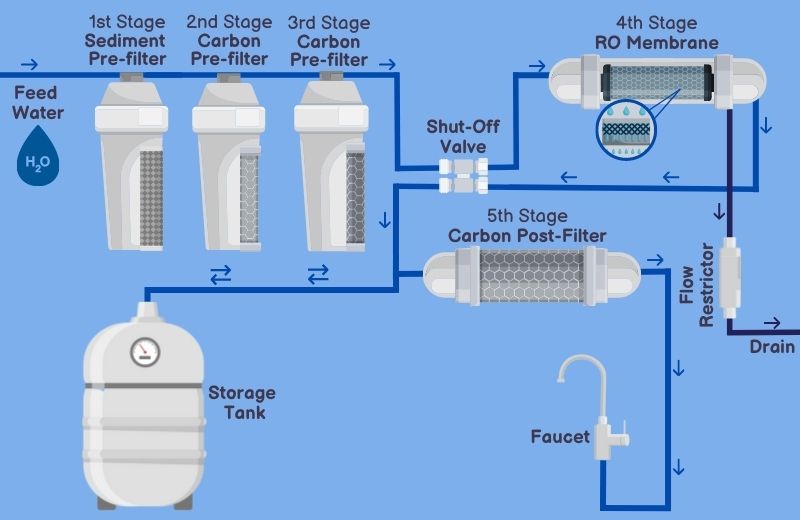
It’s not instant, by the way. It’s a slow, methodical process. Think of it as a water yoga class—slow, deliberate, and very zen. The system usually has three to five stages of filtration before the water even hits that fancy membrane.
 SuperAir Model-SN102 Reverse Osmosis 5 Stage Filtration System | Super
First, a sediment filter catches sand and dirt. Then a carbon filter grabs the chlorine. Then the RO membrane does its heavy lifting. Finally, a post-filter polishes the taste. Yes, it’s a whole production. Your water is literally getting a spa treatment.
The annoying part: waste water
Here’s the honesty corner. RO systems do produce waste water. For every gallon of clean water, you might send 2–4 gallons down the drain. Sounds bad, right? I know. But newer systems, like those with a permeate pump, waste way less.
Think of it this way: you’re paying a tiny water tax for insanely clean water. You can also collect that waste water and use it for your plants. Your garden won’t care. Plus, isn’t a little waste worth a lifetime of not drinking microplastics?
Is it better than a Brita pitcher?
I love my Brita. It’s a champ. But let’s be real: a Brita is a paper towel. An RO system is a high-tech lab coat. Brita mainly removes taste and odor. RO removes almost everything. It’s like comparing a bicycle to a spaceship.
 What to Know about Reverse Osmosis Waste Water
A pitcher filter won’t touch fluoride or heavy metals. An RO system will. But here’s the catch: RO also removes minerals like calcium and magnesium. Some people worry about that. You can get a “remineralizing” filter that adds them back. Or just eat a salad. Either way.
Do you need one?
Honestly? If your tap water tastes fine and you don’t live in an area with old pipes or known contaminants, you might not. But if your water tastes like a swimming pool, or if you’re paranoid about forever chemicals (PFAS), an RO system is your new best friend.
They are a bit of an investment. We’re talking $150 to $600 for a good under-sink unit. Plus installation, unless you’re handy with a wrench. But once you taste that first glass of RO water? You’ll never go back. It’s like drinking air. It’s too clean.
Final verdict?
An RO water filter system is the gold standard for home water purification. It’s overkill for some, a lifesaver for others. It’s slow, a bit wasteful, and requires periodic filter changes. But that water? It’s pristine.
If you’re ready to become that friend who offers guests “the good water,” go for it. Just don’t be surprised when you start judging other people’s tap water. You’ve been warned. Now go hydrate like a fancy person.
