What Is The Law On Shared Drains

Let’s talk about shared drains. You know, that unglamorous, subterranean relationship you never asked for with your neighbor. It’s the plumbing equivalent of a roommate who ne...
Let’s talk about shared drains. You know, that unglamorous, subterranean relationship you never asked for with your neighbor. It’s the plumbing equivalent of a roommate who never washes their dishes, but instead of dirty plates, it’s… well, everything else.
The Great Underground Marriage
Most people don’t realize that if you live in a house or a condo built before, say, the 1970s, your drainpipe probably makes a very intimate connection with your neighbor’s. You’re not just sharing a fence; you’re sharing a poop highway.
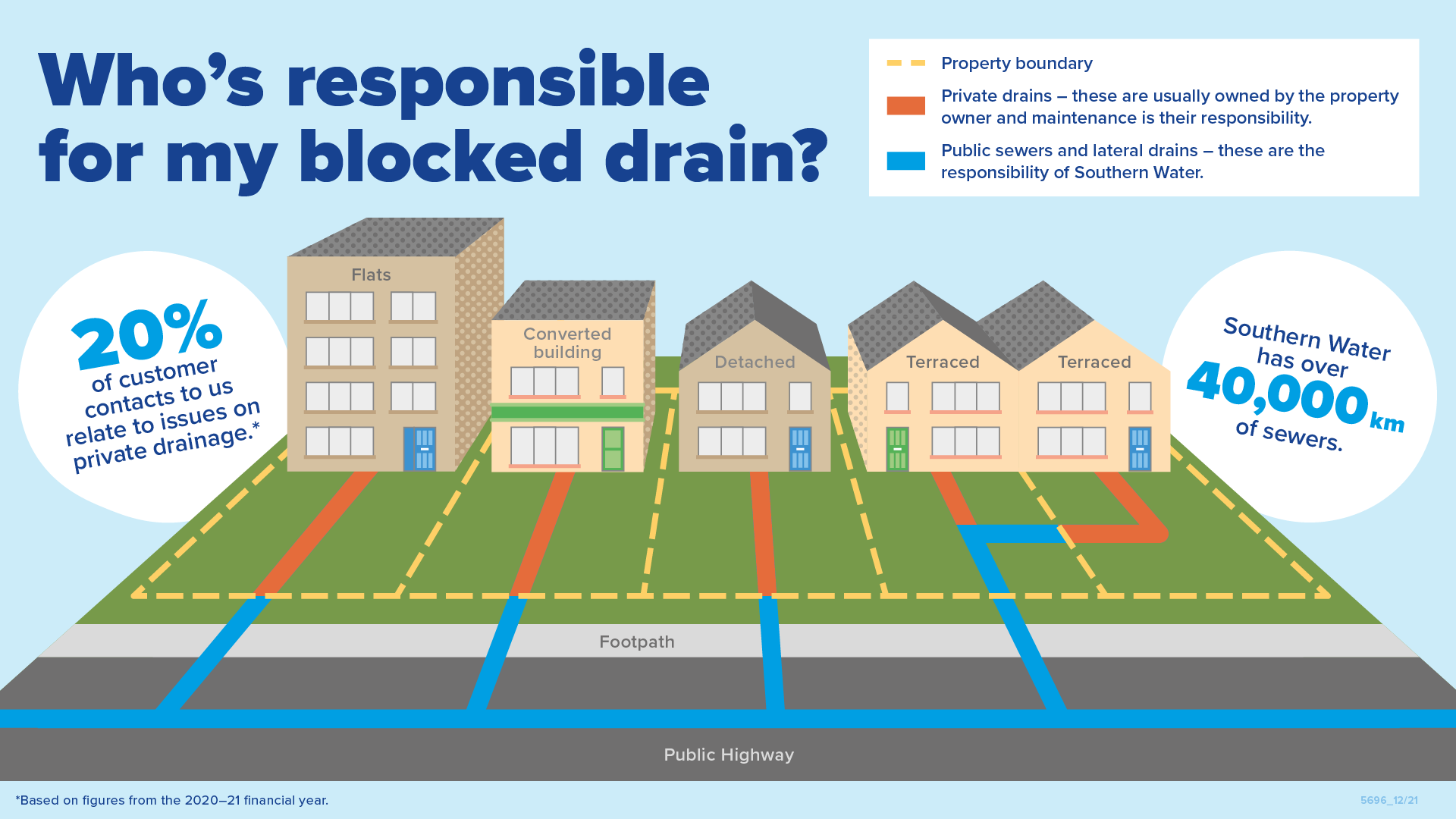
In legalese, a shared drain is called a “common drain” or “lateral drain” (try saying that at a cocktail party). It’s the pipe that takes waste from two or more properties and dumps it into the main sewer line under the street. Think of it as a joint custody agreement for your sewage.
Must Read
Who Owns The Pipe of Doom?
Here’s the kicker: you usually own the pipe that runs under your property. But that pipe, my friend, buries itself under your neighbor’s lawn before waddling off to the sewer. You are legally bound to your neighbor by a piece of PVC. It’s a closer relationship than marriage—because divorce isn’t an option.
Surprising fact: in the UK, if you have a shared drain built before 2011, guess what? The sewer company owns the whole thing. You paid for it, you call the plumber, but technically, it’s not even yours. It’s like dating someone who lives in their parents’ house.
The “Blockage” Nightmare
Picture this: you flush a “disappearing” flushable wipe (they don’t disappear—they’re a lie). That wipe lodges itself halfway to the street. Now, your toilet is fine, but your neighbor’s basement is a brown soup. They hate you. You hate the wipe. The law? It gets murky.
Most places follow the “first cause, first fault” rule. If you caused the block, you pay. But if it’s decades of slime, tree roots, and a dead raccoon—that’s a shared problem. And shared problems mean you’re paying half for your neighbor’s broken dreams.
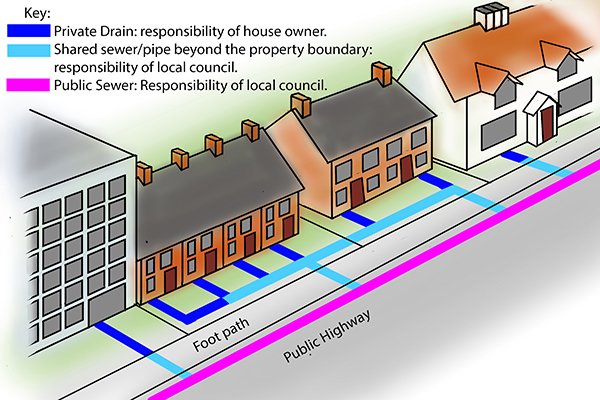 Who is responsible for the manhole on my property?
Pro tip: never, ever pour “flushable” anything down a shared drain. It’s the legal equivalent of throwing a grenade at your neighbor’s petunias.
The Hungarian Surprise (Yes, Really)
Did you know that in Hungary, the law on shared drains requires you to get written permission from your neighbor before you install a new toilet? It’s true. Imagine knocking on a door and saying, “Hey, thanks for letting me build a bathroom. It’s for my third daily poop.” Awkward.
In most Western law, however, you don’t need permission for minor work, but you must not reduce the flow of the common drain. That means no flushing a bowling ball just because you’re angry.
The Leak That Started a War (And A Settlement)
Let’s talk about “easements.” This is the legal concept that says: “Your neighbor’s pipe is allowed to be under your rose bush, and you can’t dig it up.” It’s like an invisible lease for your dirt. If you plant a tree on top of it and the roots crack the pipe, guess who pays? You do. Yes, the tree is a botanical saboteur, and you are an accessory.
There’s a famous case in Texas where a man’s shared drain clogged because his neighbor flushed a whole sock. The sock owner said, “It’s your sock, your problem.” The court ruled it was a shared blockage, and they had to split the $4,000 repair. That’s an expensive sock.
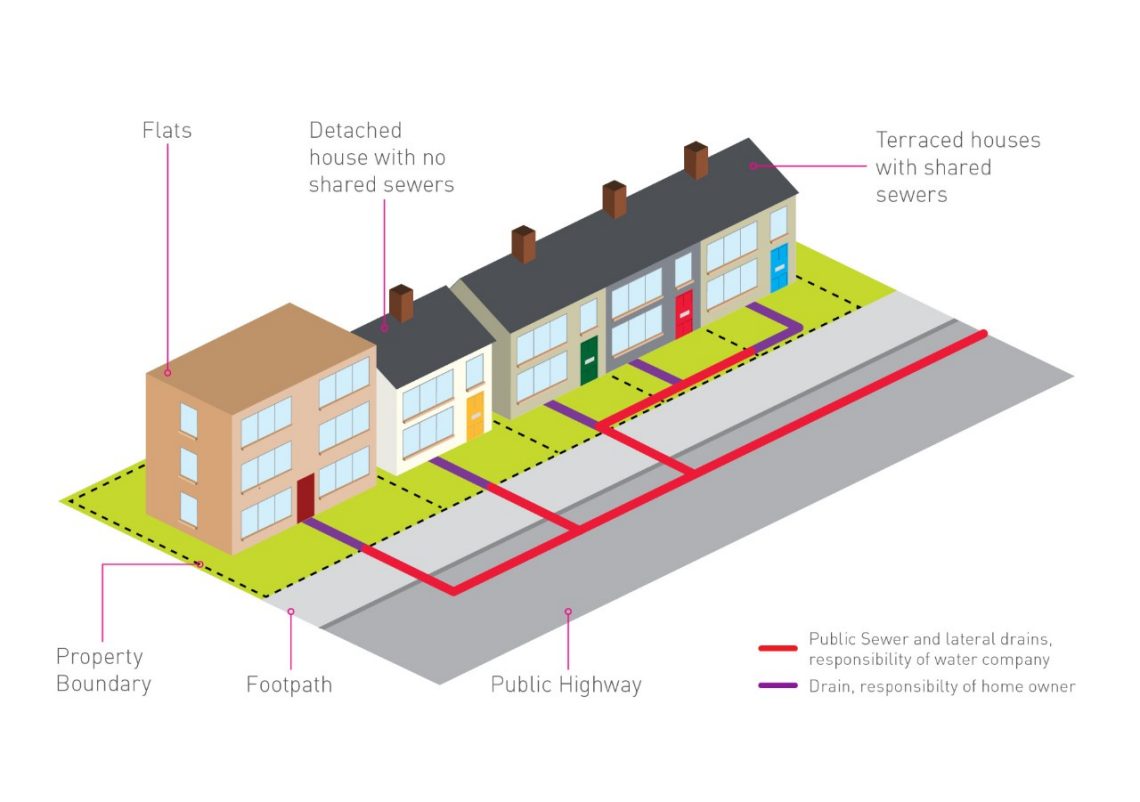 Shared Drainage Responsibility – Drain Brains
The “Do-Nothing” Disaster
Here’s the law’s dirty secret: you cannot ignore a shared drain problem. If your half of the pipe is fine, but your neighbor’s half is leaking, you still have to let a plumber onto your property to fix it. Refuse? You get sued for “nuisance.” That’s fancy lawyer talk for “you’re a jerk who smells.”
In many U.S. states, you must maintain the pipe to a “reasonable standard.” That means no reinforcing it with duct tape and hope. If you do, and it fails, you’re liable for everyone’s backups.
How to Survive the Pipe Ceasefire
First: get a party-line agreement. This is a written contract with your neighbor that says, “If the pipe breaks, we split it 50/50 like divorce lawyers.” (Or, if you’re generous, by percentage of toilets used.)
Second: buy insurance. Most standard homeowner’s policies don’t cover shared drain backups unless you add a $20 rider. That’s cheaper than a single plumber bill, which can run $500 to $5,000. And finally: be friends with your neighbor. Not best friends, just “we share a sewage pipe” friends. Bake them a cake. Don’t flush the cake.
Remember, the law on shared drains is really just a glorified handshake through concrete. Treat it with respect, keep the wipes out, and for the love of all that is holy, never flush a sock.
