How To Remove Nitrate From Water

Let’s be real: no one wakes up thinking about nitrates. You’re probably more concerned with your morning coffee ratio or whether your houseplants are still alive. But if you’v...

Let’s be real: no one wakes up thinking about nitrates. You’re probably more concerned with your morning coffee ratio or whether your houseplants are still alive. But if you’ve noticed a funny taste in your tap water or spotted a “high nitrate” warning on a local report, it’s time to pay attention. Nitrates are sneaky—they’re odorless, colorless, and tasteless at low levels, yet they can mess with your health and your home’s vibe.
Think of nitrates as the uninvited party guests of the water world. They show up from fertilizers, septic systems, and even natural decay. When levels creep above 10 mg/L (the EPA limit), they can cause blue baby syndrome in infants and have been linked to thyroid issues in adults. But don’t panic—you don’t need a chemistry degree to kick them out. Here’s your friendly, no-stress guide to making your water taste and feel better.
The Nitrate Lowdown: What’s Actually in Your Glass?
Nitrates (NO₃) are just nitrogen atoms with three oxygen buddies. They’re a normal part of the environment—plants love them. The problem starts when runoff from farms or lawns overwhelms your local water supply. Imagine a smoothie that’s mostly sugar: a little is fine, too much and you crash.
Must Read
The good news is that your home can fight back. You don’t need a lab or a wizard. You just need the right tools and a bit of know-how. Let’s dive into the three most effective methods, each with a splash of real-world style.
Method 1: Reverse Osmosis (The VIP Filter)
Reverse osmosis (RO) is like a celebrity bouncer for your water. It pushes H₂O through a semi-permeable membrane that blocks 90–95% of nitrates. This is the gold standard for homes with stubborn contamination. You’ll often find RO systems under kitchen sinks, looking like a tiny sci-fi contraption.
Here’s a fun fact: RO was originally developed to desalinate seawater on submarines. So yes, you’re basically using submarine tech to make your ice cubes. A good system costs between $150 and $600, plus annual filter replacements. Pro tip: Look for units with a “nitrate-specific” membrane—they’re tuned to grab those molecules without wasting water.
But RO has a quirk: it removes healthy minerals like calcium and magnesium. That’s why many systems add a remineralization stage. Drink that flat water? It’s fine, but some people add a pinch of sea salt for taste. Think of it as styling your water after a detox.
Method 2: Ion Exchange (The Chemistry Wiz)
If RO is the bouncer, ion exchange is the clever bartender swapping out bad ingredients. This method uses resin beads coated with chloride ions. As water flows through, the resin trades chloride for nitrates, like a silent, chemical handshake. It’s highly effective and often used in whole-house systems for rural wells.
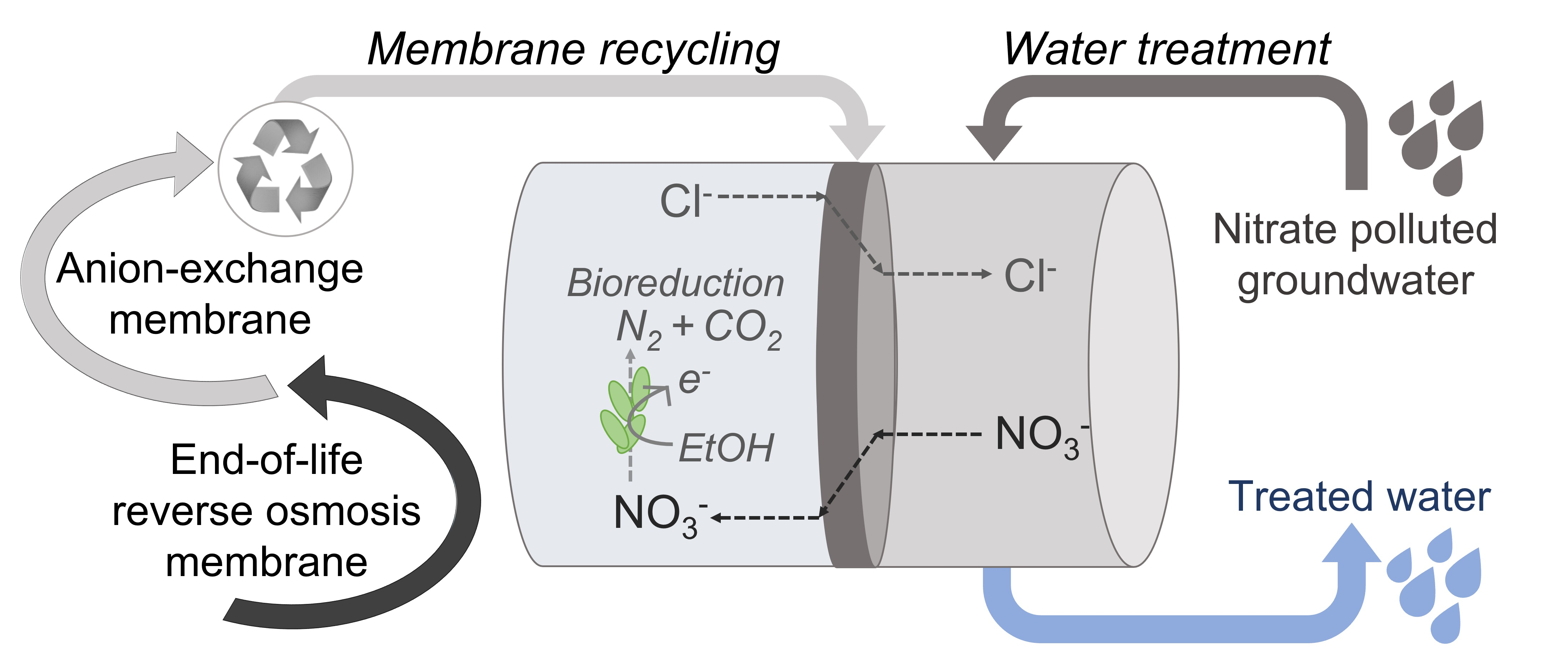 Nitrate Removal by Donnan Dialysis and Anion-Exchange Membrane
The catch? The resin needs periodic regeneration with a salt brine. Think of it as recharging your phone—annoying but necessary. A typical system handles 1,000 gallons before needing a reboot. Cultural reference: This process is similar to how Britta filters work, but far more intense, like comparing a home espresso machine to a café’s commercial one.
Ion exchange can also soften your water, so if you have hard water syndrome (that chalky scale on your showerhead), you’re solving two problems at once. Bonus: It won’t strip out all the minerals, so your morning OJ mixes without tasting flat.
Method 3: Distillation (The Old-School Chef’s Move)
Distillation is the original water purifier—think moonshine stills and Victorian-era chemistry. You boil water, capture the steam, and condense it back into a clean liquid. Nitrates stay behind because they have a higher boiling point. It’s extremely effective, removing up to 99% of contaminants.
But let’s be honest: distillation is slow and energy-hungry. A typical countertop unit produces about a gallon every 3–4 hours. Perfect for your remote cabin or if you’re feeling retro, but not practical for a family of four. Plus, it makes water taste flat—some folks add a drop of lemon or a pinch of pink salt to liven it up.
Fun fact: distillation is how astronauts recycle their urine on the ISS. So if you’re drinking distilled water, you’re basically sipping space-level purity. Just don’t think about the backstory too hard.
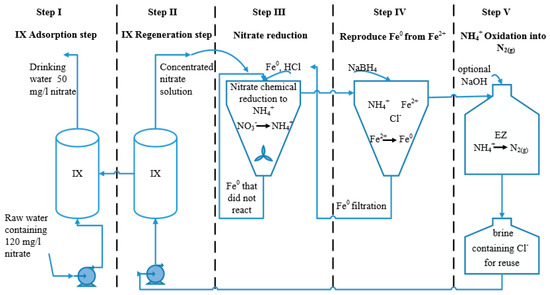 Removal of Nitrate from Drinking Water by Ion-Exchange Followed by nZVI
Practical Tips for Real Life
Before installing anything, test your water first. Pick up a nitrate test strip online or from a hardware store—they cost about $10 for a pack of 25. Dip it in your tap water and compare the color. If results are borderline (say, 5–8 mg/L), you might just need a carbon filter that claims nitrate reduction, though these are less reliable.
For emergencies, like a boil water advisory where nitrates are high, do not boil your water. Boiling actually concentrates nitrates, making the problem worse. Instead, use bottled water that’s labeled “purified by reverse osmosis” or “distilled.” Store it in glass or BPA-free bottles to avoid leached chemicals.
Also, consider your landscaping. Go easy on fertilizers, especially near your well. Swap synthetic lawn food for compost or slow-release brands. You can even plant a “buffer zone” of native grasses and trees around your water source—they absorb runoff like a sponge. It’s like giving your yard a green filter.
The Quiet Ritual of Clean Water
In the end, removing nitrates isn’t just about chemistry—it’s about intention. Every time you fill a glass from a filtered pitcher or turn on an RO faucet, you’re choosing peace of mind. That simple act connects you to ancient traditions of purifying water, from clay pots in Morocco to sandstone filters in India.
Think about it: the water you drink was once raindrops that fell on fields, traveled through soil, and now returns to you, cleaned and safe. It’s a small daily miracle. So next time you sip that crisp, nitrate-free water, smile a little. You’ve outsmarted a chemical, saved a baby’s lunch, and made your kitchen feel like a spa. That’s modern living at its best.
