Where Does Hard Water Come From

I still remember my first morning in a new apartment. I poured a glass of water from the tap, and it looked perfectly clear. But when I took a sip, it tasted like I was lickin...
I still remember my first morning in a new apartment. I poured a glass of water from the tap, and it looked perfectly clear. But when I took a sip, it tasted like I was licking a rock—and my kettle looked like a snow globe after just two boils.
That’s when I learned the hard way: I was living in hard water territory. And honestly? It felt personal. So, where does this pesky, mineral-packed water actually come from?
The Short Answer: It’s a Rock Star Origin
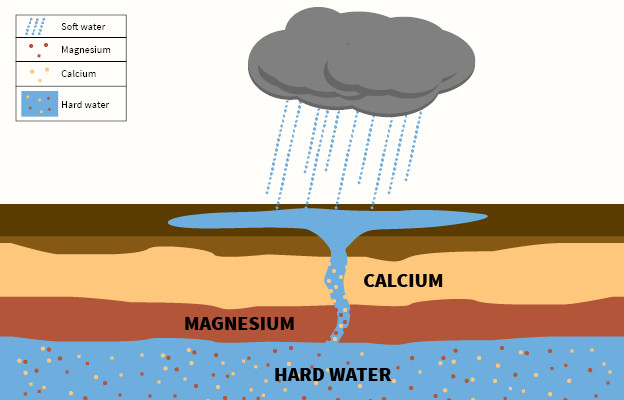
Hard water isn’t born in the pipes—it’s made by the ground itself. Think of rainwater as a curious little sponge. As it falls from the sky, it’s naturally soft and acidic (thanks to carbon dioxide in the air).
Must Read
But then this rainwater starts its underground journey. It seeps through soil and chisels its way through rocks like limestone, chalk, and gypsum. (Ever seen a cave? That’s what water does over centuries—it’s basically nature’s slow-motion sculptor.)
During that trip, the water picks up calcium and magnesium ions from the rocks. Those two minerals—especially calcium carbonate—are what make your shower feel like sandpaper and your soap refuse to lather. That’s hard water in a nutshell: soft water + rocks = hard water.
Why Does One City Have Hard Water and Another Doesn’t?
It’s all about geology—the type of rock under your feet. If you live in an area with lots of limestone (like the UK, the Midwest US, or parts of Texas), you’re practically guaranteed hard water. Limestone is basically compressed seashells from ancient oceans, and it’s loaded with calcium.
On the flip side, places with granite or sandstone—like parts of Maine or Scotland—tend to have soft water. Those rocks don’t dissolve easily. (Sorry, Scots—you win the clear-coffee, no-scale battle, but you might miss out on the alleged health benefits of calcium in your drinking water.)
So, if you’re wondering why your tap water feels “heavy,” blame the dinosaur fossils, ancient sea beds, and mineral deposits that decided to hang out under your house millions of years ago. (No pressure, 65-million-year-old seabeds.)
 Where Does Water From The Shower Come From at Randall Starkes blog
But Wait—Isn’t Rainwater Pure?
Technically, yes, rainwater is among the purest forms of water in nature (ignoring acid rain—sorry, environment). But pure water is aggressive. It’s a solvent—it wants to dissolve things. Think of it as a teenage rebel: clean, looking for trouble, and ready to steal minerals from the first rock it meets.
Once that “pure” water hits the ground, it goes full heist mode. It eats away at carbonate rocks, dragging calcium and magnesium ions with it. And since we can’t see those ions, we only notice the consequences: white crusty faucets, dingy laundry, and dry hair.
Ironically, our bodies need calcium and magnesium—they’re great for bones and hearts. But in water? They just mess up your plumbing. (Classic case of “good thing, wrong place,” right?)
Does Hard Water Come From City Pipes?
Rarely. Your water utility company might add a little lime to adjust pH, but they don’t dump calcium in on purpose. Instead, the minerals are already there from the source—like a river running through limestone, or a groundwater well drilled into chalky soil.
So, if you move from one town to another and your water suddenly gets hard, it’s not the city’s fault. It’s the local bedrock showing off. (Unless you’re on a private well—then it’s all on your property’s geology. Feel free to blame the previous homeowner for choosing to build on a calcium mine.)
:max_bytes(150000):strip_icc()/TheSpruce_WhatisHardWater_colorv1-71c4c7ba876646638980256db096a84e.png) What Causes High Hardness In Water at Edward Mozingo blog
What Causes High Hardness In Water at Edward Mozingo blog
The Ironic Twist: Hard Water Is Everywhere—But Not Permanent
About 85% of US homes have hard water. Globally, it’s common in regions with young mountains or ancient seabeds. So if you’re reading this in the Midwest, UK, or Australia, you’re likely nodding along with a spotty glass in your hand.
But here’s the kicker: hard water can be softened. Ion-exchange systems replace calcium and magnesium with sodium or potassium. (Yes, you swap your rock drama for a little salt. Quelle surprise.)
Alternatively, you can just embrace the crust. Some people swear hard water is better for health—and it’s certainly not dangerous. (Unless you count the annoyance of scrubbing shower doors as a mortal peril. In that case, run for a water softener.)
Small Story Wrap-Up
That kettle of mine? After three months, it looked like a coral reef. I finally boiled a vinegar solution to dissolve the layers of calcium—and the fizzing sound was oddly satisfying. Like the water was sighing, “Finally, you got it.”
So next time you see a white ring in your mug, remember: you’re not looking at dirt. You’re looking at ancient, crushed seashells that hitched a ride from a limestone cave, through the ground, and straight into your morning tea. (And honestly? That’s kind of cool. Annoying, but cool.)
