Does Boiling Water Kill Viruses

Let’s be real—when you hear the phrase “boil your water,” your brain probably flashes back to that one camping trip where you forgot the coffee filters and used a sock. We’ve...
Let’s be real—when you hear the phrase “boil your water,” your brain probably flashes back to that one camping trip where you forgot the coffee filters and used a sock. We’ve all been there, staring at a pot of bubbling water like it’s a magic potion. But does boiling water actually kill viruses? Short answer: yes, it does, and it’s way easier than trying to convince your toddler that veggies are candy.
Think of viruses as tiny, uninvited guests at a house party. They’re clingy, they’re loud, and they really don’t want to leave. Boiling water is like cranking up the thermostat until the party gets so hot that everyone has to leave—except they don’t just leave; they literally fall apart. Most viruses can’t handle temperatures above 160°F (71°C), and water boils at a sassy 212°F (100°C). That’s like showing up to a pool party and finding out the pool is made of lava.
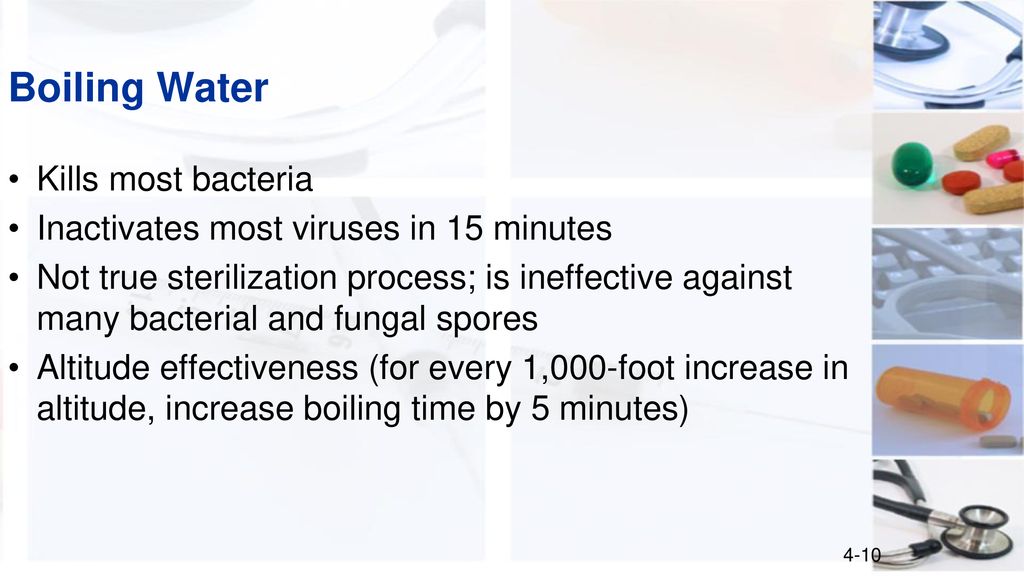
I once had a buddy who insisted he could kill germs by just thinking really hard about hot water. Spoiler: it didn’t work. But actual boiling works like a charm. When water reaches a rolling boil—the kind that splashes your stove and makes you regret not buying a taller pot—it zaps most viruses, bacteria, and other microscopic freeloaders within a minute or two. For extra safety, let it boil for at least one full minute (or three minutes if you’re above 6,500 feet, because altitude makes water act like a drama queen).
Must Read
Here’s where it gets funny: you don’t need to boil water for hours like you’re making a soup for hibernation. A one-minute boil is enough to send viruses like norovirus, hepatitis A, and even the flu packing. It’s like giving your water a quick, hot shower—not a spa day. And if you’re thinking, “But what about weird fancy viruses?”—don’t worry, viruses are wimps in heat. Even the toughest ones crumble like a cookie left in a hot car.
But wait—does it work on every virus?
Okay, let’s not get carried away. Boiling water kills viruses that are in the water. It won’t do squat for viruses on your phone screen, your doorknob, or your neighbor who sneezes without covering their mouth. For that, you need soap, disinfectant, or a very long social-distancing stare. But for your drinking water? Boiling is the old-school superhero—no cape, just steam.
I remember a time during a power outage when my aunt insisted we boil river water “until it smells like grandma’s chicken soup.” We did, and guess what? No one got sick. That’s because boiling doesn’t just kill viruses; it also kills parasites like Giardia (the “beaver fever” nobody wants to catch). So, if you’re ever stuck in a wilderness with a questionable stream, boiling is your best friend—even if the water tastes a little flat afterward. Pro tip: aerate it by pouring it between two cups, or just add a pinch of salt and pretend it’s fancy mineral water.
 Does Boiling Tap Water Purify It? What Boiling Really Removes—and What
The one thing boiling can’t fix
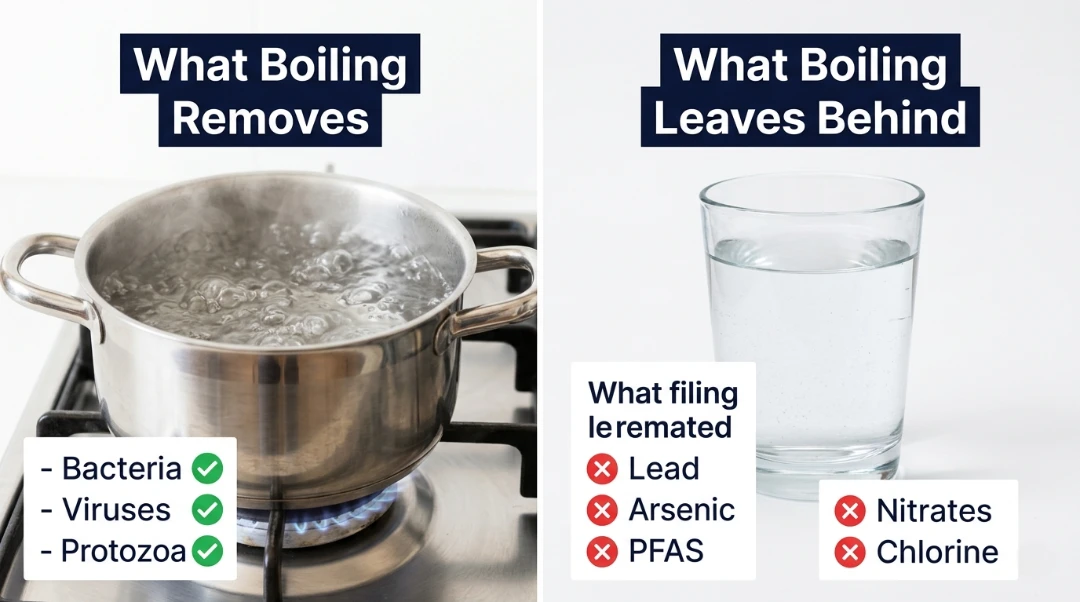
Here’s the kicker: boiling water won’t remove chemical contaminants like lead, pesticides, or that weird metallic taste from old pipes. Think of it like this: boiling kills the living party crashers, but it won’t clean up the spilled soda or the broken glass. For chemicals, you need a filter or a different source. So, if your water tastes like a science experiment, boiling might make it safe from viruses but still nasty to drink. Sorry, no amount of heat fixes bad plumbing.
I once tried to “purify” muddy creek water by boiling it, and the result was clean muddy water. It killed the bugs, but it still looked like a swamp smoothie. Moral of the story: boiling is amazing for viruses, but it’s not a magical eraser for everything. Use common sense—if the water comes from a toilet, boiling it won’t make it okay. Please don’t test that.
So, should you boil your tap water during a virus outbreak?
If public health officials say “boil water advisory,” then yes—do it. It’s cheap, it’s easy, and it’s way less stressful than trying to remember where you put your COVID-19 tests. Just fill a pot, crank the heat, and wait for those big, happy bubbles. While you wait, you can scroll through memes about people who didn’t boil their water. They’re the same folks who eat raw cookie dough and wonder why their stomach hurts.
 Will Boiling Water Kill All Bacteria at Jessica Zelman blog
Also, boiling water is a great excuse to finally use that antique kettle your grandma gave you. You know, the one that whistles like a tea-obsessed parrot. It’s practical, it’s nostalgic, and it makes you feel like a pioneer—minus the dysentery. And if you’re feeling extra, you can even make tea with the resulting water. Boiled water + tea bag = instant relaxation. It’s like a two-for-one deal: kill viruses, then sip your stress away.
The final bubble
Here’s the bottom line: boiling water is the reliable, grumpy uncle of water treatment—it’s old-school, it works, and it doesn’t care about your fancy filters. It kills viruses, including COVID-19, norovirus, and the flu, because heat is the great equalizer. Just remember: let it cool before you drink it, unless you want to be that person who burns their tongue and then complains about it for a week. We all know that person. Don’t be that person.
So next time you hear a whisper about “does boiling water kill viruses,” just nod wisely and say, “Yeah, it does—and it also makes a mean cup of coffee, if you’re patient.” Then go boil some water, pour yourself a drink, and laugh at the fact that your great-grandparents handled pandemics with a pot and a fire. Sometimes, the simplest solutions are the best—and the most hilarious in hindsight.
