How Much Is It To Put In A Well

You’ve been dreaming of a pure, crisp glass of water straight from the earth, free from city chlorine and monthly bills. But then the question hits: How much is it to put in a...

You’ve been dreaming of a pure, crisp glass of water straight from the earth, free from city chlorine and monthly bills. But then the question hits: How much is it to put in a well, anyway? The short answer is a wide range—typically between $3,000 and $15,000—but the real cost depends on where you dig, how deep you go, and what kind of lifestyle you’re after. Let’s break it down without the headache of a dry textbook.
The Big Numbers: What Drives the Price?
Your wallet’s first conversation is with depth. A shallow well for irrigation might run you $4,000, while a deep residential well for drinking water can climb to $12,000 or more. The geology of your land—sand, clay, or bedrock—determines how far the drill must sink, and that bit costs per foot.
Add to that the pump, pressure tank, and piping, which can tack on another $1,500 to $3,000. Think of it as the engine and plumbing of your underground water system. Permits and testing for water quality typically add a few hundred dollars, though skipping them is like buying a vintage car without checking the engine—tempting, but risky.
Must Read
If you’re on a fixed budget, consider a sandpoint well (a manual pipe driven into shallow groundwater) for as little as $500. It’s the IKEA version of well-drilling—doable for a weekend warrior with a strong back and loose soil.
Cultural Water Wisdom: From Dowsing to Drilling
Before you write a check, know that well-digging has its own lore. For centuries, people used water dowsing—walking with a forked stick to "find" water—a practice still joked about at rural hardware stores. Modern drillers rely on ground-penetrating radar and soil maps, but the old-timers will wink and say, "The stick never lies."
Fun fact: In Texas, the average well depth is 300 feet, while in Florida it’s often under 100 feet because of the limestone aquifer. That’s a cultural geography lesson that directly impacts your cost—so check your state’s average before you panic.
Another quirky insight: Amish communities still dig wells by hand, often hitting water at 30 to 50 feet. They save thousands but spend weeks of labor—proof that time and tradition have their own price tag.
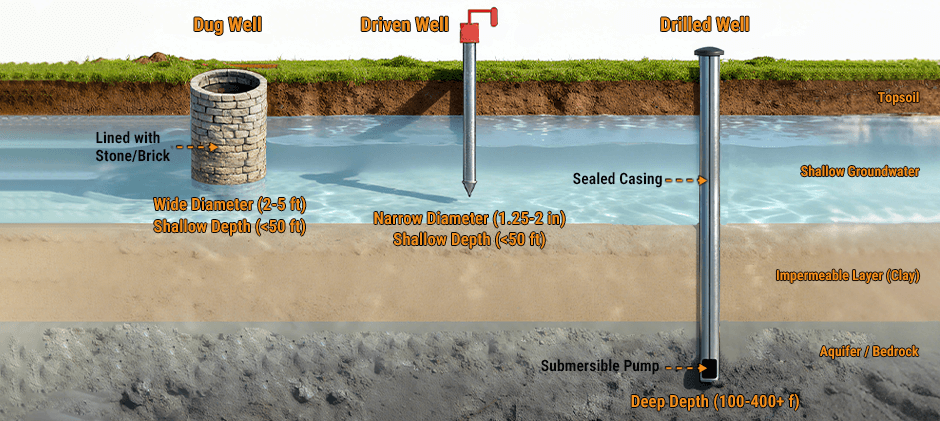 How To Drill A 2 Inch Water Well
Practical Tips: How to Avoid Costly Surprises
First, get at least three quotes from licensed well drillers in your area. Prices can vary by 40% depending on the company’s workload and equipment. Ask for a flat-rate contract that includes drilling, casing, and the pump—or you might face “rock fees” that feel like a hidden tax.
Second, test your soil and water before you sign. If your land has high iron, sulfur, or arsenic, you’ll need a filtration system that could add $2,000 to $5,000. Think of it as a spa treatment for your aqua—necessary, but not always included in the initial quote.
Third, consider a shared well with a neighbor. In rural subdivisions, splitting the cost of a deep drilling project can drop your share to $4,000 per household. It’s the carpools of water—socially savvy and surprisingly legal with a simple agreement.
The Hidden Costs: Time and Patience
Drilling a well takes one to three days, but the waiting list for a good driller can stretch to six months during dry seasons. Treat this like a vinyl record release: pre-order early, or you’ll miss the drop. Meanwhile, you might need a temporary water delivery service—adding a few hundred dollars to your monthly tab until the well is online.
Also, don’t forget the land. A well requires a clear, accessible area about 10 feet by 10 feet, away from septic tanks and property lines. If your lot is overgrown with trees or backed by a hill, clearing costs can add $500 to $1,500. That’s the landscaping tax you didn’t expect.
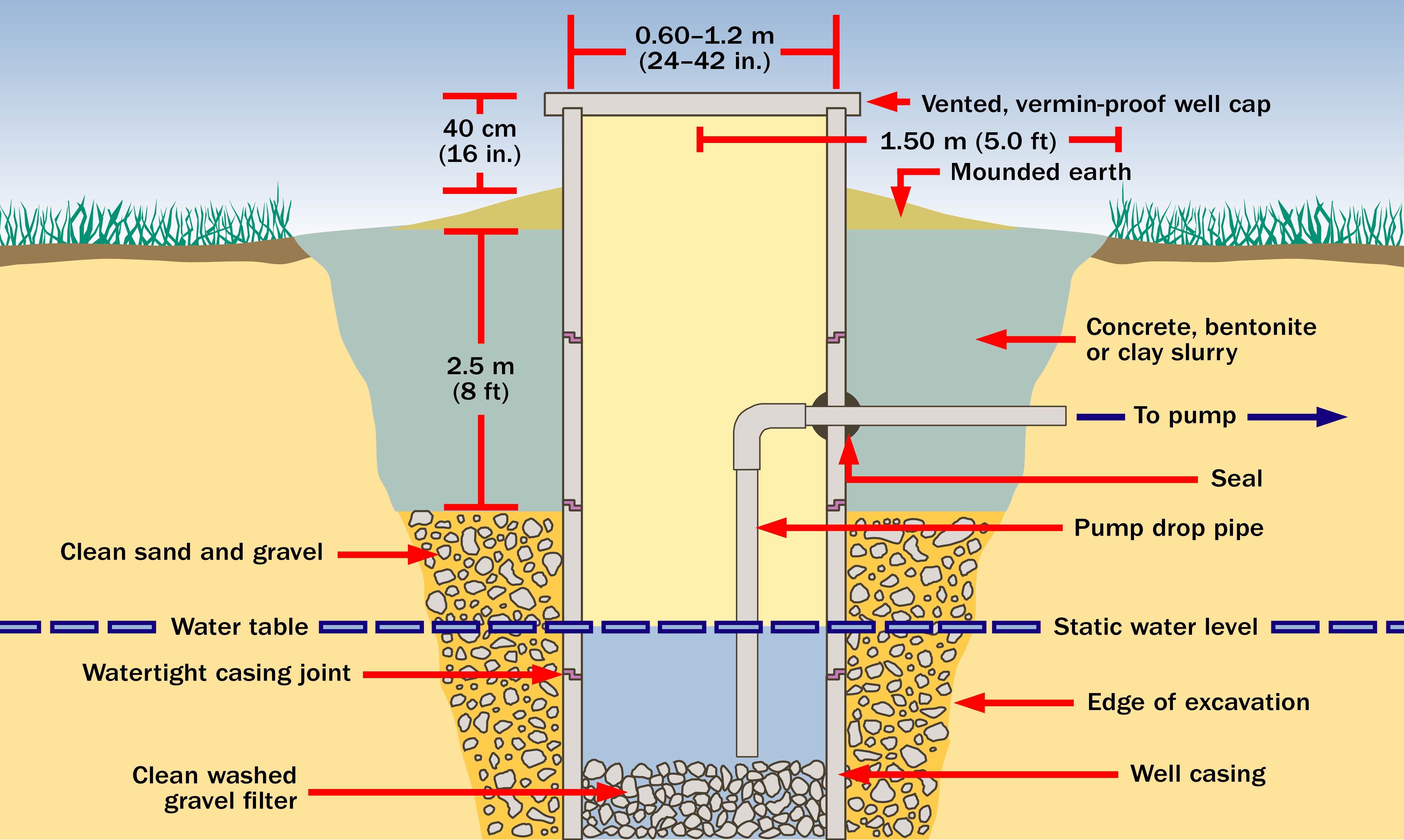 Groundwater Well Diagram
Finally, insure your well. A standard homeowner’s policy often covers it, but check for exclusions on pump failure or contamination. One neighbor learned this the hard way after a lightning strike fried his pump—a $3,000 lesson in reading fine print.
Quick Breakdown: What a $10,000 Well Gets You
For $10,000, you typically get a 200-foot drilled well with a submersible pump, a pressure tank, basic casing, and a water test. That’s enough for a family of four to water their garden, shower, and fill a swimming pool—guilt-free.
Add another $2,000 for a UV filter and softener, and you’ve got water that tastes better than a boutique spring. It’s the difference between a reliable sedan and a luxury SUV—both get you there, but one feels like a treat every time you turn the tap.
Reflection: The Well in Daily Life
Paying for a well is a little like buying a permanent seat at a concert: you cover the upfront cost, but the music never stops. Every morning, you’ll hear the hum of your pump and feel a quiet pride in owning your own water source. It’s freedom from utility bills, but also a gentle reminder—everything precious comes with a price.
In the end, a well isn’t just a hole in the ground; it’s a commitment to independence. Whether you pay $4,000 or $15,000, you’re buying peace of mind, one gallon at a time. So next time you sip that cold, clean glass, remember: you didn’t just put in a well—you put in part of yourself.
