How To Find Water Leak In House

You’re lounging on the couch, half-watching a true crime documentary, when a faint drip-drip-drip sneaks into the silence. At first, you think it’s the rain. But then you chec...
You’re lounging on the couch, half-watching a true crime documentary, when a faint drip-drip-drip sneaks into the silence. At first, you think it’s the rain. But then you check the basement, and there it is: a small puddle, like a guilty secret your house has been keeping. Finding a water leak is less about panic and more about playing detective—think Scooby-Doo with plumbing skills. Most leaks start small, so catching them early saves your sanity and your wallet.
The Silent Clues Your Home Whispers
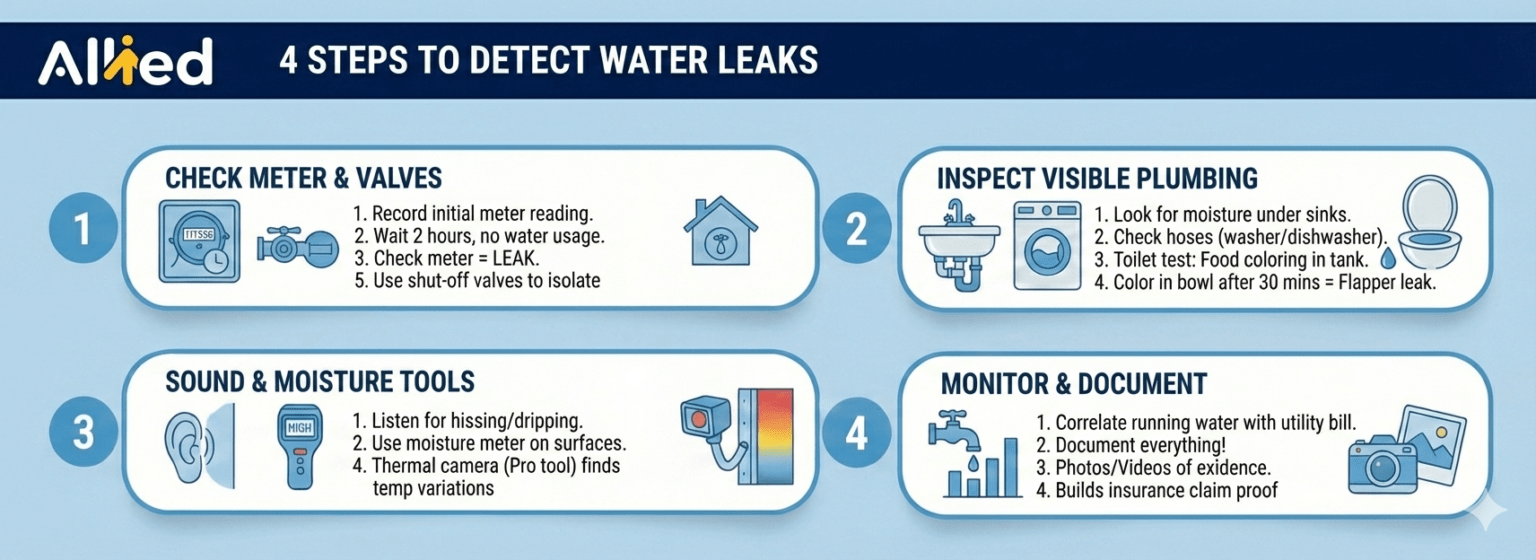
Your house talks, but you have to listen. A sudden spike in your water bill—say, 20% higher than last month—is the first red flag. Don’t just blame the kids for longer showers; check the meter. Turn off every tap and appliance, then watch the meter’s little dial: if it’s still spinning, water is escaping somewhere, like a ghost in the pipes. Another clue? The sound of water when nothing is running—a low hiss behind a wall or a toilet that “whispers” after flushing. That’s your cue to act.
Check your walls and floors for mystery stains. Yellowish patches on ceilings or bulging paint are classic signs—think of them as your home’s subtle distress signals. If you own a smart home device, ask Alexa to remind you to check monthly. Yes, it’s a little extra, but peace of mind is priceless.
Must Read
The Toilet Test That’s Almost Too Easy
Toilets are notorious water hogs. Drop a few drops of food coloring (red or blue works best) into the tank. Wait 10 minutes without flushing. If color seeps into the bowl, you’ve got a silent leak—a flapper valve that’s given up. Fixing it costs under $10 and takes about as long as making a cup of tea. In a year, that tiny leak can waste over 3,000 gallons—enough to fill a small swimming pool. Imagine paying for a pool you never swim in.
Don’t ignore the puddles around the toilet base. That’s often loose connections or wax ring failure, best handled by a plumber. But hey, if you’re handy, it’s a weekend project that feels incredibly satisfying—like fixing a loose button on your favorite jacket.
Outdoor Leaks: The Garden’s Cry for Help
Your lawn shouldn’t have a swampy corner unless you’re raising rice. A sudden green patch of grass that’s super lush compared to the rest? That’s an underground pipe leaking fertilizer-rich water. Your sprinkler system is the usual suspect. Turn it on manually and walk the line—look for geysers or bubbling mud. One inch-diameter hole can waste 6,000 gallons a month, enough to make even your plants blush with guilt.
Also, listen for that faint hiss near your outdoor spigot. If the garden hose is still attached during winter, freeze-thaw cycles crack the pipe. It’s like forgetting to bring in your pet hamster before a snowstorm—bad news. A simple shut-off valve check can save you a springtime flood.
 How to Find Water Leaks in House: A Practical Guide for Homeowners
Tech Tools for the Modern Sleuth
You don’t need a plumber’s degree. Use a basic moisture meter (about $30) on dry walls—if it suddenly screams “wet!” you’ve found a hidden weep. Thermal imaging apps for your phone are even cooler: they show cold spots behind walls, like a thermal camera from a sci-fi movie. And there’s the classic low-tech trick: a paper towel test. Press a dry towel against suspected areas; if it comes back damp, you’ve nailed the leak. It’s like forensics, but with less blood and more baseboards.
Don’t forget the basement or crawl space. Put on your detective hat and check after heavy rain—water stains on foundation walls are telltale signs of groundwater seeping in. That’s less a pipe issue and more a drainage problem, but it’s still a leak that wants attention. Your sump pump is your best friend here—test it annually by pouring a bucket of water into the pit.
When You Think You’re Crazy, Trust the Smell
Musty odors are your nose’s way of saying, “Something’s rotten in the state of Denmark.” That damp smell in a closet or under the sink often means a slow leak has been breeding mold—the silent cousin of a burst pipe. Don’t ignore it. Open cabinets, sniff around baseboards, and if you spot black spots, that’s mold. Call a pro immediately—your lungs will thank you. In the meantime, run a dehumidifier and keep the area dry.
Fun fact: 80% of water damage is from slow, invisible leaks, not dramatic bursts. It’s like termites—quiet and destructive. The average home loses over 10,000 gallons a year to leaks. That’s the equivalent of 27 flushes per day for a family of four, just vanishing into your foundation.
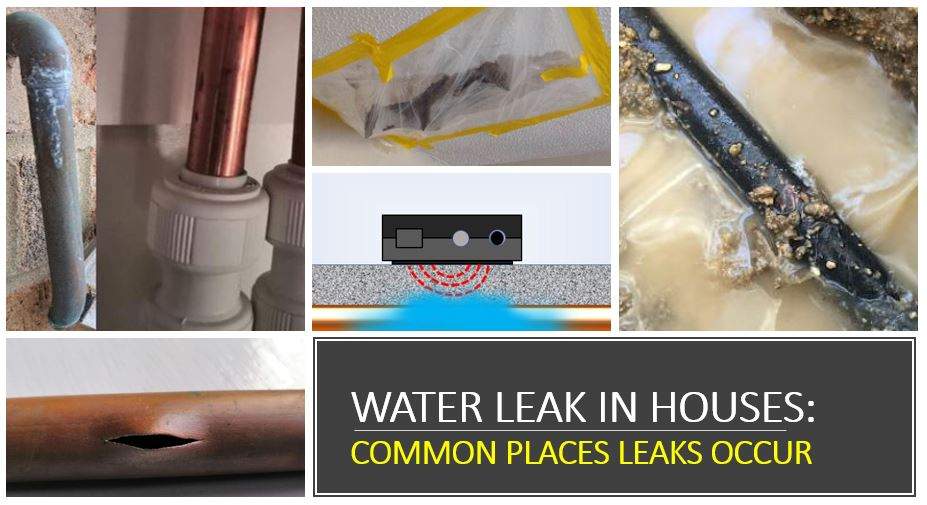 How To Find Water Leak On House at Edward Diaz blog
The Final Check: Your Water Bill as a Diary
Track your bill like you track your step count. A 100-gallon-a-day usage for a family of four is normal; anything over that? Investigate. Use a leak-detection system like Phyn or Flo by Moen—they send alerts to your phone when water flows suspiciously. They’re like a Fitbit for your house, minus the shame of missing a workout. Even a simple $20 “leak alarm” (a loud beeper that goes off on contact with water) near your water heater can save you from a flood while you’re at work.
One last trick: read your water meter at night before bed and again in the morning. If the numbers changed, you have a leak—and possibly a ghostly plumber. No one likes paying for water they never used.
A Gentle Reflection on Finding Flow
Catching a water leak is a little like listening to your own breath—easy to ignore until it’s labored. In a world that moves fast, taking an hour to check your home’s pipes is a small act of self-care. You’re not just saving money; you’re preserving the quiet sanctuary where you rest, cook, and laugh. That drip, once found and fixed, becomes a story you tell over coffee: “Remember that time we thought the house was haunted, but it was just a faulty washer?”
So, embrace the snooping. Channel your inner Sherlock Holmes with a crescent wrench. Your home is a living thing, and a little attention keeps it healthy. After all, water is life—until it’s under your floorboards. Keep it where it belongs, and your house will thank you with no surprises, just peaceful silence.
