Why Do Schools Not Serve Water

Have you ever sat through a long school day, feeling that familiar fog, and wondered why the water fountain is a whole hallway away? You’re not alone. It’s a low-key mystery:...

Have you ever sat through a long school day, feeling that familiar fog, and wondered why the water fountain is a whole hallway away? You’re not alone. It’s a low-key mystery: why do schools not serve water more readily, like they do with milk or juice at lunch? It feels like a no-brainer, right? After all, water is the stuff of life, the ultimate thirst-killer, and costs next to nothing.
Let's be real—schools do serve water, but it’s often hidden in the corner, tucked behind a dinky fountain or a lukewarm tap. The real question is: why isn’t it the star of the cafeteria show? Compare it to a soda machine, which gets a prime spot and a flashy light. It’s like having a VIP lounge for sugary drinks, while water gets a folding chair in the hallway. Why is that?
The Great Hydration Gap
One reason is historical, and it’s a little boring: schools built their infrastructure around milk and juice programs. Back in the day, milk was the hero for strong bones, and juice was the “healthy” alternative to soda. Water was considered a given—something you get from a tap. But here’s the kicker: that mindset ignores how much water we actually need to focus, think, and not turn into a grumpy, dry-mouthed zombie.
Must Read
Think about it: your brain is about 75% water. If you’re dehydrated, even a little, you can’t pay attention. It’s like trying to run a smartphone on 5% battery. Schools accidentally sabotage their own mission to educate by making water an afterthought. A student with a headache from thirst isn’t going to ace that pop quiz.
The Sugar Trap and The Cafeteria Conspiracy
Let’s talk about the elephant in the lunchroom: sugar. Schools often have contracts with beverage companies, and those shiny vending machines push sports drinks, sodas, and flavored milks. These are profitable. Water, however, is free or nearly free. It doesn’t come with a marketing budget or a colorful label. It’s the awkward friend who brings nothing to the party, but actually saves everyone from a hangover.
But here’s a fun comparison: imagine if every classroom had a personal water cooler like an office. It would be a game-changer. Instead, students sneak sips from their own bottles, hoping the teacher doesn’t call it “disruptive.” Why is a sip of water more disruptive than a crumpled chip bag? It’s a weird double standard. Water is literally the fuel for the machine, yet it’s treated like a distraction.
 Are Schools In Bengaluru Closing Due To Water Crisis During Board Exams
Some schools argue that water fountains are enough, but let’s be honest: school fountain water tastes like pennies and sadness. It’s often warm, or the pressure is so low you have to do a weird awkward lean just to get a trickle. Is that really inviting? It’s like offering a guest a chair with three legs—technically functional, but nobody wants to use it.
The Coolest Reason It Matters Now
The cool part is that this is slowly changing. More schools are installing hydration stations—those fancy bottle-filling taps that count how many plastic bottles they save. It’s a quiet revolution. Students are demanding it, too, because they realize water helps them stay awake and less cranky. It’s not about being a “nerd”; it’s about feeling good.
You ever notice how sports teams always have water on the sidelines? They know that even a 2% drop in hydration hurts performance. So why don’t classrooms have water breaks built in? Imagine a teacher saying, “Okay, everyone, sip for 30 seconds.” It would be like a reset button. We’re finally asking the right questions, and the answers are surprisingly simple.
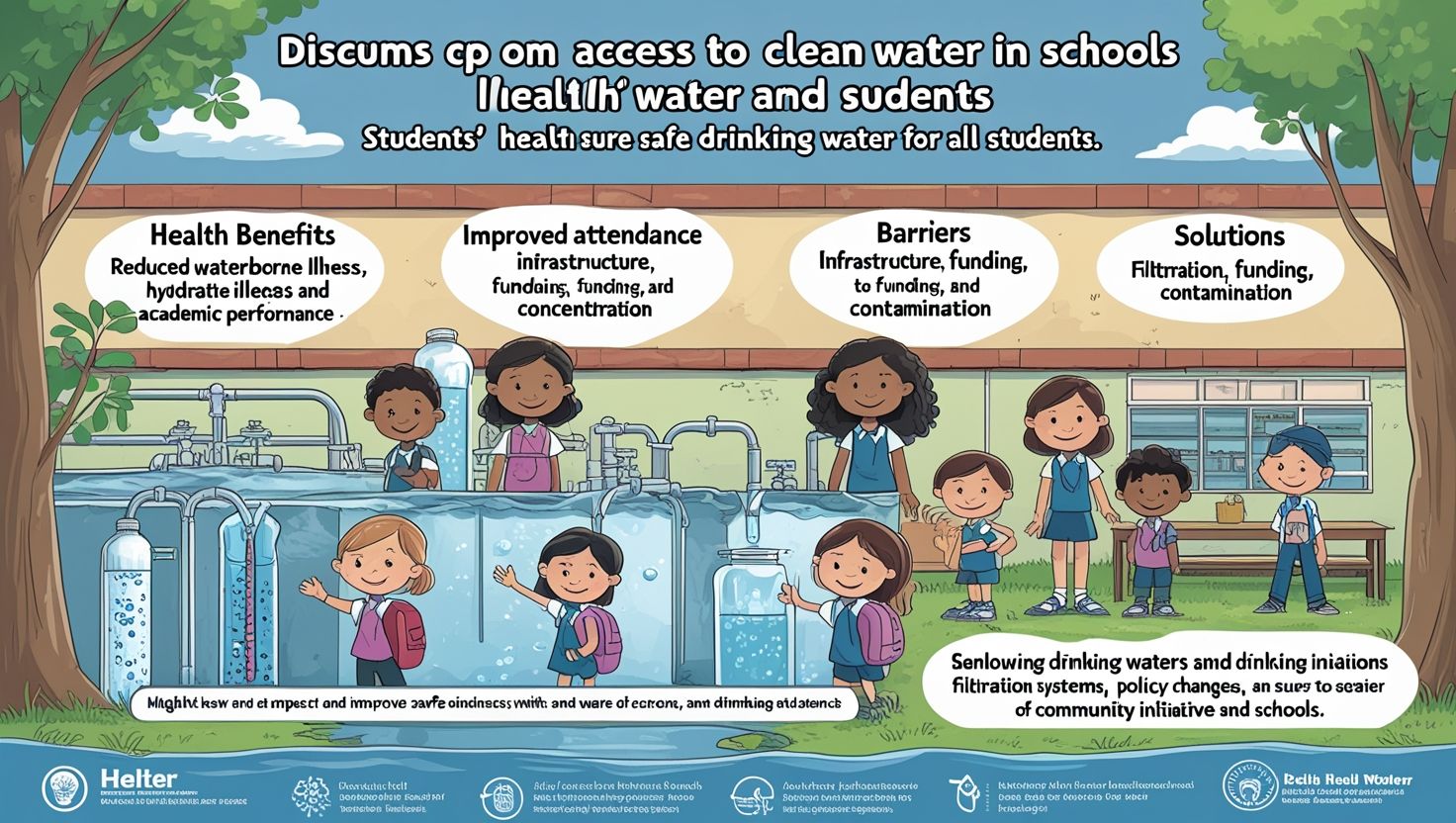 Access to Clean Water in Schools - Teachers Guide
The Awkward Truth
Let’s not forget the bathroom factor. Some schools limit water access because they don’t want students constantly asking to go to the bathroom. It’s a logistical fear. But that’s like saying “don’t eat food because you might need to digest.” It’s a backwards solution. The body needs to eliminate waste—that’s a good thing. Keeping kids dehydrated to avoid bathroom breaks is like stopping a car because the gas gauge is dropping. It just doesn’t make sense.
There’s also a funny cultural thing: water is seen as “boring” in the age of energy drinks and fancy coffees. Schools are fighting this by making water more attractive. Some add fruit slices to pitchers in the cafeteria. It’s a small step, but it shows that water doesn’t have to be flavorless or lame. It just needs a little PR help.
So, what’s the takeaway? Schools don’t serve water because of old habits, profitable contracts, and weird fears about bathroom breaks. But the tide is turning. The next time you see a kid guzzling from a bottle in class, know that they’re part of a quiet rebellion. They’re saying, “Hey, brains need water.” And honestly? That’s pretty cool. If schools can make water the star, they’ll have sharper students, happier teachers, and fewer bad attitudes. Now, go fill up your water bottle.
