Why Chlorine Is Added In Water

Let’s be honest—when you take a sip of tap water, you’re not thinking about chemistry. You’re probably thinking, “Is this glass clean?” or “Why does my morning coffee taste a...

Let’s be honest—when you take a sip of tap water, you’re not thinking about chemistry. You’re probably thinking, “Is this glass clean?” or “Why does my morning coffee taste a little funny?” Well, if your water has that faint, pool-like scent, you can thank chlorine.
Chlorine is the unsung hero of your kitchen faucet. It’s the reason you don’t need to boil every drop before you brush your teeth. Think of it as the bouncer at a club—keeping the nasty germs out so you can party (or hydrate) safely.
What’s the Big Deal About Germs Anyway?
Imagine your water supply is a giant, invisible highway. Without chlorine, that highway becomes a superhighway for bacteria, viruses, and parasites like giardia. These little troublemakers can cause stomach cramps, nausea, or worse.
Must Read
Back in the 1800s, people didn’t have chlorine. They got sick from water more often than we get hangnails. Typhoid and cholera were household names, and not in a good way. Chlorine changed all that by zapping those bugs before they ever reach your glass.
Your Daily Life in the Chlorine Lane
Think about your morning routine. You splash water on your face, make oatmeal, and maybe water your houseplant. Chlorine is working the night shift so that plant doesn’t get a bacterial infection—and neither do you.
Even your ice cubes owe chlorine a nod. That clear, cold cube in your iced tea is germ-free because chlorine did its job at the treatment plant. It’s like a microscopic security guard that never takes a coffee break.
And yes, that includes your shower. While you’re singing off-key, chlorine is making sure the water hitting your skin isn’t a soup of microorganisms. Gross, right? Exactly.
But Doesn’t It Taste Like a Swimming Pool?
You’re not wrong. Some people call it “the pool taste,” and it’s more noticeable in certain cities. Chlorine itself doesn’t smell or taste strongly—the smell you notice is actually a reaction with tiny bits of organic matter (like leaves or dirt) in the water.
If you let a pitcher of tap water sit in the fridge for an hour, that smell mostly disappears. It’s like letting a bottle of wine breathe, but way cheaper. Or squeeze a little lemon in your water—it masks the taste and adds a smile.
 The Connection Between Chlorine and THMs in Drinking Water - Olympian
Water companies add just enough chlorine to kill the bad stuff, but not enough to make you feel like you’re doing laps. The levels are tightly regulated by health officials to be safe for everyone, including your pet cat who insists on drinking from the faucet.
A Little History for Your Dinner Table
Here’s a fun fact to drop at a dinner party: Chicago was one of the first U.S. cities to add chlorine to its water way back in 1908. Before that, people accepted getting sick from water like they accepted bad weather—just part of life.
After chlorination became widespread, waterborne diseases dropped by nearly 90% in many cities. That’s not a statistic; that’s a miracle. Your great-grandparents probably didn’t have this luxury.
So when you complain about the taste, remember you’re sipping from a system that once saved millions of lives. That’s worth a little “pool water” vibe.
Is Chlorine the Only Option?
Nope. Some places use ozone or UV light—fancy, high-tech methods. But chlorine is like that reliable friend who always shows up: it’s cheap, effective, and proven for over a century.
It also leaves a “residual” amount in the pipes, meaning it keeps working even as water travels miles to your home. UV light stops working the second the light turns off—chlorine keeps going. It’s the Energizer Bunny of disinfection.
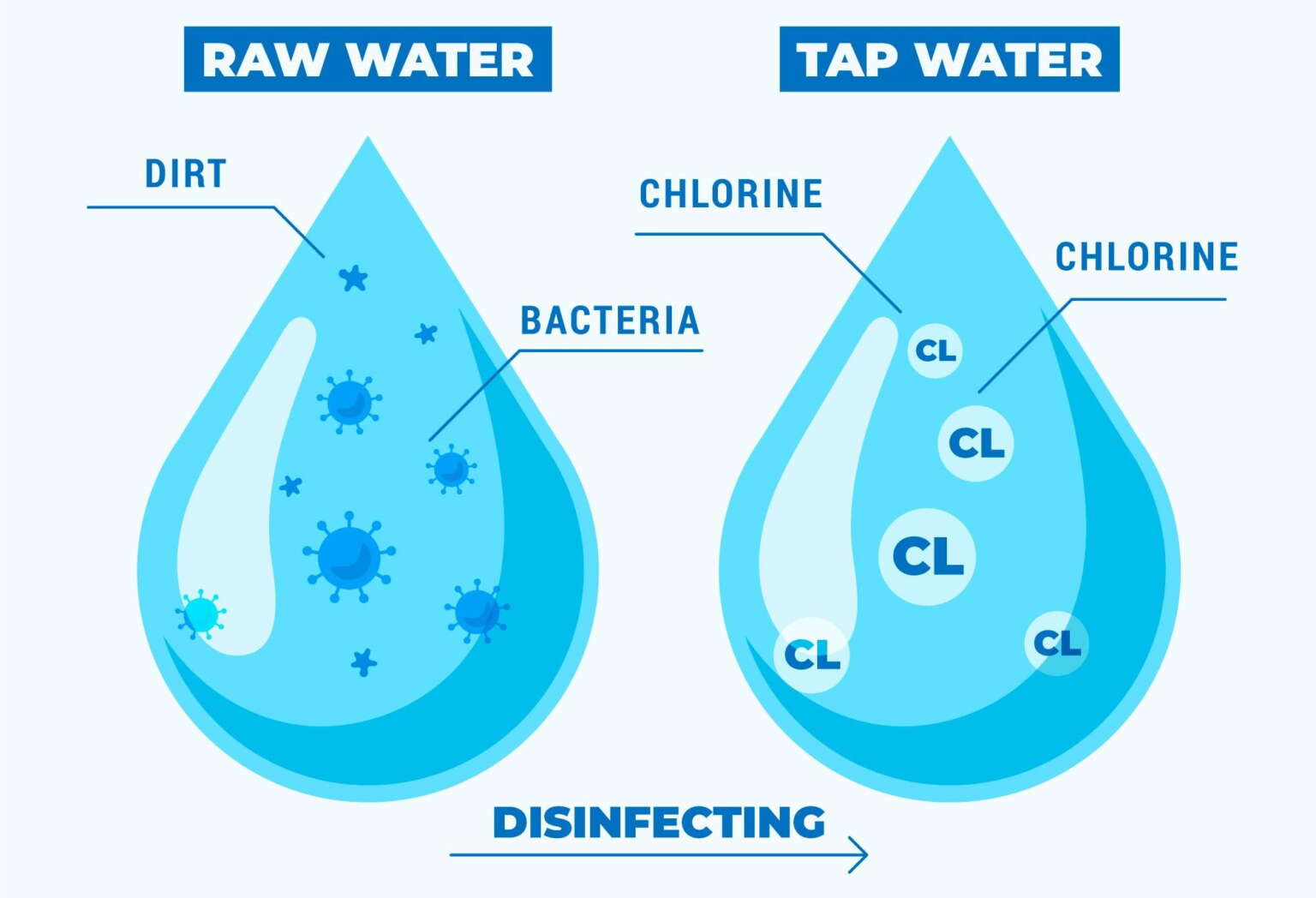 Why Does My Tap Water Smell Like Chlorine? (And How to Fix It)
So if your water tastes a bit like a Friday night at the YMCA pool, give it a wink. It’s doing its job.
What About the Environment?
Great question! Chlorine can create byproducts when it reacts with organic matter—some are linked to health concerns over very long periods. Water utilities monitor this closely and adjust levels to minimize those byproducts.
Filter pitchers, faucet attachments, or even a simple Brita can reduce chlorine taste and those byproducts at home. It’s a small step that makes a big difference in your own glass. Think of it as your personal taste adjustment.
And let’s not forget: the alternative—no chlorine—means rolling the dice with stomach bugs every time you brush your teeth. I’ll take a little taste over a trip to the ER, thank you very much.
Bottom Line: Pour a Glass and Cheers
Next time you fill your water bottle before a run or sip a glass before bed, give a little nod to chlorine. It’s the invisible, slightly-scented guardian of your hydration. It doesn’t ask for thanks. It just hangs out in the pipes, fighting the good fight.
You don’t have to love the taste. But you can appreciate the peace of mind. Now go hydrate—and maybe let that pitcher sit out for ten minutes first.
