What Does Chlorine Do To Water

So, you’re wondering what chlorine does to water. Maybe you’ve smelled that sharp, pool-like scent and thought, “Is magic happening in there?” Well, grab a floatie—we’re divin...

So, you’re wondering what chlorine does to water. Maybe you’ve smelled that sharp, pool-like scent and thought, “Is magic happening in there?” Well, grab a floatie—we’re diving into the science, but I promise it’s more fun than a chemistry pop quiz.
First off, chlorine is basically the bodyguard of your water supply. It doesn’t just sit there looking tough; it actively fights off nasty little invaders like bacteria, viruses, and parasites. Imagine a tiny bouncer at a club, kicking out germs before they can crash your gastrointestinal party.
When you add chlorine to water, it doesn’t just mix in like sugar in lemonade. It reacts chemically, forming hypochlorous acid and hypochlorite ions. Yes, those are big words, but think of them as microbe murder-weapons—they punch holes in the cell walls of germs, making them explode like tiny water balloons. Gross, but effective!
Must Read
That “pool smell” you love? It’s a bit of a lie. That sharp odor isn’t actually chlorine alone—it’s chloramines, which form when chlorine meets sweat, pee, or dirt. In other words, if your pool smells strong, it’s not “too much chlorine”; it’s a sign that someone didn’t shower before jumping in. Thanks, Jerry.
What About Your Drinking Water?
You’re probably sipping chlorinated water right now. Don’t panic—it’s perfectly safe at the levels used by treatment plants. Think of it as a tiny insurance policy: chlorine keeps your tap water free from cholera, typhoid, and other medieval plagues. We owe that clean glass to some very hardworking molecules.
But does it change the water’s taste? A little. Some people say it tastes like a swimming pool’s distant cousin. If that bugs you, let your water sit in the fridge for an hour—the chlorine evaporates like gossip at a family reunion. Problem solved.
Here’s a fun fact: chlorine also helps oxidize stuff like iron and manganese. That means it can turn rusty-looking water into crystal-clear, drinkable gold. It’s like a superhero that scrubs the dirt off your tap without breaking a sweat.
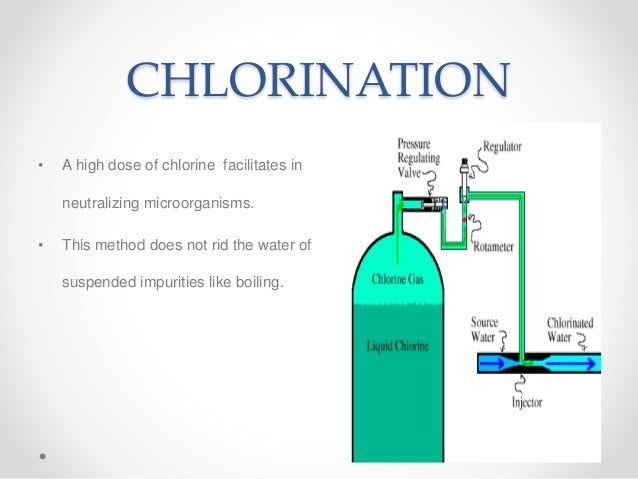 Why should we purify water?
The Joke’s On You (And The Germs)
Chlorine plays a clever trick on microorganisms. It sneaks into their cellular machinery and denatures their proteins—which is a fancy way of saying it scrambles their biological “brains.” Imagine trying to bake a cake and suddenly forgetting what flour is. That’s a dead germ.
Now, you might wonder: “Does chlorine kill everything in the water?” Not quite. Some hardy little cysts, like Cryptosporidium, can resist chlorine’s superpowers. That’s why water plants also use filters and UV light—it’s a team effort. Think of chlorine as the quarterback, not the whole football team.
And hey, let’s not forget our fishy friends. If you have an aquarium, you must remove chlorine from tap water or your goldfish will start doing backflips (the sad kind). A simple dechlorinator drop fixes that. Your fish will thank you with grumpy bubbles.
The Comfort Zone: What Chlorine Doesn’t Do
Chlorine won’t make your water radioactive. It won’t turn it into a magical potion. And it definitely won’t teach your dog to fetch (I’ve tried). It simply keeps water clean enough to drink, swim in, and brush your teeth without fear of an ancient plague.
 The Connection Between Chlorine and THMs in Drinking Water - Olympian
Some people worry about chlorine reacting with organic matter and forming disinfection byproducts (DBPs). Yes, scientists study this, but the risk is tiny compared to the danger of drinking untreated water. It’s like worrying about a papercut while a lion is chasing you.
If you’re still skeptical, know this: chlorinated water has saved billions of lives since the early 1900s. It’s one of the greatest public health wins in history. Right up there with sliced bread, but way more life-saving (sorry, bread).
The Grand Finale: Why You Should Smile
So next time you step into a sparkling pool or fill a glass from the tap, give a little nod to chlorine. It’s not glamorous. It doesn’t sparkle. But it’s the quiet guardian that turns a potential swamp of sickness into a refreshing, safe splash.
Remember, chlorine doesn’t just “do something” to water—it gives water superpowers. It transforms it from a germ taxi into a health elixir. And that, my friend, is pretty cool for a chemical that smells like a high school locker room.
So go ahead: take a sip, cannonball into the deep end, and laugh at the thought of all those microscopic baddies getting wrecked. Chlorine’s got your back. And your water is winning.
