Where Does The Water Come From

Have you ever stood in the shower, letting the warm water run over your face, and just wondered: where did you come from? It sounds like a simple question, but the answer is a...
Have you ever stood in the shower, letting the warm water run over your face, and just wondered: where did you come from? It sounds like a simple question, but the answer is a wild, planet-wide adventure. Seriously, the water that’s dripping off your nose right now might be older than the dinosaurs.
The Old, Old, Old Story
Most of the water on Earth isn’t made here. It was delivered, like a celestial package. Billions of years ago, our planet was a hot, dry rock.
Then came the comets and asteroids—icy space rocks that smashed into the early Earth. They brought gobs of frozen water, which melted and filled the oceans we see today. It’s a bit like your ice cube tray finally thawing after a cosmic party.
Must Read
Where Did Your Glass of Water Come From?
Let’s get personal. The water in your kitchen faucet has a more recent, local story. It probably fell from the sky as rain or snow in the last few weeks or years.
That rain soaked into the ground, trickling through layers of sand and rock like a giant coffee filter. It’s stored in underground aquifers—huge, natural reservoirs you can’t see—or in lakes and rivers we depend on every day. Think of it like a secret bank account of water beneath your feet.
But here’s the kicker: that same water has been cycled for millions of years. The molecules that quenched a T-Rex’s thirst might now be hydrating your houseplant. Wild, right?
The Water Cycle Is Just Magic with Physics
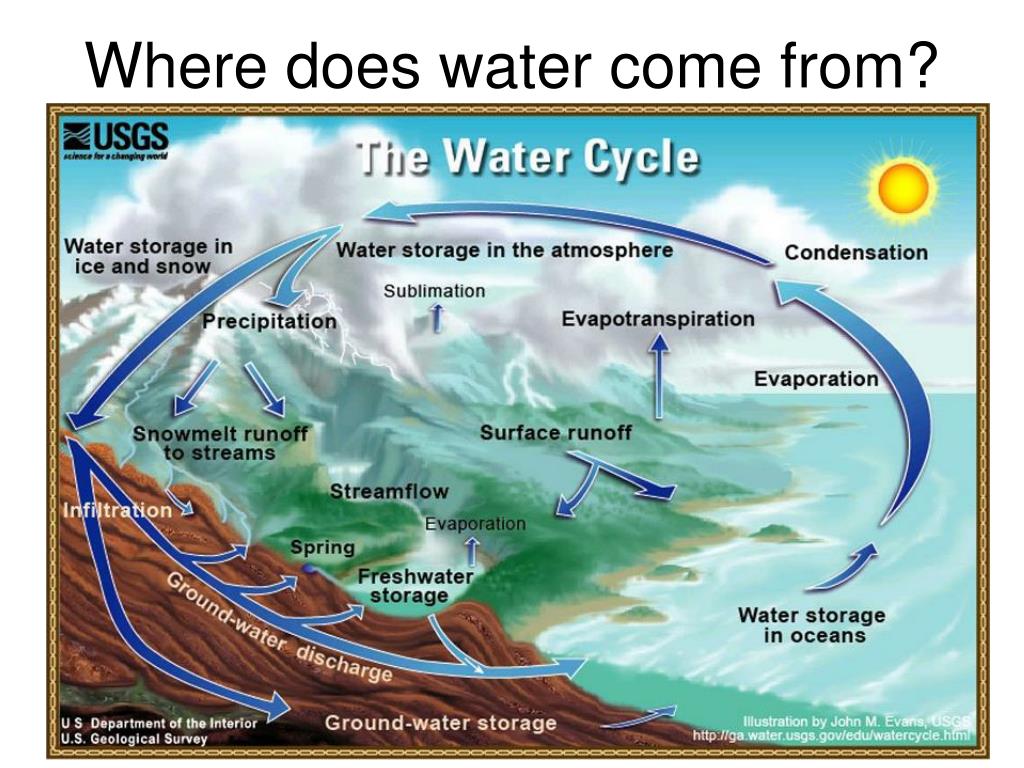
So how does it keep moving around without a truck? It’s called the water cycle, and it’s essentially a giant, invisible recycling system powered by the sun.
The sun heats the ocean, turning liquid water into vapor—a process called evaporation. That vapor rises into the sky, cools down, and clumps together into clouds. It’s like your bathroom mirror fogging up after a hot shower, but on a planetary scale.
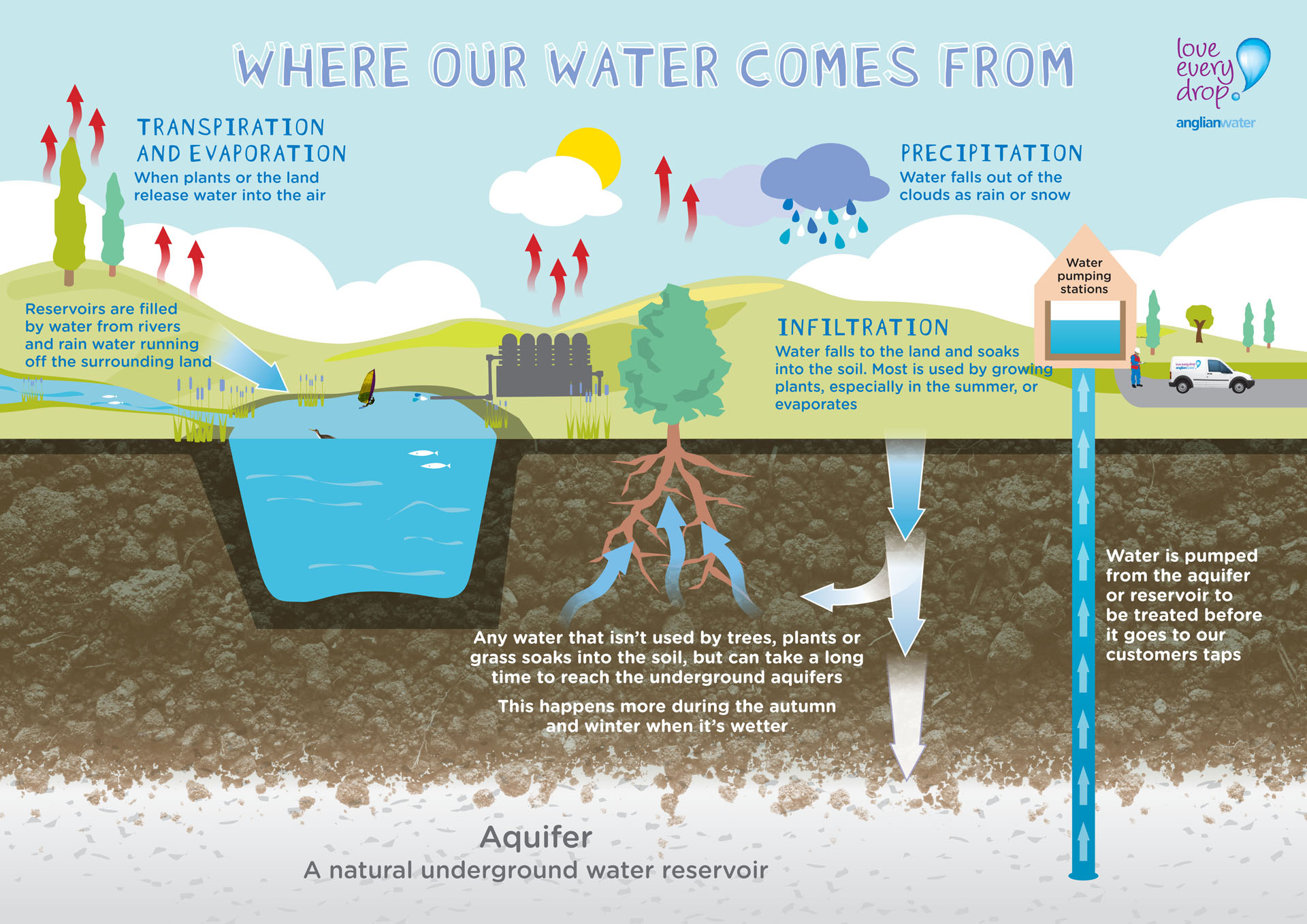 Where Does My Water Come From Southern Water at Stephen Gallagher blog
When those clouds get too heavy, they drop the water back down as rain or snow. This is called precipitation, and it’s the universe’s way of saying, “Here’s your refill.” Then the whole cycle starts again. It never stops.
Why You Should Care (Even If You’re No Scientist)
Here’s the funny part: we have the same amount of water on Earth today as we did a billion years ago. No new water is being made. We are drinking the same stuff that washed away ancient civilizations.
That means the water in your morning coffee might have once been part of a glacier in the Arctic. Or a cloud over the Amazon. Or a teardrop on a Roman emperor’s cheek. It’s a humbling, connected feeling.
And because it’s the same water, it’s also a limited resource. Only about 1% of Earth’s water is fresh and easy to reach. The rest is salty or frozen. So that glass in your hand? It’s rarer than you think.
Fun Comparisons to Wrap Your Head Around
Imagine if the entire Earth’s water was a one-gallon jug. Only about one tablespoon of that is liquid fresh water we can actually use. The rest is ocean or ice.
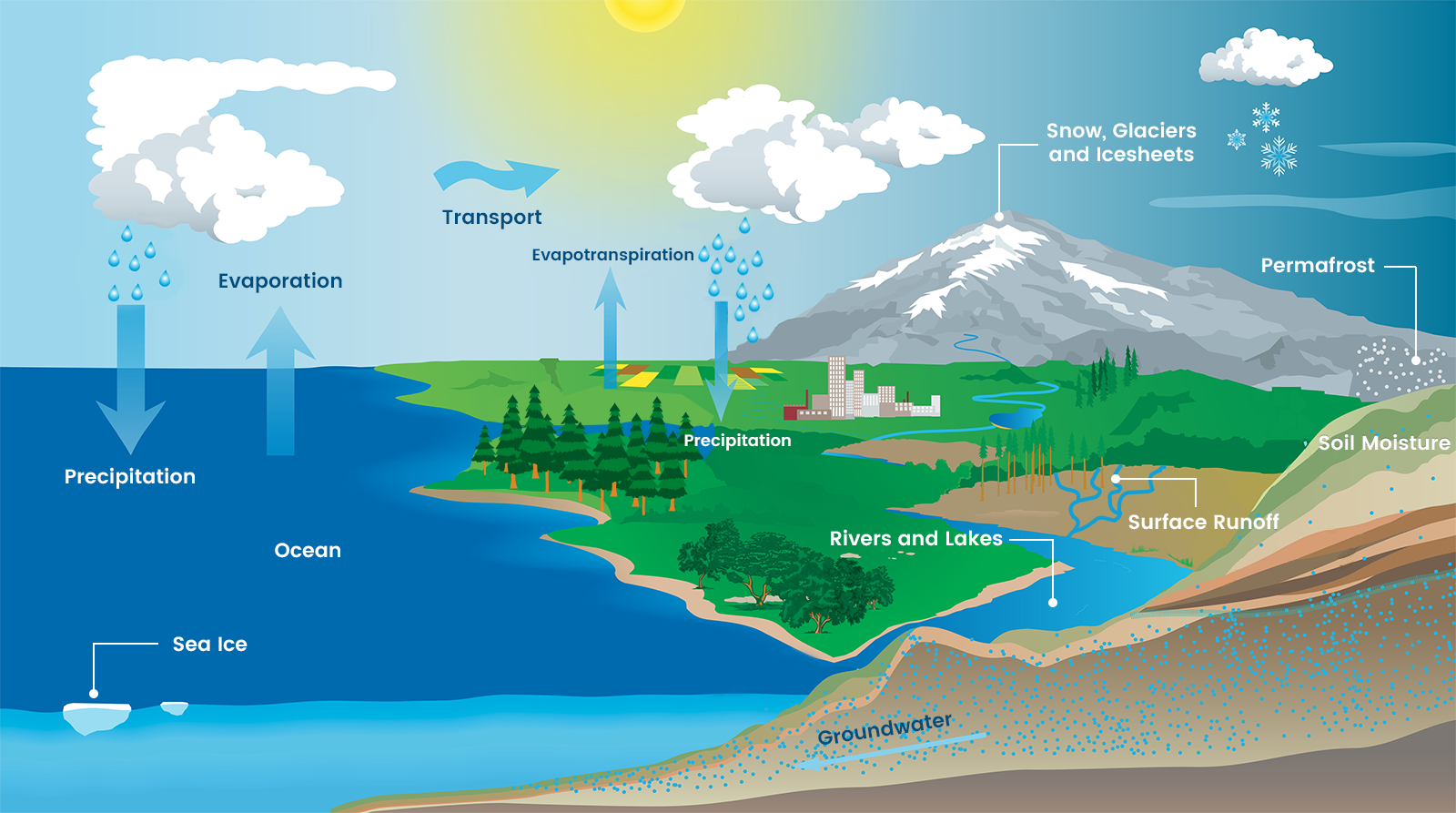 Earth’s Water Movements | Grades 9-12 Science Teaching and Lesson Resources
Or picture this: the water you flush down the toilet today will eventually evaporate, travel across continents, and fall as rain on a farmer’s field in Brazil. You’re literally sharing showers with the whole world.
Isn’t it weird to think that every drop has been on a journey longer than any road trip you’ll ever take? And you just turned on the tap like it was no big deal.
So, Where Does It Really Come From?
Ultimately, your water comes from a time before the sun was fully formed. It comes from icy comets that slammed into a young Earth. It comes from clouds that danced over mountains you’ll never climb.
It comes from the sweat of your ancestors, the morning dew on a spiderweb, and the tears of joy during a summer storm. It’s ancient, recycled, and alive.
So next time you fill your water bottle, pause. Give it a little nod. Because you’re not just drinking H2O—you’re sipping a tiny piece of the universe’s history, one cool, clear molecule at a time.
