Why Doesn't Water Have A Taste

Okay, let’s get real for a second. Have you ever been parched, grabbed a glass of water, and thought, “Wow, this tastes… exactly like nothing”? It’s weird, right? We spend our...

Okay, let’s get real for a second. Have you ever been parched, grabbed a glass of water, and thought, “Wow, this tastes… exactly like nothing”? It’s weird, right? We spend our lives chasing flavors—coffee, pizza, chocolate—but water just sits there, being neutral. Why doesn’t it have a taste?
First, let me blow your mind: water does have a taste. Technically. But your brain is a sneaky little liar. It’s wired to ignore water’s flavor so you can survive. Think of it as the ultimate background friend—always there, never stealing the spotlight.
The Science of “Nothing”
Your tongue is covered in taste buds that detect five basic flavors: sweet, sour, salty, bitter, and umami. Water doesn’t trigger any of these. It’s like a blank canvas. But here’s the kicker: your mouth has special receptors called taste cells for water itself. They literally sense “I’m touching H2O.”
Must Read
So why don’t you taste it? Because your brain actively filters it out. If you tasted water every time you drank, you’d be overwhelmed. Imagine a constant, low-level “wet” flavor—like chewing on a damp sponge forever. No thanks.
Your brain treats water as the default. It says, “This is normal. Ignore it. Focus on the dangerous stuff, like poison or spoiled milk.” Survival 101, my friend.
The “Wait, Is It Tap or Bottled?” Effect
Hold on. You’ve definitely tasted a difference between tap water, spring water, and that fancy Icelandic stuff. That’s not water’s taste—it’s contamination. Your tap water has chlorine, minerals, and maybe a tiny hint of copper pipes. That’s not water; that’s a chemical cocktail on a mission.
Think of it like this: pure water is a silent movie star. Add a pinch of salt, and it’s suddenly “salty.” Add calcium, and it’s “hard.” But the water itself? It’s the invisible actor playing the role of “nothing.”
Fun experiment: drink some distilled water. It’s the purest H2O you can get. You’ll probably think, “This tastes flat.” That’s your brain freaking out because there’s nothing extra to taste. It’s like hearing a room with zero echo—unsettling.
 Taste and Smell of Water Explained - YouTube
But Wait, What About Temperature and Carbonation?
You know how cold water feels crisp? That’s your mouth’s temperature sensors hijacking the experience. Cold water numbs your taste buds and makes it feel “clean.” Hot water? It releases more dissolved gases and minerals, so it can taste “ech-y.” But again, not water—just physics being a drama queen.
And carbonation? That’s pressure and acid (carbonic acid) tickling your tongue. Bubbly water tastes sharp, but it’s still a lie. The bubbles aren’t a flavor; they’re a texture, like a gentle pop-rock concert in your mouth.
So when you say, “I hate sparkling water’s taste,” you’re really saying, “I hate feeling like tiny soda ghosts are exploding on my tongue.” Valid.
The Evolutionary Twist
Here’s the part that makes you feel clever: animals that can’t taste water die faster. Seriously. If you can’t detect fresh water, you might chug salt water and dehydrate. Your ancestors who could sense “this is water (not poison)” survived. What you call “tasteless” is actually a superpower—your brain’s way of saying, “Yep, not dying today.”
But humans have a weird social twist. We associate “pure” with “tasteless.” So when ads show a glacier dropping into a bottle, you think, “Ah, premium nothingness.” Marketing, my friend. It’s all a game of convincing you that emptiness is expensive.
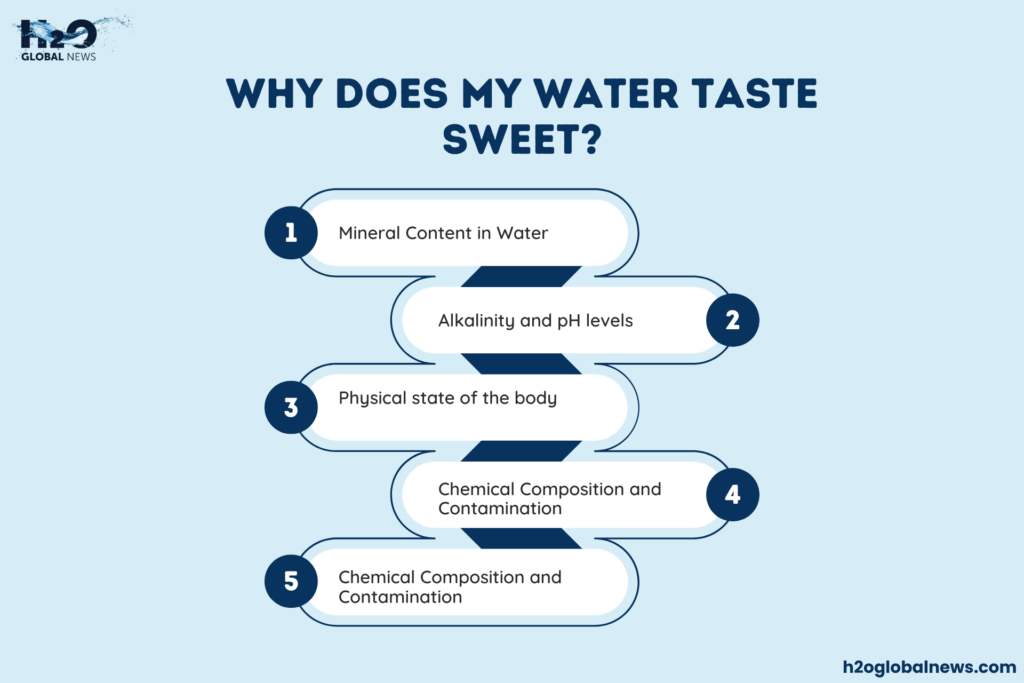 Why Does Water Taste Sweet? The Science Explained | H2O Global News
So, Is Water Really Flavorless?
Sort of. It’s like asking if air has a smell. It does—you just tune it out unless there’s smoke or a garbage truck nearby. Water is the same. Your olfactory system (smell) also chimes in. Pure water doesn’t smell, so your brain says, “Moving on.”
But take that same water, drop a lemon in it, and boom—you’ve got a flavor. Because now your nose is involved. You’re tasting lemon, not water. The water just carries the party.
I once spent a whole day trying to “taste” water. I failed. I just kept thinking about how my mouth felt. That’s the secret: water is a feeling, not a flavor. It’s wet, cool, and refreshing. Like a hug for your insides.
The Final Sip
Next time someone asks, “Why doesn’t water have a taste?” you can casually drop this: “Oh, it does—but your brain is too busy protecting you to notice.” Then take a dramatic sip of your tap water. They’ll look at you like you’re a genius.
Or at least like you’ve thought way too much about a drink that costs $0.00. Either way, you’re welcome. Now go drink some water. It tastes like nothing, and that’s perfectly okay.
