What Does Fluoride In Water Do

Let’s be honest—when you hear the word “fluoride,” you probably picture a dentist’s office, a minty paste, or maybe that weird warning label on your toothpaste tube. But here’...

Let’s be honest—when you hear the word “fluoride,” you probably picture a dentist’s office, a minty paste, or maybe that weird warning label on your toothpaste tube. But here’s the thing: fluoride isn’t just for scrubbing your teeth twice a day. It’s been quietly hanging out in your tap water for decades, doing some seriously cool work. Think of it as a tiny, invisible bodyguard for your smile, one that works 24/7 without you ever having to think about it.
What Does It Actually Do in Your Mouth?
Imagine your tooth enamel is like a suit of armor. Every time you eat a sugary snack or sip a soda, little acid attacks try to chip away at that armor. Over time, those chips turn into cavities—tiny holes that make your teeth sad. Fluoride swoops in like a repair crew, fixing those weak spots before they become big problems.
It does this through a process called remineralization. Basically, fluoride helps your teeth soak up minerals like calcium and phosphate from your saliva, making the enamel stronger and more resistant to decay. It’s like giving your teeth a daily vitamin boost, but instead of a pill, you’re just turning on the kitchen faucet.
Must Read
A Little Story from the Sink
Picture this: You’re brushing your teeth before bed, and you rinse your brush under the tap. That simple splash of water—the one you barely register—is carrying fluoride that’s been working all day long. Every glass of water you drink with dinner, every sip from your water bottle at the gym, every time you make coffee or soup… it’s all a constant little army protecting your teeth.
It’s not a magic potion, but it’s the closest thing we’ve got to a dentist’s visit that fits in your daily routine. And the best part? You don’t have to remember to do anything. It’s already there, like a loyal friend who never asks for anything in return.
Why Should You Care?
Okay, maybe you’re thinking, “I already brush my teeth. Do I really need fluoride in my water?” Here’s the honest truth: brushing is great, but it’s like washing one side of a car while the other side stays dirty. We miss spots—a lot of spots. The nooks and crannies between teeth, the gumline, those tricky back molars—fluoride in your water reaches all of them.
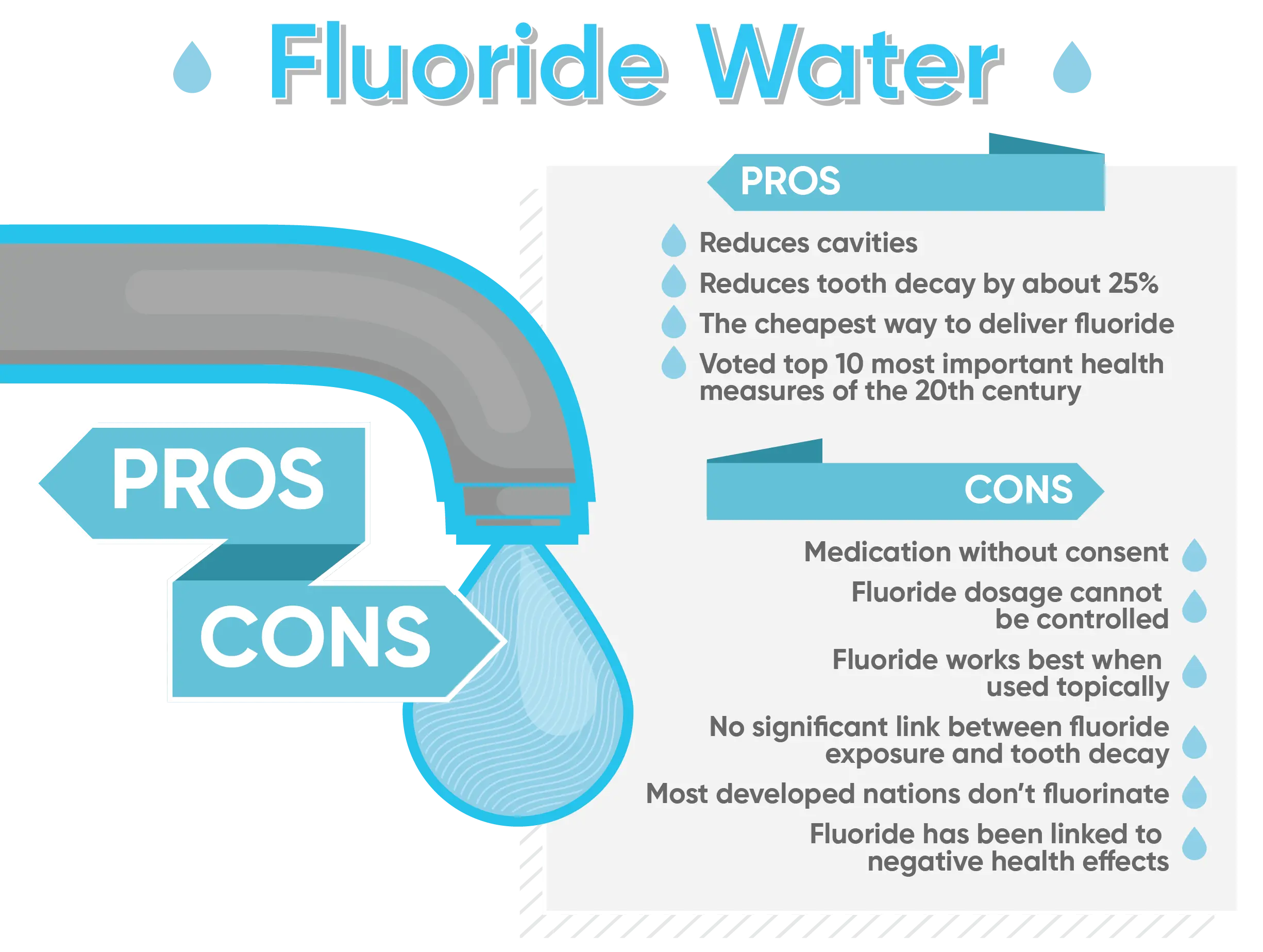 Is Fluoride in Water Good or Bad? I Quench Water
Plus, not everyone has the same access to dental care. Some folks can’t afford regular cleanings or fancy toothpaste. Fluoridated water is the great equalizer. It gives everyone—kids, grandparents, folks on a budget—the same chance to avoid painful, expensive cavities. It’s like a public health superhero that wears a very subtle cape.
But Isn’t It… Controversial?
You’ve probably heard whispers about fluoride—some folks worry it’s unsafe or that it’s “forced medication.” Let’s clear that up with a simple comparison: Think of vitamins in milk (vitamin D) or iodine in table salt. We add these tiny amounts to everyday foods and drinks because they help us stay healthy without any extra effort. Fluoride in water is exactly that—a small, carefully measured addition that’s been studied for nearly 80 years.
Major health organizations, from the World Health Organization to the American Dental Association, all agree that when used correctly, it’s safe and effective. Of course, too much of anything (even water!) can be a problem, but the amount in your tap is so low that it’s like a sprinkle of cinnamon on toast—not a whole jar.
What About Kids and Grandparents?
Here’s where it gets really warm and fuzzy. If you’ve got little ones at home, they’re probably not great brushers. They rush, they forget, they eat gummy snacks on the sly. Fluoride in water is a safety net for their growing teeth, helping them build strong enamel from the inside out. It’s even been shown to help baby teeth (yes, those little pearls matter too!) stay cavity-free.
 How Does Fluoride Work? | ACSH
And for older adults? As we age, gums recede, and tooth roots become exposed—making them extra vulnerable to decay. A steady dose of fluoride in your daily water helps protect those delicate areas. It’s like retirement security for your teeth—a quiet, reliable plan that keeps on giving.
A Simple Way to Think About It
You know how a raincoat keeps you dry without you having to do anything? You just put it on, and the rain slides right off. Fluoride in water is your tooth’s raincoat. You don’t see it, you don’t taste it, but it’s there, protecting you from the storm of sugar and acid that life throws at your mouth every single day.
So, next time you fill up a glass from the tap or boil water for pasta, give a little nod to that quiet helper. It’s been working hard, without any applause, to keep your smile strong. And really, isn’t that the kind of low-key, reliable friend we all need?
Cheers to you, fluoride. You’re a literal lifesaver, one sip at a time.
