Does Ro System Remove Fluoride

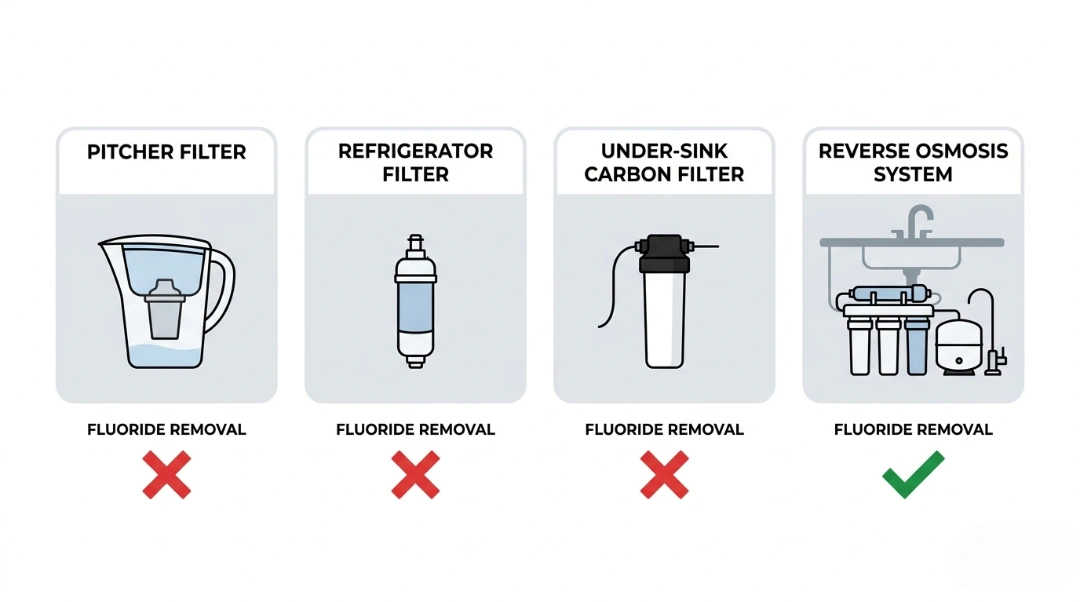
Let’s dive headfirst into a question that’s been bouncing around your brain (and maybe your kitchen faucet): does an RO system remove fluoride? Spoiler alert: yes, it absolute...

Let’s dive headfirst into a question that’s been bouncing around your brain (and maybe your kitchen faucet): does an RO system remove fluoride? Spoiler alert: yes, it absolutely does. But let’s not just leave you with a one-word answer—this is where the fun begins.
You see, fluoride is a bit like that friend who shows up uninvited to a party. It’s sort of helpful in small doses for your teeth, but too much can leave you feeling a little sour. Reverse osmosis (RO) systems are the bouncers at the door, politely showing fluoride the exit.
How does this water wizardry actually work?
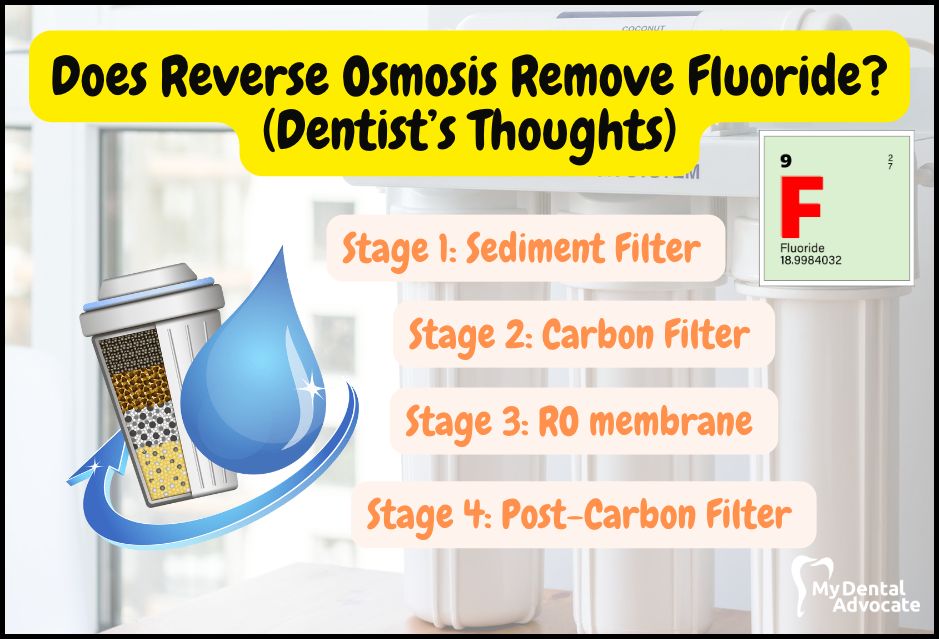
Imagine a super-fine mesh so tight that only pure water molecules can squeeze through. That’s your RO membrane in a nutshell. It blocks fluoride ions, along with other minerals and contaminants, like a microscopic superhero cape.
Must Read
The process uses pressure to push water through this semi-permeable membrane. Think of it as a very selective strainer—one that leaves behind about 90-95% of fluoride. Not bad for a gadget that fits under your sink, right?
And here’s the kicker: it doesn’t just stop at fluoride. RO systems also wave goodbye to lead, chlorine, arsenic, and even some bacteria. It’s like a multi-tool for your tap water—practical, powerful, and a little bit flashy.
But wait—should you really care about removing fluoride?
Here’s where things get personal. Some people love fluoridated water for dental health. Others worry about overexposure, especially if you drink a lot of tap water or live in an area with naturally high fluoride levels.
The beauty of an RO system? You get to choose. You can sip with peace of mind, knowing you’re in control. It’s like having a remote control for your hydration—how cool is that?
 Does Reverse Osmosis Remove Fluoride? A Dentist's Take
And let’s be real: great-tasting water makes life more fun. No more metallic aftertaste. No more “is that from the tap or the bottle?” guessing games. Just crisp, clean, joyful H2O.
Let’s bust a myth while we’re at it
Some folks worry that RO systems remove too many good minerals, like calcium and magnesium. True, they strip a bit out—but your diet (hello, cheese and almonds!) has you covered. Plus, many RO systems come with a remineralization filter to add back the good stuff.
So no, you won’t turn into a mineral-deficient zombie. You’ll just have water that’s pristine and perfectly balanced. It’s like ordering a salad but keeping the best toppings.
And if you’re still on the fence, think about this: RO systems are incredibly efficient nowadays. Modern units waste less water and even have fancy tanks that keep your countertops clutter-free. Progress, baby!
 Does Reverse Osmosis Remove Fluoride? Explained
Ready to make your water adventure epic?
So, does RO remove fluoride? Yes, and with style. It’s your ticket to water that’s pure, refreshing, and totally on your terms. No more second-guessing what’s in your glass.
Here’s the uplifting part: learning about water filtration doesn’t have to be a chore—it can be a gateway to better health, better taste, and a little daily joy. Every sip becomes a small victory.
So go ahead, research those RO systems, imagine the crisp ice cubes you’ll make, and dream of coffee that tastes like it’s from a mountain spring. You’ve got this. And your water? It’s about to get a major upgrade.
Life’s too short for meh water. Cheers to clarity, choice, and a future where every drop makes you smile.
