What Is Total Dissolved Solids

So, we’re having coffee, right? And you ask me, “What the heck is Total Dissolved Solids?” I love that question. It sounds like a science experiment, but it’s actually about w...
So, we’re having coffee, right? And you ask me, “What the heck is Total Dissolved Solids?” I love that question. It sounds like a science experiment, but it’s actually about what’s hiding in your water.
Let’s break it down. Total Dissolved Solids, or TDS, is basically everything that’s dissolved in your water that isn’t H₂O. Think of it as the flavor, the minerals, and the random junk floating invisibly along for the ride.
It’s not just dirt. It’s calcium, magnesium, sodium, and even tiny bits of metal or salt. If you’ve ever tasted “hard” water, you’ve tasted TDS. You’re basically sipping a very weak mineral soup. Creepy? Or refreshing? Depends on your mood.
Must Read
Where Does All This Stuff Come From?
Okay, picture a river. It flows over rocks and through soil, picking up minerals like a kid collecting candy. That’s natural TDS. Groundwater is often higher in TDS because it hangs out with rocks for centuries. So, your tap water might be a geological road trip in a glass.
But here’s the kicker: human stuff adds to the party. Runoff from farms, chemicals from factories, and even old pipes can increase TDS. Suddenly, that “mineral soup” gets a little too spicy. Not ideal.
High TDS vs. Low TDS (The Taste Test)
Have you ever had distilled water? It tastes flat, right? That’s because it has almost zero TDS. It’s like drinking pure emptiness. Your tongue doesn’t know what to do with it. Meanwhile, mineral water (like Evian) has a high TDS and tastes buttery or crisp. It’s all about balance.
On the flip side, really high TDS water tastes metallic, salty, or even bitter. Think of a rusty pipe mixed with a salt lick. Gross, right? Your water filter is basically begging you to lower that number.
 Solids in Water|| Water Quality Index || Environmental Engineering
How Do We Measure It?
You can buy a little gadget called a TDS meter for like $10 on Amazon. It looks like a thermometer from a mad scientist’s lab. You dip it in water, and it spits out a number in parts per million (ppm). Easy. Simple. Slightly geeky.
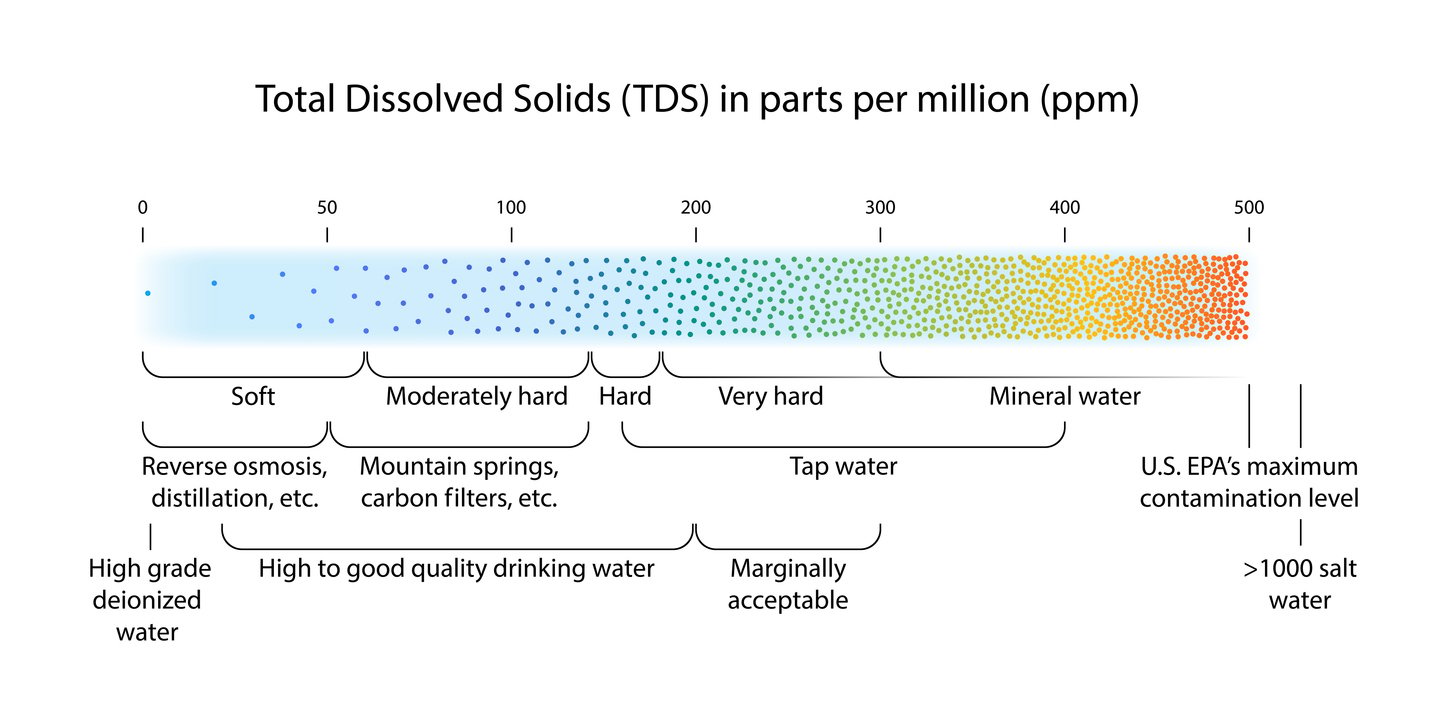
Here’s a rough guide: 0-50 ppm is basically pure (like rain or distilled). 150-300 ppm is typical tap water (not bad). 500+ ppm? That’s hard water territory, and your kettle might hate you. Over 1000 ppm? You’re basically drinking a saline solution. Don’t do it.
So, Is High TDS Dangerous?
Here’s the truth bomb: Not always. In fact, some high TDS water is healthy because it has good minerals like calcium or magnesium. Think of it as a vitamin pill that quenches your thirst. The issue is what those solids are. Lead? Bad. Arsenic? Very bad. Potassium? Meh, mostly fine.
The real danger is when the TDS is high and the water tastes funky. That’s your clue that something nasty (like bacteria or heavy metals) might be in the mix. Your body is smarter than you think. If it tastes like a swamp, stop drinking it.
 What is Meant by Total Dissolved Solids?
How to Lower TDS (Without a Science Degree)
You’ve got options! Reverse osmosis systems are the gold standard. They push water through a membrane that locks out most solids. It’s like a bouncer for your water. Expensive? A bit. Worth it for cloudy tap water? Absolutely.
Distillation works too, but it’s slow and uses a ton of energy. You’re basically boiling water, catching the steam, and drinking the rain. It’s poetic, but also a pain. A simple carbon filter (like Brita) helps a little, but it’s not a TDS monster. It’s more of a house cat.
The Unofficial Conclusion (Over Coffee, Remember?)
So, what is Total Dissolved Solids? It’s the invisible, tasty, or terrifying stuff in your water. It’s the reason your tap water tastes different from your neighbor’s. It’s the silent scorekeeper of water quality.
Next time you grab a glass, give it a smell. Smell nothing? That’s low TDS. Smell something faintly earthy? That’s TDS saying hello. You don’t have to become a water snob, but knowing this stuff makes you feel like a wizard. And really, who doesn’t want to feel like a wizard over a glass of water? Cheers, my friend.
