What Is Reverse Osmosis Filter

So, picture this: It’s a scorching Saturday afternoon, and I’m at a friend’s barbecue. They proudly hand me a glass of “filtered” water from their fancy new tap. I take a sip,...

So, picture this: It’s a scorching Saturday afternoon, and I’m at a friend’s barbecue. They proudly hand me a glass of “filtered” water from their fancy new tap. I take a sip, expecting crystal-clear perfection. Instead, it tastes faintly of… well, of last week’s garden hose and a vague metallic sigh.
"Wait," I say, trying not to grimace. "Is this from your reverse osmosis system?" They nod enthusiastically, pointing to a sleek gadget under the sink. I just smile and nod back. But inside, I’m screaming: That’s not how RO works, my friend!
The Great Water Lie (And the Hero It Deserves)
Let’s be real: we’ve all fallen for the myth that any filter turns tap water into mountain spring. But reverse osmosis is the overachieving, slightly neurotic cousin of regular filters. It doesn’t just catch a few specks of dirt—it stage-fives nearly everything except H₂O itself.
Must Read
Side note: If your tap water tastes like a swimming pool or a rusty pipe, RO is the friend who shows up with a sledgehammer and a lab coat. It’s a little dramatic, but it gets the job done.
So, What Actually Happens Inside That Silver Canister?
Imagine you have a very fine net—like, incredibly fine. We’re talking pores that are 0.0001 microns wide. A human hair is about 70 microns. Yeah, RO membranes are basically the bouncers at an exclusive club where only water molecules get past the velvet rope.
The “reverse” part is the kicker. Normally, water flows from low concentration to high concentration (osmosis). But RO uses pressure to shove water the wrong way—through that tight membrane. It’s like forcing a sheep through a keyhole. Only the sheep is pure water, and everything else—lead, chlorine, fluoride, pesticides, even those salty minerals—gets left behind in the “brine” stream.
You following me? Good. Because this isn’t just science; it’s the reason you can finally drink tap water without making a sour face.
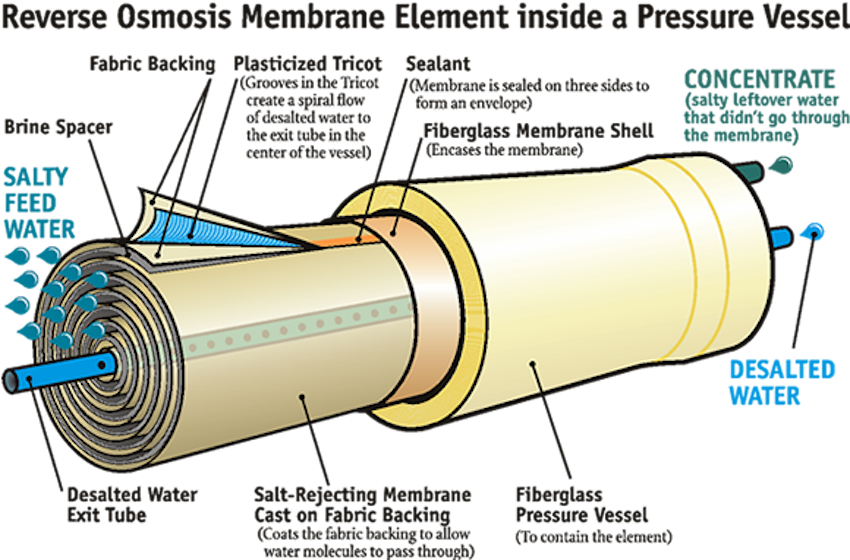 Membrane Filtration Reverse Osmosis at Dorothy Boots blog
What It Takes Out (and What It Doesn’t)
Let’s talk about the bad guys RO kicks to the curb. We’re talking heavy metals like lead and mercury. Chlorine, which makes water smell like a public pool. Arsenic, nitrates, and even some viruses and bacteria. It’s basically a superhero for your kidneys.
But here’s the ironic part: RO is too good at its job. It also strips out calcium and magnesium—the minerals that make water taste “smooth.” This is why plain RO water can taste flat or a little sour. That’s not a defect; it’s a feature of its obsessive cleaning.
Real talk: If you’re using RO, either add a remineralization filter afterward or just accept that your water is spiritually pure but physically boring. Your tea might taste weird at first. You’ll survive.
The Thirsty Truth: It Wastes Water (But You Can Get Over It)
Okay, let’s address the elephant in the room. For every gallon of clean water RO produces, it wastes about 3–4 gallons down the drain. That sounds horrifying, right? It is—if you’re living in a drought zone and don’t care.
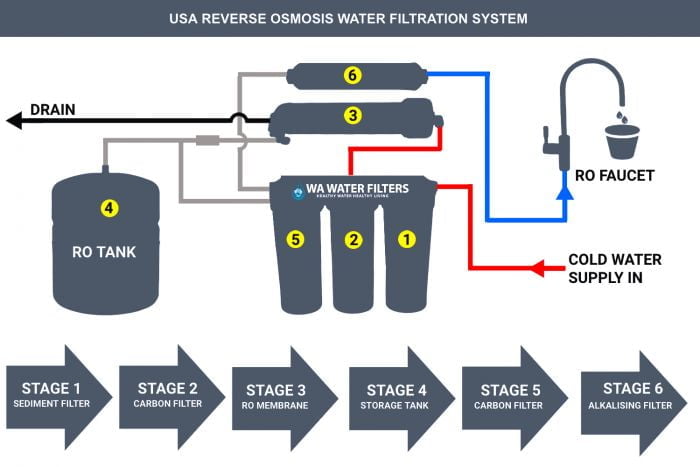 Filtration Process in 5 Stage Reverse Osmosis Systems - Wa Water Filters
But here’s the twist: newer systems are getting way more efficient. Some “permeate pumps” can cut waste to 1:1. Plus, that “waste” water is still cleaner than your garden hose water—so you can catch it for your plants or your lawn. Just don’t drink it. Your grass will forgive you.
Do You Actually Need One? (Spoiler: Most People Don’t)
Let’s be friends here. If you live in a city with decent municipal water, a simple carbon filter (like a Brita) is plenty. RO is for the heavy lifters: people on well water, folks with high lead levels, or absolute water snobs who want “zero TDS” (total dissolved solids).
Confession time: I installed an RO system once, mostly because I liked the shiny faucet. Three days later, I realized my tap water was already fine. I now use it for coffee—because coffee made with RO water tastes cleaner, less bitter, and slightly smug.
The Verdict (With a Wink)
Reverse osmosis is a brilliant, slightly wasteful, over-engineered solution to a problem most of us don’t actually have. But if you do need it—because your water tastes like a chemistry experiment or because you’re growing prize-winning orchids—it’s worth every penny.
Just remember: it’s not magic. It’s physics wearing a fancy mask. And if your friend at the barbecue serves you “RO water” that tastes like hose, politely ask them if they changed their filters last year. You’re welcome.
