How To Use Water Softener Salt

Let’s be honest: nobody wakes up thinking, “Gee, I can’t wait to pour salt into a giant plastic bin today.” But if you have hard water, your water softener is the unsung hero...

Let’s be honest: nobody wakes up thinking, “Gee, I can’t wait to pour salt into a giant plastic bin today.” But if you have hard water, your water softener is the unsung hero of your home. It’s the bouncer keeping the harsh minerals from crashing your shower party.
That white, dusty stuff on your faucets? That’s not a ghost. That’s hard water doing its best impression of a messy roommate. And the only way to kick it out is with the right salt.
First, Know Your Salt Types
Think of salt like coffee beans. You have grocery-store basics, fancy boutique blends, and the stuff that might just wreck your machine. For your softener, you’ve got three main contenders: rock salt, solar salt, and evaporated salt.
Must Read
Rock salt is the cheap, lumpy cousin who shows up uninvited. It’s cheap, but it leaves behind a nasty sludge of insolubles that gunks up your tank. You’ll be cleaning that thing out with a spatula and a lot of grumbling.
Solar salt is the middle child—better, but still not perfect. It comes from evaporated seawater and looks like shiny crystals. It’s a solid choice if you’re on a budget, but watch out for the dreaded “salt bridge.” That’s when the salt hardens into a crusty dome inside your tank, tricking the system into thinking it’s full. It’s the water softener equivalent of an empty gas tank with a full gauge.
If you want the VIP treatment, go for evaporated salt. It’s the purest, most expensive option. It dissolves like a dream and leaves nearly no mess. Think of it as the single-origin pour-over of water softening.
How to Add the Salt (Without Looking Like a Fool)
First, turn off the water softener. I know, it sounds obvious, but I once skipped this step and ended up with a salty geyser that soaked my socks. Learn from my soggy mistakes.
Pop open the lid of the brine tank. If you see water sitting on top of a solid block of salt, you’ve got a salt bridge. Don’t panic. Grab a broom handle (or a long, blunt object) and gently poke the crust until it breaks apart. It’s like cracking a giant, angry eggshell—satisfying and necessary.
 When To Add Salt In Water Softener at Gabrielle Pillinger blog
Now, pour in the salt. Don’t overthink it. Just dump it in until the tank is about half to two-thirds full. That’s the sweet spot. Too little, and the system starves. Too much, and you get a salt mountain that won’t dissolve. It’s like adding cheese to pasta—you want enough, but not so much that it becomes a sad, clumpy disaster.
The Water Level Drama
If you see water past the salt line, don’t panic. That’s normal during a regeneration cycle. But if it’s constantly high, your softener might be stuck in a rinse cycle. That’s like a washing machine that never stops—annoying and wasteful. Call a plumber if that happens.
If the water looks murky or smells like rotten eggs, you might have bacteria. That’s rare, but a quick shock with a little bleach can fix it. Just don’t dump bleach in with the salt—that makes a toxic gas. Read the manual, you mad scientist.
When to Feed Your Machine
Check the salt level once a month. Set a calendar reminder. I use the same one that tells me to water my fake plant—which I still forget, but at least I remember the salt.
You’ll know it’s time for a refill when you hear gurgling or the softener regenerates more often. That’s your machine’s way of saying, “Hey, I’m hungry.” It’s the same sound my fridge makes when I ignore the leftovers.
Don’t wait until the tank is empty. That’s like trying to brew coffee with an empty bean hopper. You’ll get hard water back, which means crunchy towels and chalky shower doors. And nobody wants to dry off with sandpaper.
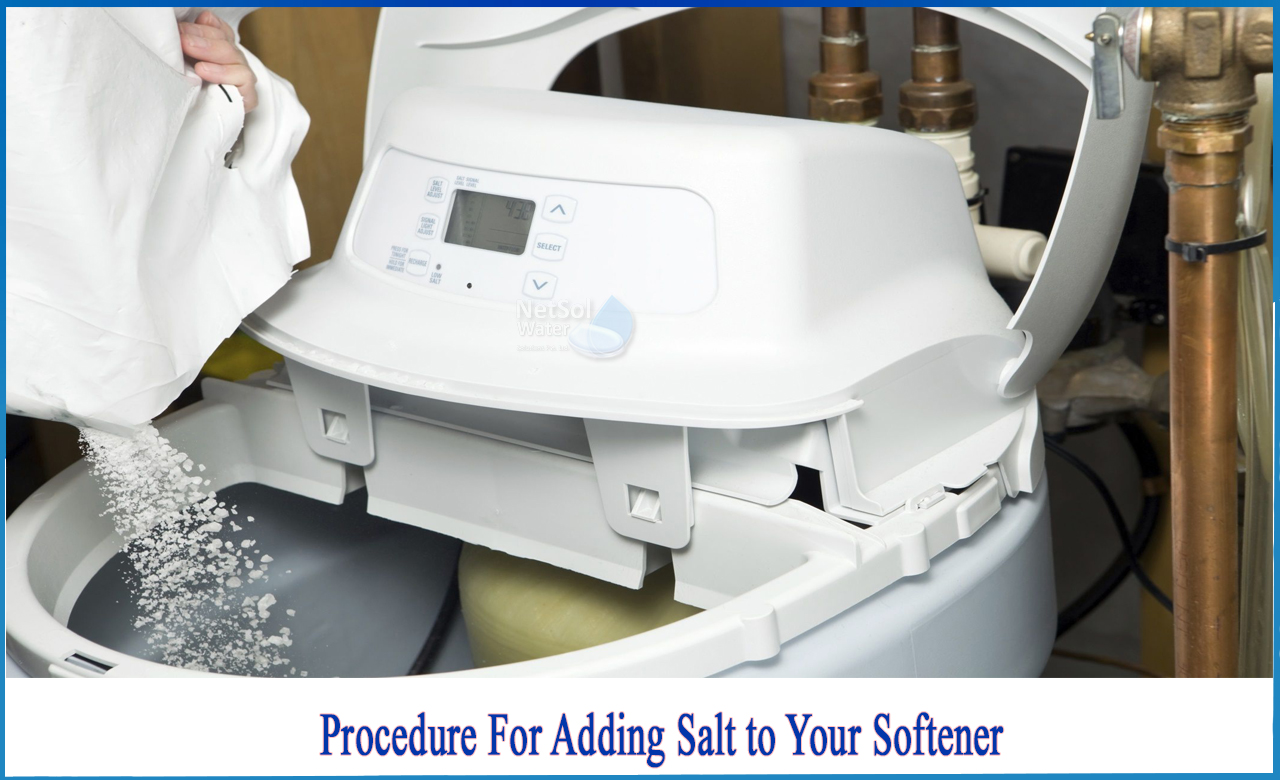 How to add salt to the water softener
The Brine Tank Cleaning Myth
You don’t need to clean it every year like some internet gurus claim. But every three to five years, give it a scrub if you use cheap rock salt. If you use pure evaporated salt, you might never need to clean it. It’s the low-maintenance friend we all aspire to be.
When you do clean it, empty the tank, hose it out, and don’t use soap. Soap residue messes with the brine. Just water, a rag, and a little elbow grease. Then vacuum up the leftover sludge. Yes, that’s a real thing. Your vacuum will smell salty for a week.
Final Pro Tips
Buy a salt pellet specifically for water softeners. Don’t use table salt, ice melt, or that fancy pink Himalayan stuff. Your softener doesn’t care about Instagram aesthetics.
Store your salt in a dry place. If the bag gets wet, it turns into a brick. A salty brick is not as useful as a salt block for grilling—trust me, I’ve tried.
And if you ever see a mushroom cloud of salt dust when you open the lid, wave it away and laugh. You’ve just made your own personal snowstorm. Consider it a free, non-caloric dessert.
So that’s it. Water softener salt is just another routine—like brushing your teeth or avoiding small talk with your neighbor about their lawn. Do it right, and your water will be soft as a puppy’s ear. Do it wrong, and you’ll be scraping calcium rings off your kettle while muttering salty things. Either way, you’re now equipped. Now go pour that salt like a champion.
