How To Treat Yellow Well Water

So, you turn on the tap, expecting a crystal-clear stream, and instead you’re greeted with something that looks like it was brewed in a rusty kettle by a very angry beaver. Co...
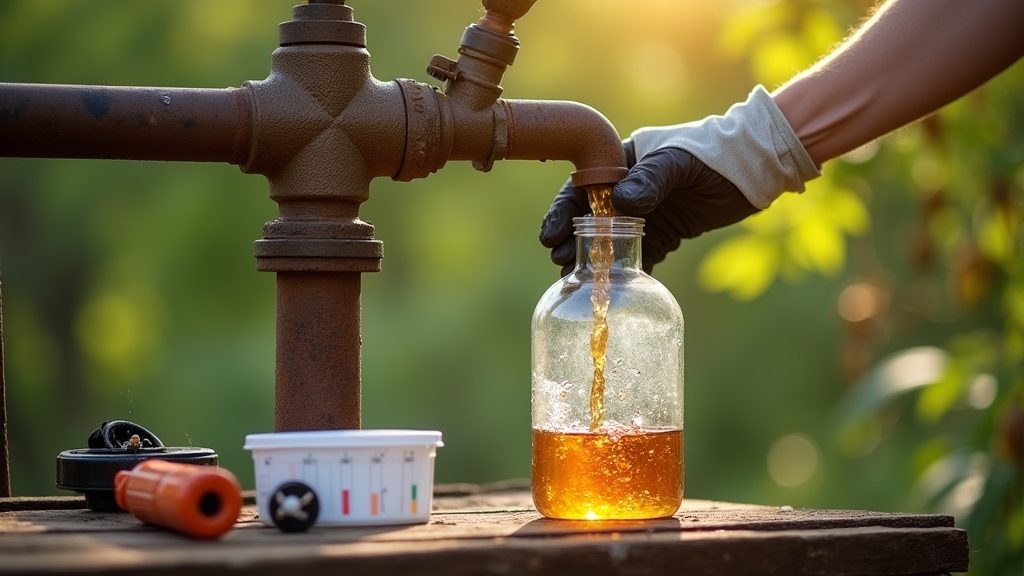
So, you turn on the tap, expecting a crystal-clear stream, and instead you’re greeted with something that looks like it was brewed in a rusty kettle by a very angry beaver. Congratulations, you’ve got yellow well water. It’s not exactly the spa-like oasis you were hoping for, but don’t panic—it’s usually not toxic. It just means your water has been hanging out with some iron and manganese, which turn it that charming shade of urine-gold.
Before you start a GoFundMe for bottled water, know this: yellow water is incredibly common for folks on private wells. In fact, roughly one in four wells in the U.S. has some level of iron staining. The good news? You can fix it without sacrificing your firstborn to the plumbing gods. The bad news? You might have to do a little detective work first.
The Suspect: Iron vs. Manganese
Yellow water usually comes from ferric iron (“red water” iron) or manganese, which gives off that sickly yellow-brown hue. Think of ferric iron as the grumpy old man who already oxidized and turned rusty; manganese is the sneaky prankster that stains your laundry a weird pale pink. Fun fact: Manganese at high levels can make your water smell like a wet basement after a rave—a weird, metallic, potato-like funk.
Must Read
Here’s the kicker: if your water turns yellow after it sits in a glass for a few minutes, you’ve got dissolved (ferrous) iron. That’s the kind that magically appears when exposed to air, like a party trick nobody asked for. If it’s yellow straight out of the tap, you’re dealing with already-oxidized iron, and you’ll need a different game plan.
Step 1: Test, Don’t Guess
I know, testing sounds about as exciting as watching paint dry, but trust me—it’s way more fun than accidentally buying a $2,000 filter that doesn’t work. Grab a home water test kit from the hardware store, or better yet, send a sample to a certified lab. You’re looking for iron concentration, manganese levels, and pH. Yes, pH matters because if your water is too acidic, the iron will literally laugh at your filter and keep right on staining.
Surprising fact: Some levels of iron are actually good for you—small amounts are essential for red blood cells. But if you’re tasting rusty nails in your morning coffee, you’ve crossed the line from “mineral water” to “construction site floor drain.” The EPA recommends no more than 0.3 mg/L of iron for taste and appearance, but don’t worry if yours is a bit higher—most solutions handle up to 10 mg/L like a champ.
 Is It Safe To Drink Yellow Well Water at Joel Fountain blog
The Fix: Three Ways to Turn Your Water Clear
Now for the fun part—kicking that yellow to the curb. Depending on what your tests reveal, you’ve got three main options. Option one: A simple sediment filter. This works great if your yellow water is caused by large rust particles from old pipes. It’s cheap, easy, and about as sophisticated as a colander in your sink. But if your iron is dissolved, a sediment filter will just give you clear water that still turns yellow later. That’s like putting a Band-Aid on a bullet wound.
Option two: The ion exchange water softener. This bad boy swaps iron and calcium for sodium, like a superhero trading card game for molecules. It works only if your iron level is below 5 mg/L and your pH is above 6.8. Pro tip: if you have iron-eating bacteria (yes, that’s a real thing), a softener will become a slime party. You’ll need to disinfect the well first, which is a whole other chaotic adventure involving bleach and a lot of swearing.
Option three: The oxidation filter, also known as the big guns. This is for when your iron is over 10 mg/L or you have that sneaky manganese. Systems like Birm, Greensand, or aeration work by forcing oxygen into the water, turning dissolved iron into solid particles that can be filtered out. Think of it as iron MMA training: you pump air, the iron gets angry and forms clumps, then you KO it with a filter. These can cost $1,000 to $3,000, but you’ll never yellow a toilet bowl again.
 Well Water Yellowish at Angelina Varley blog
Step 3: Don’t Forget the Laundry
While you’re waiting for your filter system to arrive, you can treat yellow-stained clothes with commercial iron-removing detergent or a sprinkle of citric acid in the wash cycle. Do not use bleach—it reacts with iron to make the stains permanent. Imagine turning your favorite white shirt into a Jackson Pollock painting of rust blobs. Not a good look.
Also, check your water heater. If your water is yellow only when you use hot water, the culprit is your heater’s anode rod corroding inside. Replace that rod (about $30 at a hardware store) and flush the tank. It’s like giving your water heater a little enema, but for pipes.
When to Call a Professional
If your well water smells like rotten eggs and looks yellow, you’ve got sulfur-reducing bacteria in addition to iron. That’s a job for a well driller or a water treatment pro. Also, if your pH is below 6.0, your water will dissolve copper pipes, turning your yellow water a lovely shade of green. At that point, you’re not just treating iron—you’re fighting a chemical war in your basement.
Here’s the surprising fact to leave you with: Some people actually pay for yellow water as a novelty. In Japan, you can buy “golden” mineral water from deep wells that’s naturally tinted and costs $40 a bottle. So really, your yellow well water is just a budget-friendly spa treatment waiting to be fixed. Now go test that well, buy a filter, and reclaim your right to clear, un-rusty hydration. Your toilet will thank you.
