How To Produce Deionized Water

So, you want to make the purest water on Earth? Not the fancy spring kind, not the fizzy stuff, but water so clean it would make a raindrop feel dirty. We're talking deionized...

So, you want to make the purest water on Earth? Not the fancy spring kind, not the fizzy stuff, but water so clean it would make a raindrop feel dirty. We're talking deionized water, my friend—the "champagne of solitude" for scientists and the ultimate "do not drink" liquid. Yes, you read that right: never drink it, unless you enjoy having your insides sucker-punched for electrolytes.
Producing it is less like chemistry and more like magical exorcism. You take regular tap water—full of dissolved salts, calcium, and the ghost of yesterday's coffee—and you yank out every charged particle. It’s a spa day for H₂O, but with industrial machinery instead of cucumber slices. And I promise, you will feel powerful while doing it, even if you have no idea what a "millisiemens" is.
Step One: The "Pre-Game" (Because Tap Water is a Hot Mess)
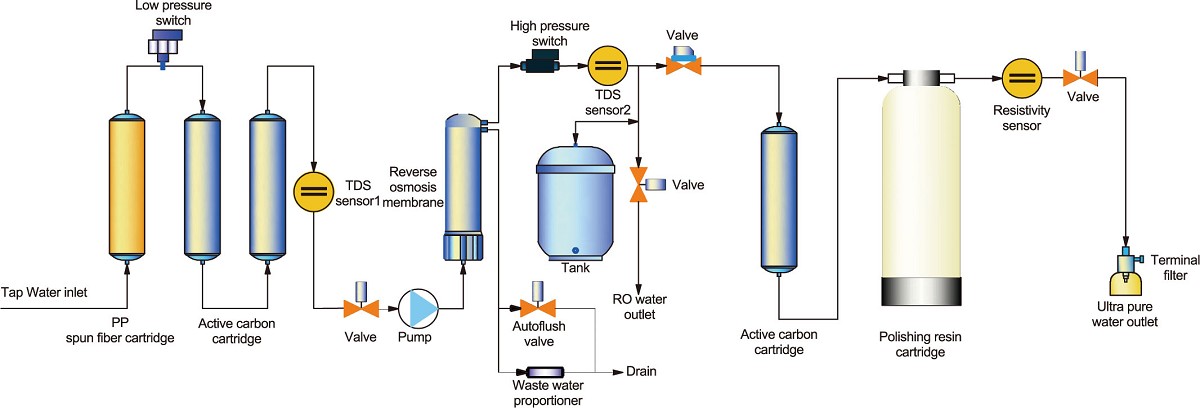
First, you can't just dump tap water into a fancy machine and expect magic. Tap water is a chaotic soup: minerals, chlorine, fluoride, and bits of ancient Roman pipe. We call this the pre-treatment phase, which is just a fancy way of saying "Get the big chunks out."
Must Read
You'll run it through a sediment filter to catch sand, rust, and any microscopic marbles that somehow got in there. Then you hit it with activated carbon to scrub out the chlorine smell—because nobody wants their deionized water to taste like a swimming pool's regret. Think of this as the "peel and chop" step before you fire up the blender.
Step Two: The Ion Party (Where Things Get Weird)
Now for the main event: ion exchange. This is the secret sauce, the rock concert of water purification. You pass your pre-treated water through a tower of little plastic beads called ion exchange resin. These beads are like tiny, extremely picky bouncers at an exclusive nightclub.
The beads are covered in either hydrogen ions (positive charge) or hydroxide ions (negative charge). When a dissolved salt—say, calcium with a positive charge—floats by, the bead shouts "Get out, loser!" and swaps its own hydrogen for the calcium. Same for negative ions like chloride: the bead trades its hydroxide. The result? The calcium and chloride get locked inside the beads like an embarrassing story, and the hydrogen and hydroxide combine to form… more water. It's cannibalism, but for chemistry.
 Sasi Spring Water - Deionized Water
And get this: the process is so thorough that the water leaving the tank has the electrical resistance of glass. Pure water is actually an excellent insulator—meaning it cannot carry electricity. That’s right: the water in your tap could power a lamp (slightly), but deionized water would just blink at you and say "Nope."
Step Three: The "Oops, You Broke It" Problem
Here’s the kicker: the resin beads have a limited appetite. Eventually, they get stuffed full of calcium and chloride like a teenager after Thanksgiving dinner. When the water starts tasting salty again (or the machine beeps angrily), you need to regenerate the resin.
Regeneration is a chemical bath of pure funk. You soak the beads in concentrated hydrochloric acid for the positive side and sodium hydroxide (lye, the drain cleaner) for the negative side. It’s like giving the beads a violent enema—industrial strength, and you should wear gloves. Do not do this in your kitchen sink unless you enjoy explaining to your partner why the bubbles are eating the grout.
Surprising Facts (To Make You Sound Smart at Parties)
You know that "crazy pure" water you can buy for car batteries? That’s only around 90% pure. Real deionized water is so aggressive it will dissolve metal pipes over time. That's why labs always store it in plastic bottles—it would eat copper like candy.
 A Guide to Deionized Water: Production, Applications, and Lab Systems
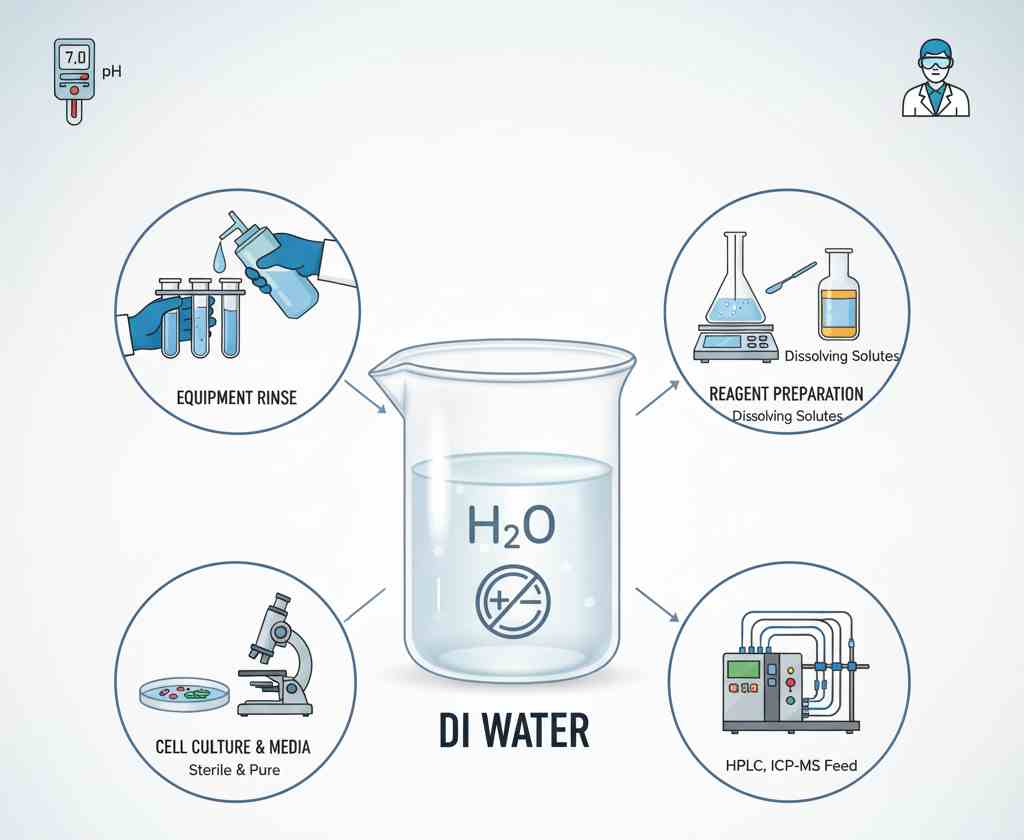
Also, deionized water is used to make semiconductors like the one powering your phone. If a single grain of salt lands on that silicon chip, your entire iPhone becomes a paperweight. So yes, the water that used to be in your toilet bowl is now helping you scroll Instagram. You’re welcome.
And the absolute weirdest fact: if you try to boil it, it can superheat. Because there are no dissolved particles for bubbles to form on, the water can get hotter than boiling without actually boiling. Then you bump the pot, and it erupts like a geyser of scalding rage. So, never boil deionized water unless you want a second-degree burn and a very dramatic story for the hospital staff.
The Verdict: Should You DIY This?
Probably not. Countertop deionizers exist, but they’re slower than a sloth on sedatives and cost a fortune in resin refills. Unless you are running a molecular biology lab, building a time machine, or just want to win a purity contest against Mother Nature—stick to tap water.
But now you know: deionized water isn't just "pure." It's the loneliest water in the universe, stripped of everything that makes water social. Treat it with respect, never drink it, and maybe buy it pre-made by nerds in hazmat suits. Your coffee will thank you. Your stomach will thank you more.
